

 Travel Essentials
 Travel Essentials

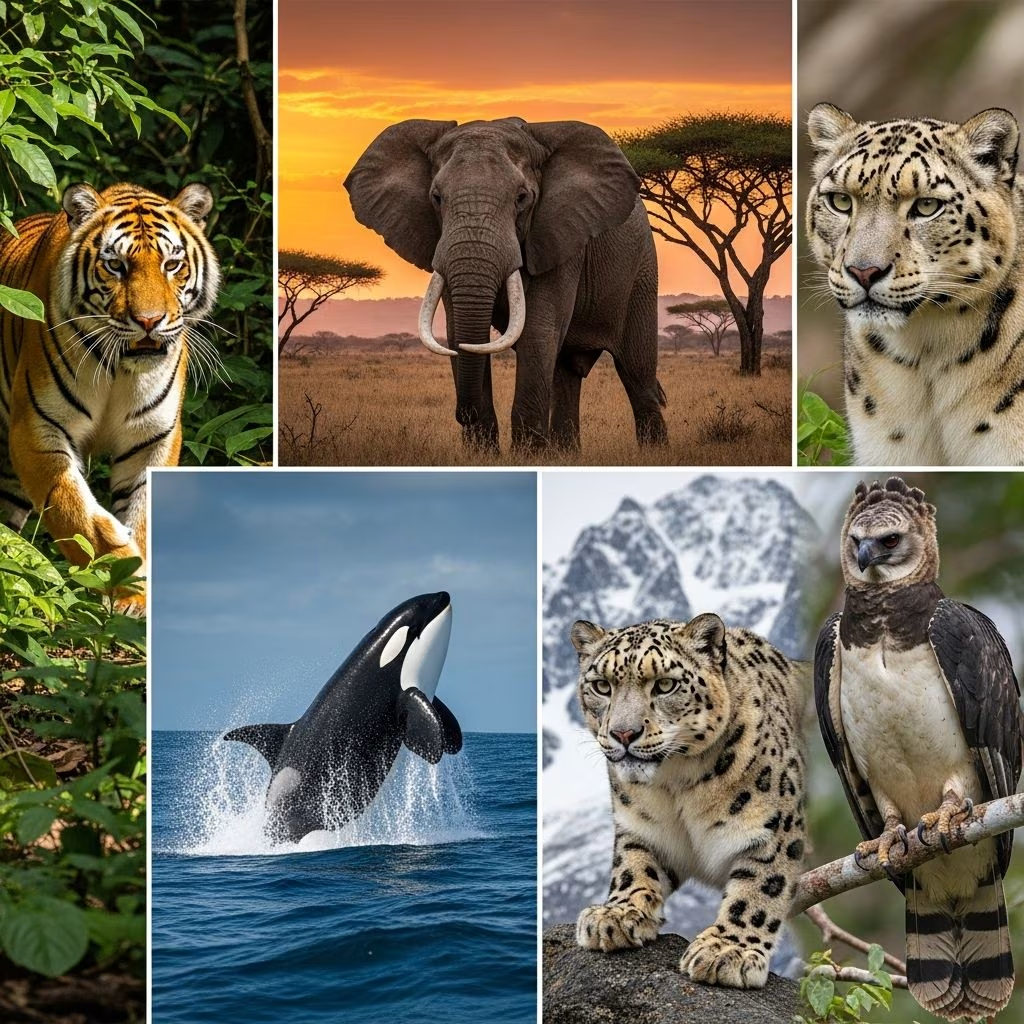
Discover the New Big 5 of wildlife photography—elephants, polar bears, gorillas, lions and tigers—plus ethical tips, gear and conservation insights.
 Travel Essentials
The concept of the Big 5 originated in African hunting lore, referring to the most challenging and prized animals to hunt: elephant, rhino, leopard, Cape buffalo, and lion. Today, a transformative movement has redefined this term for the modern era, focusing on admiration through lenses rather than rifles. Launched in April 2020 by wildlife photographer Graeme Green, the New Big 5 initiative invited people worldwide to vote for their favorite animals to photograph or view in images. The result? A fresh lineup: elephants, polar bears, gorillas, lions, and tigers. This shift emphasizes celebration, conservation, and creativity in wildlife photography.
The traditional Big 5 symbolized danger and prestige for colonial-era hunters, but it carried a dark legacy of death and depletion. Recognizing this, the New Big 5 project emerged as a positive counter-narrative. Through an online voting process on newbig5.com, thousands of wildlife enthusiasts from every continent participated over a year, selecting animals that inspire awe and photographic passion. Elephants topped the list, followed by polar bears, gorillas, tigers, and lions. This democratic choice highlights universal appeal, transcending borders and cultures.
Unlike its predecessor, this list isn’t confined to Africa; it spans continents, reflecting global biodiversity. The initiative isn’t overtly anti-hunting but promotes life-affirming alternatives like ethical photography safaris, which support local economies and conservation without harm. Photographers like Ami Vitale and Thomas Mangelsen have backed the project, contributing stunning images that showcase these species’ majesty.
Elephants earned the top spot in the New Big 5 for their intelligence, social complexity, and sheer presence. African elephants (Loxodonta africana) roam vast savannas, while Asian elephants (Elephas maximus) navigate forests. Their trunk dexterity, long memories, and matriarchal herds make them captivating subjects. Photographers seek golden-hour shots of herds at waterholes, capturing dust baths or family bonds.
Challenges include poaching for ivory and habitat loss. In Kenya’s Amboseli National Park, elephants thrive near Mount Kilimanjaro, offering prime photography spots. Use wide-angle lenses for dramatic landscapes and telephotos for intimate portraits. Ethical tip: Maintain distance to avoid stress; drones are often restricted.
Polar bears (Ursus maritimus) represent the icy north, voted second for their power and vulnerability. Masters of sea ice, they hunt seals from floating platforms. Climate change melts their habitat, making each sighting precious. Photographers venture to Svalbard, Norway, or Churchill, Manitoba, for autumn encounters on shores.
Capture their white fur against blue ice with fast shutters for movement. Boat-based tours minimize disturbance. Conservation efforts by organizations like Polar Bears International track populations, emphasizing reduced emissions.
Mountain gorillas (Gorilla beringei beringei) in Rwanda and Uganda’s Virunga ranges offer eye-level magic. Their expressive faces and gentle strength mesmerize. Permits for gorilla trekking fund protection, with only 1,000 wild individuals left. Photographers use 400mm lenses for respectful closeness during hour-long habituations.
Silverbacks lead families with chest-beating displays ripe for action shots. Bwindi Impenetrable Forest provides misty, verdant backdrops. Habituation protects them from poachers while enabling non-intrusive imaging.
Lions (Panthera leo) retain their Big 5 status, symbolizing raw power. Serengeti prides hunt at dawn, perfect for silhouette photography. Males’ manes glow in African sunsets. Decline from trophy hunting and retaliation kills threatens them; only 20,000 remain.
Masai Mara offers night drives for glowing eyes. Patience yields mating or cub-play sequences. Use bean bags on safari vehicles for stability.
Tigers (Panthera tigris) prowled to fifth place with their solitary stealth. India’s Ranthambore and Bandhavgarh parks host jeep safaris amid ruins. Fewer than 4,000 survive due to poaching and fragmentation. Camouflaged coats challenge spotters, rewarding ambush shots.
Monsoon greens contrast orange fur; hides near waterholes capture drinks. Flash bans preserve natural behavior.
Success demands preparation. Gear: Weather-sealed bodies, 100-500mm zooms, tripods. Settings: ISO 400-1600, f/5.6-8, 1/1000s+ shutters. Post-processing enhances drama ethically—no heavy edits.
| Animal | Best Lens | Prime Location | Tip |
|---|---|---|---|
| Elephant | 24-105mm + 400mm | Amboseli | Waterhole waits |
| Polar Bear | 500mm prime | Svalbard | Boat stability |
| Gorilla | 70-200mm | Bwindi | No flash |
| Lion | 300-600mm | Serengeti | Dawn patrols |
| Tiger | 400-800mm | Ranthambore | Machaan hides |
Ethics first: Follow guidelines from IUCN and local rangers. Low-impact tourism sustains populations.
Photography raises awareness and funds. New Big 5 features podcasts, interviews on threats like climate change and illegal trade. Community conservancies in Africa exemplify success, where photo tourism replaces hunting revenue.
Combine species: East Africa’s elephants/lions, then India for tigers. Budget: $5,000-15,000/person for guided trips. Seasons matter—dry for water concentrations.
A global vote-selected list of top wildlife photography animals: elephants, polar bears, gorillas, lions, tigers.
Public nominated via newbig5.com; results announced post-2020.
No, but promotes photography as celebration.
Serengeti for lions/elephants.
Drives tourism funding protections.
This movement redefines legacy, urging us to capture, not kill. Embark on your quest to frame these icons, contributing to their survival.
