

 Travel Essentials
 Travel Essentials

Explore the most peaceful national parks in America, from remote Alaskan wilderness to desert solitudes, perfect for escaping noise and crowds.
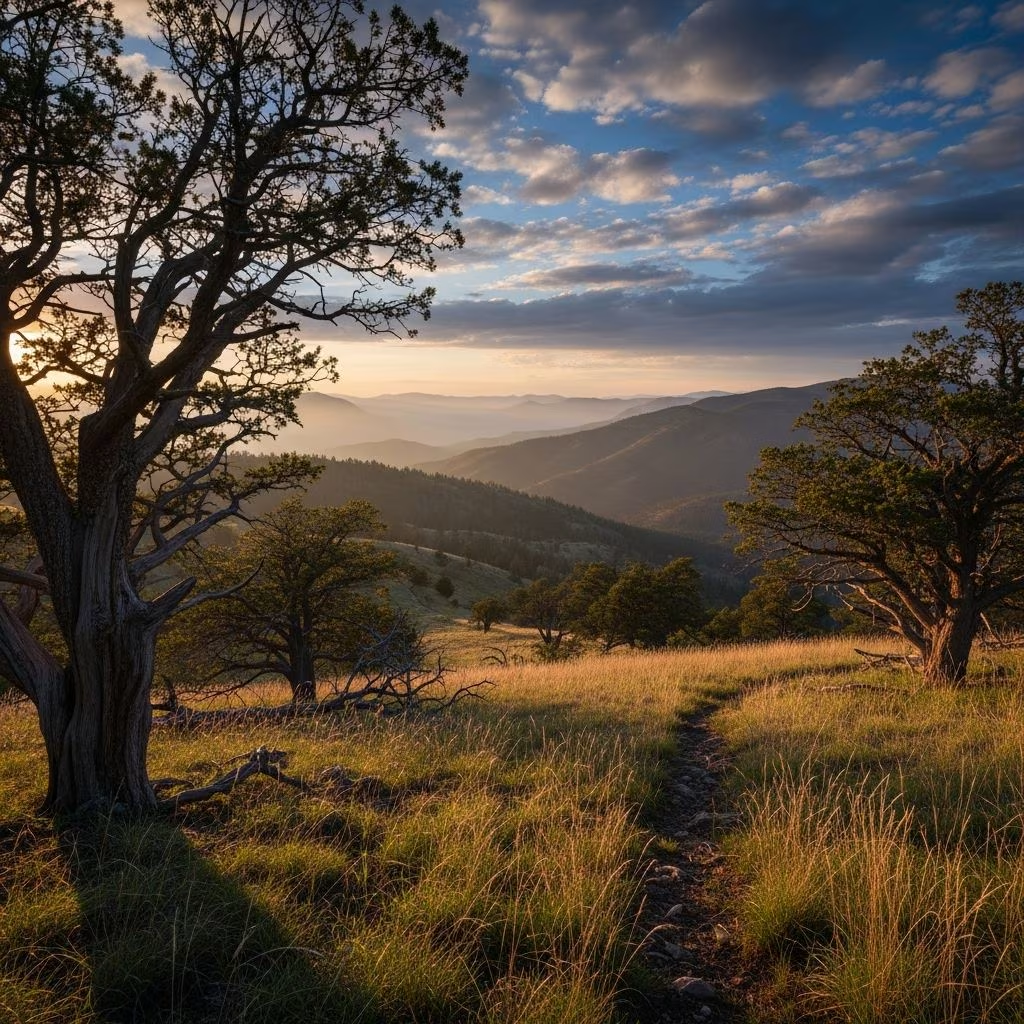 Travel Essentials
Amid the clamor of modern life, certain US national parks stand out as havens of profound silence. These destinations, often remote or protected by natural barriers, allow visitors to reconnect with nature’s subtle symphony—birdsong, wind through trees, and flowing water. Drawing from acoustic studies and visitor data, this guide highlights top spots where noise pollution is minimal, offering restorative escapes.
Silence in nature isn’t just absence of sound; it’s a canvas for natural acoustics. Organizations like Quiet Parks International measure ‘noise-free intervals’—periods exceeding 15 minutes without human-caused disruption. Such places reduce stress, enhance focus, and reveal biodiversity through amplified wildlife sounds. National Park Service data from 1.5 million hours of recordings identifies parks like Yellowstone as exceptionally quiet despite popularity. Remote access, airspace restrictions, and vast sizes contribute to this peace, making low-visitation parks ideal.
From volcanic craters to glacial wilds, these parks top rankings for acoustic purity and low crowds. Each offers unique soundscapes shaped by geography.
Perched at 10,023 feet atop Maui’s volcano, Haleakala claims the title of the world’s quietest spot according to acoustician Gordon Hempton. Volcanic ash absorbs sound waves, while high elevation shields it from island air traffic. Inside the crater, decibel levels drop dramatically, allowing whispers of wind and rare birds to dominate. Visitors report meditative sunrises where silence amplifies inner thoughts. Access via winding roads; hike early for solitude. Note: Respect cultural significance to Native Hawaiians.
This 1 million-acre watery wilderness mandates non-motorized travel on most of its 1,100 lakes, muting engine noise. Bordering Canada, it evades heavy overflights. Daytime fills with songbirds, nights with frog choruses, wolf howls, and loon calls echoing across fjords. Hempton praises its pristine acoustics. Paddle-in camping immerses you fully; guided silent retreats incorporate mindfulness amid the calm.
Spanning over a million acres of glacier-carved peaks and forests, Glacier earned Quiet Parks International’s first US Wilderness Quiet Park designation in 2022. Canadian border location limits air traffic; coniferous groves create natural amphitheaters for stream stones’ ‘musical notes’ and wildlife. Car-free roads like Going-to-the-Sun enable e-bike exploration. Stargazing under dark skies enhances the auditory void. Backcountry permits ensure seclusion.
Alaska’s vastest park scores 95.6/100 for peace in visitation studies, with just 0.006 visitors per acre. No roads penetrate its 13 million acres of ice fields and peaks; bush planes or boats provide entry. Silence here reveals glacial creaks and eagle cries. Its remoteness preserves one of the largest intact ecosystems in the lower 48.
Encompassing Big Bend National Park and adjacent Big Bend Ranch State Park, this desert expanse rivals the quietest US sites. Arid air dissipates sound rapidly; border proximity cuts flights. Canyon echoes amplify nature’s whispers—coyote yips, owl hoots. Ranch park’s airspace reservation bans flights below 4,000 feet. Vastness (800,000+ acres) disperses hikers; night skies rival glaciers.
Use this table to weigh options based on size, access, and quiet factors from studies.
| Park | Size (acres) | Visits/Acre | Key Quiet Feature | Best Activity |
|---|---|---|---|---|
| Haleakala NP | 33,000 | Low | Volcanic absorption | Sunrise hike |
| Boundary Waters | 1,098,000 | Minimal | No motors | Canoeing |
| Glacier NP | 1,013,000 | 0.1 | Airspace protection | Backpacking |
| Wrangell-St. Elias | 13,175,000 | 0.006 | No roads | Flightseeing |
| Big Bend Ranch SP | 385,000 | Very low | Desert fade | Canyoneering |
To preserve and experience these sanctuaries:
Embrace digital detox; phones on airplane mode heighten awareness.
Prolonged silence lowers cortisol, boosts creativity. Studies link natural quiet to improved sleep, reduced anxiety. In parks like these, bioacoustic richness—diverse species sounds—fosters mindfulness. Hempton’s work shows such sites as vital for mental restoration amid global noise rise.
Climate change, overflights threaten even these bastions. NPS monitors via sound maps; Quiet Parks International advocates protections. Visitors play a role: Report violations, support flight-free zones.
Per Quiet Parks International, sites with noise-free intervals over 15 minutes qualify, prioritizing bioacoustics.
Many require fitness for hikes or paddling; guided trips ease entry, like Recal’s Boundary Waters retreats.
Weekdays in fall; avoid holidays. Alaskan parks shine in summer midnight sun.
Yes, with permits; solo sites amplify solitude but follow safety protocols.
Arid deserts fade noise fast; moist forests absorb via moss.
These quiet parks beckon those craving nature’s hush. Plan mindfully to sustain their magic for future generations.
