

 Travel Essentials
 Travel Essentials

Discover the history, design evolution, and cultural impact of the iconic Wienermobile—from a 1936 marketing gimmick to a beloved American symbol.
 Travel Essentials
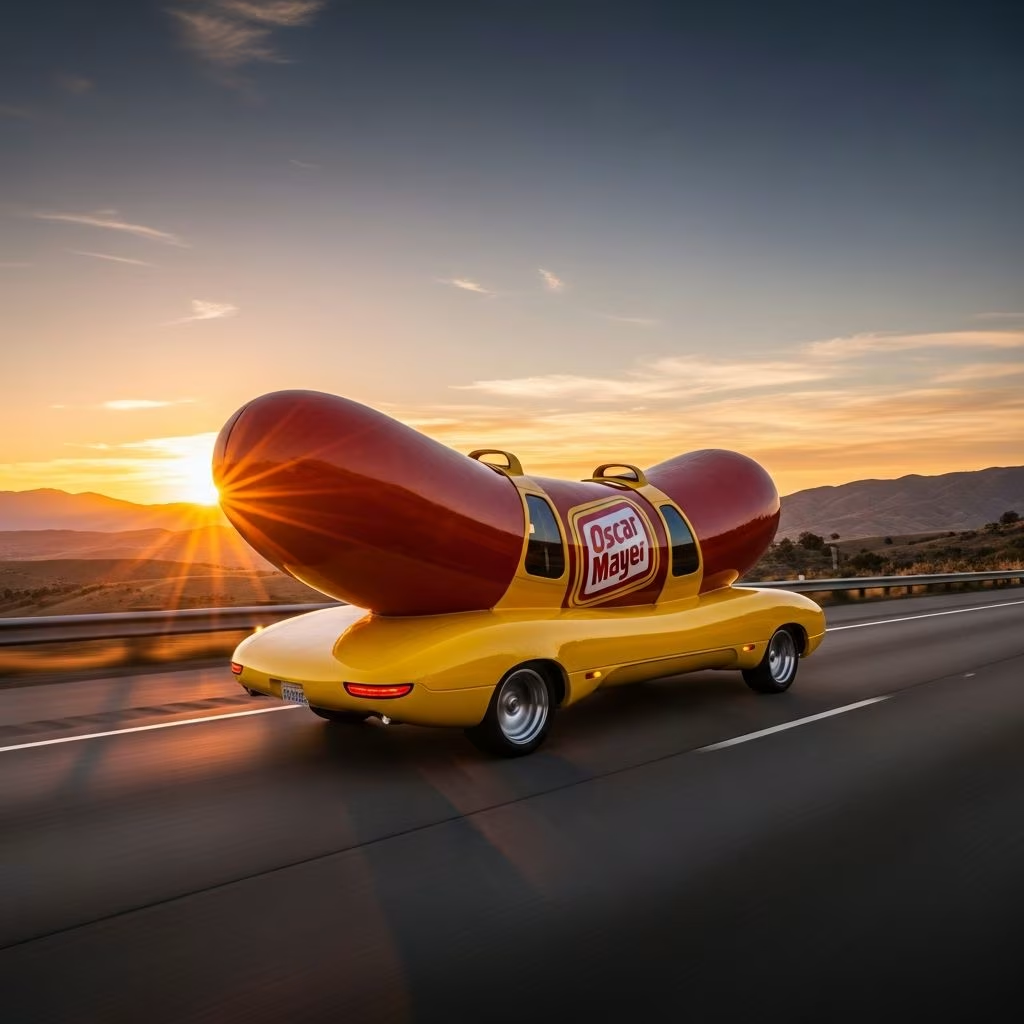
The Wienermobile stands as one of America’s most recognizable and playful vehicles, a massive hot dog on wheels that has crisscrossed the nation for decades, spreading joy and promoting Oscar Mayer products. Conceived in 1936 by Carl G. Mayer, nephew of the company’s founder, this rolling icon began as a simple marketing gimmick but evolved into a cultural phenomenon.
In the bustling streets of Chicago during the Great Depression, Carl G. Mayer envisioned a vehicle that would cut through the competition in the meatpacking industry. The original Wienermobile measured about 13 to 17 feet long, crafted from sheet metal over a custom chassis by the General Body Company. Shaped like an oversized frankfurter, it lacked the iconic bun at first, relying purely on its audacious design to draw eyes and appetites.
This pioneering vehicle cost around $5,000 and was driven through urban areas, honking its distinctive ‘wiener whistle’ to announce its presence. Oscar Mayer, who had relocated operations to Madison, Wisconsin, in 1919 and innovated pre-sliced bacon packaging in 1924, saw immediate success. The Wienermobile transformed mundane delivery trucks into crowd magnets, boosting brand visibility in a crowded market.
The Wienermobile’s appearance has undergone several makeovers, each reflecting automotive trends and marketing needs. Early models were basic hot dog replicas, but by the late 1930s, a scaled-down version featured a glass-enclosed cockpit for safer driving visibility.
Post-World War II, the fleet expanded. In the 1950s, industrial designer Brooks Stevens revolutionized the look with the ‘Wiener of the Future’ in 1958. Stretching 27 feet, it introduced the signature hot dog nestled in a bun, complete with a bubble-nose cockpit. Built on Dodge truck chassis by companies like Gerstenslager in Wooster, Ohio, these models set the template for future iterations.
| Era | Key Designer/Builder | Length | Notable Features |
|---|---|---|---|
| 1936 Original | General Body Co. | 13-17 ft | Hot dog shape only, sheet metal |
| 1950s | Brooks Stevens | 27 ft | Bun addition, bubble cockpit |
| 1960s-70s | Gerstenslager Co. | Varies | Dodge chassis, fiberglass body |
| Modern (2020s) | Oscar Mayer team | 27 ft | Hybrid power, LED lights |
By the 1960s and 1970s, fiberglass construction allowed for lighter, more durable builds. Recent fleets incorporate hybrid engines, advanced safety features, and vibrant LED displays, maintaining the whimsical aesthetic while meeting contemporary standards.
Driving the Wienermobile demands skill and showmanship. Known as ‘HotDoggers,’ drivers are college graduates selected from thousands of applicants. They undergo rigorous training on handling the 27-foot behemoth, which boasts a 190-horsepower engine, massive turning radius, and parking challenges due to its 60-foot turning circle.
Teams rotate vehicles from a fleet of six to eight, ensuring nationwide coverage. Living on the road means hotel stays, coordinated schedules, and constant public engagement, turning the job into a full-time adventure.
Oscar Mayer maintains multiple Wienermobiles, including full-sized models and pint-sized variants like the Wienermobile Junior or HotDogger Jr. These smaller versions, often based on compact chassis, allow access to tighter spaces.
In 2023, a brief rebrand to ‘Frankmobile’ sparked backlash from fans attached to the traditional name. Public demand swiftly restored ‘Wienermobile,’ highlighting its deep-rooted affection.
Beyond promotion, the Wienermobile has starred in films, TV shows, and memes. Its appearances in parades like Macy’s Thanksgiving Day Parade cement its status as a holiday staple. Museums occasionally feature vintage models, preserving history.
Fun facts abound: The vehicles carry 1,060 pounds of fiberglass and steel, with interiors including a ‘boil room’ for storage and a silverware drawer shaped like utensils. Custom horns blare Oscar Mayer jingles, delighting children nationwide.
“The Wienermobile isn’t just a car; it’s a mobile billboard that brings smiles and stories wherever it goes.”
Tracking a Wienermobile is a bucket-list thrill. Oscar Mayer shares schedules via social media and apps, listing stops at state fairs, sports events, and tailgates. Prime seasons run from spring to fall, with winter maintenance in Madison.
Tips for enthusiasts:
Modern Wienermobiles blend nostalgia with tech. Powered by hybrid V8 engines, they achieve 8-10 MPG despite their size. Aerodynamic designs reduce drag, while reinforced frames handle bumpy parade routes. Interiors feature climate control, sound systems blasting jingles, and hidden compartments for swag.
Safety upgrades include backup cameras, ABS brakes, and wide mirrors to navigate the 11-foot height and 8-foot width. Maintenance occurs monthly, with full overhauls ensuring roadworthiness.
The Wienermobile pioneered vehicle-based branding, influencing food trucks and promotional fleets. Its longevity—nearly 90 years—proves experiential marketing’s power. Studies show such novelties boost recall by 30-50% over static ads.
Top speed is around 65 mph, though it’s rarely pushed that hard due to handling limits.
No public rentals; only trained HotDoggers operate them after competitive selection.
Custom-built in specialized shops, with final assembly and testing in Madison, Wisconsin.
Primarily U.S.-focused, though similar concepts appear globally for other brands.
Each modern model exceeds $500,000 in design and build costs.
