

 Travel Essentials
 Travel Essentials

Explore the world's premier walking destinations, from European capitals to Asian metropolises. Learn what makes cities pedestrian-friendly and plan your next car-free adventure.
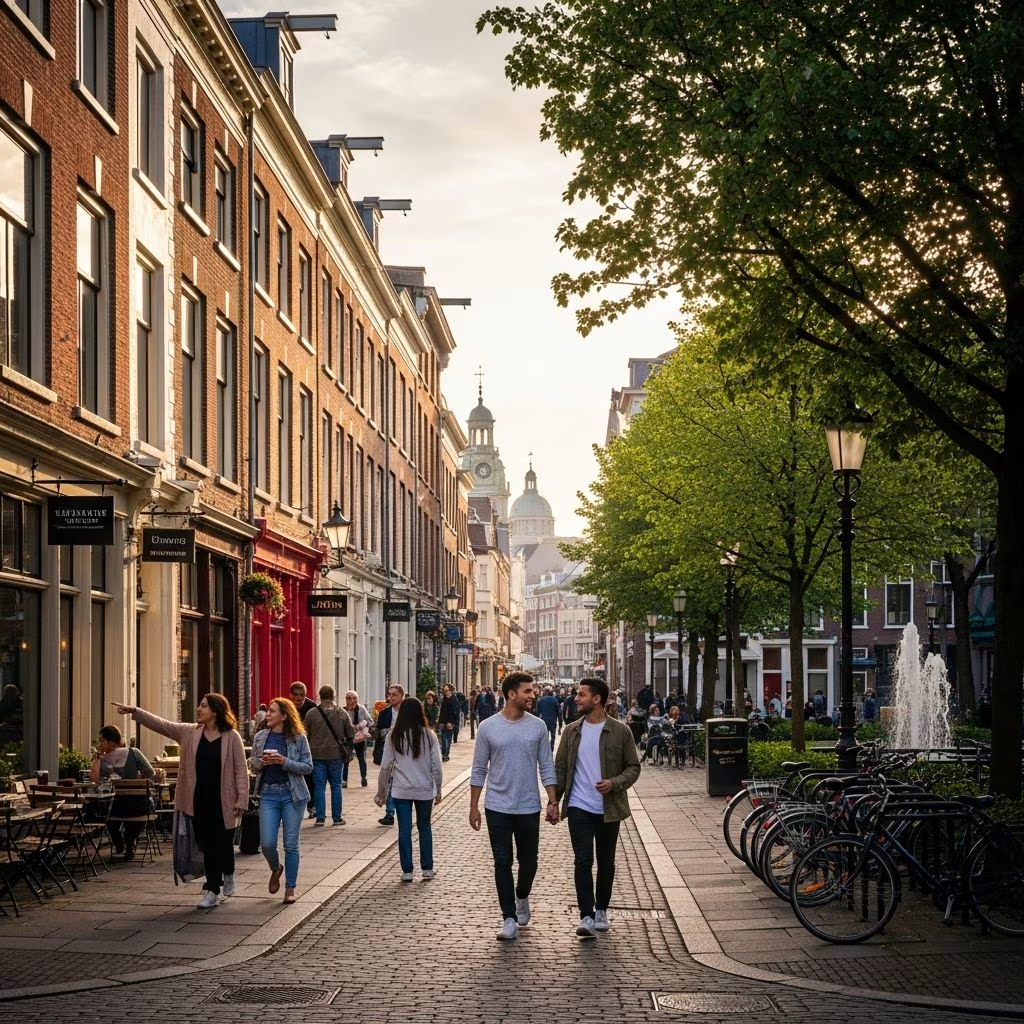 Travel Essentials
The allure of wandering through cobblestone streets, discovering hidden cafes around corners, and experiencing a destination at a leisurely pace represents one of travel’s greatest pleasures. Some cities have been deliberately designed—or have naturally evolved—to embrace pedestrian movement as a primary mode of exploration. These destinations offer visitors an authentic connection to local culture, architecture, and daily rhythms that cars simply cannot provide. Understanding which cities excel at walkability helps travelers make informed decisions about where to invest their time and energy.
Walkability encompasses multiple dimensions beyond simply having sidewalks. A genuinely pedestrian-friendly destination combines several interconnected features that work together to create an inviting environment for foot traffic. These characteristics include compact urban design that clusters essential services within reasonable distances, minimal elevation changes that don’t exhaust walkers, well-maintained infrastructure dedicated to pedestrians, and neighborhood layouts that encourage exploration rather than discouraging it.
The most walkable cities prioritize pedestrian safety through traffic calming measures, clear signage, and active street life that deters crime. They also offer mixed-use neighborhoods where residential areas, shops, entertainment venues, and cultural attractions coexist naturally, eliminating the need for lengthy commutes between different city functions. Climate considerations matter too; cities with temperate weather patterns encourage year-round walking, while those with extreme seasons may see reduced pedestrian activity during inhospitable months.
European cities have long prioritized walkability through centuries of urban development that preceded automobiles. Amsterdam stands as a remarkable example of pedestrian-centric planning. The Dutch capital’s flat terrain, with a difficulty score of just 20.1 out of 100, combined with its historic canal network and compact urban layout, makes it exceptionally easy to navigate entirely on foot. The city’s infrastructure reflects this priority, with extensive cycling and walking paths integrated throughout neighborhoods.
Vienna earned recognition as the world’s most pedestrian-friendly capital city, offering visitors the opportunity to traverse centuries of history without requiring motorized transportation. The Austrian capital’s café culture, architectural heritage, and vibrant public squares create an environment where strolling becomes the preferred method of experiencing the city. Prague similarly captivates walkers with its castle districts, historic bridges, and baroque architecture, while maintaining status as one of the safest cities for pedestrian exploration.
Additional European standouts include cities across Northern Europe. Copenhagen maintains strong walkability credentials through its integration of cycling culture and pedestrian-prioritized streets. Stockholm’s achievement of having more than four-fifths of residents live in “15-minute cities”—where essential daily services are accessible within a quarter-hour’s walk—represents an ambitious urban planning success. Edinburgh combines compact geography with historic charm, while Paris offers distinct neighborhoods that reward patient exploration on foot.
Asian cities have emerged as unexpected leaders in walkability despite their massive populations and complex urban landscapes. Seoul, one of the world’s largest cities by area and population, has achieved a remarkable 93 percent walkability approval rating from local residents. This accomplishment demonstrates that scale and population density need not prevent excellent pedestrian infrastructure when planners prioritize foot traffic and transit integration.
Tokyo presents another fascinating case study in pedestrian-friendly mega-city design. Despite being the world’s largest metropolitan area, Tokyo incorporates 652 parks and nature spaces that break up urban density and provide walkers with green respite. The city’s extensive neighborhood system creates dozens of distinct walking districts, each with unique character and attractions. This approach allows visitors to experience variety and discovery throughout their exploration without feeling overwhelmed by monotonous urban sprawl.
Singapore showcases tropical walkability through its blend of modern urban planning and cultural districts that invite pedestrian movement. The city-state’s compact footprint and efficient public transportation connections enable tourists to experience multiple neighborhoods on foot without excessive travel time between destinations.
Some of the world’s most walkable destinations emerged from medieval or Renaissance-era urban planning that predated automobile culture. Florence exemplifies this phenomenon, ranking as the world’s most walkable city according to multiple assessments. The Italian Renaissance capital’s compact size makes exploration entirely feasible on foot, with major landmarks including the Duomo and the Uffizi Gallery accessible through walkable distances. Visitors can admire the unique Ponte Vecchio bridge and the iconic Cathedral of Santa Maria—home to the largest brick dome ever constructed—within just ten minutes of walking.
Venice presents perhaps the ultimate pedestrian-only destination, with its absence of cars, scenic bridges, and entirely compact layout creating an environment where walking represents not just the preferred but the only transportation option. The car-free canal system, combined with the city’s intimate scale, means that visitors experience Venice exactly as it was designed centuries ago.
New Orleans combines historic charm with unexpected walkability despite its subtropical climate and unconventional street layout. The city’s moderate difficulty score of 25.1 out of 100 reflects flat terrain and compact neighborhoods that reward foot exploration, particularly in the French Quarter and surrounding historic districts.
Physical geography significantly influences walkability, with flat or minimally sloped terrain dramatically affecting pedestrian comfort and accessibility. Cities like Amsterdam and Rotterdam benefit from their extremely low elevation changes, with Rotterdam’s difficulty score of 20.7 out of 100 reflecting its favorable topography. Cancún, despite being an unconventional walking destination by reputation, ranks sixth most walkable globally thanks to minimal elevation range combined with compact layout.
Colombo, located on Sri Lanka’s west coast with low-lying terrain and sandy beaches, earned recognition as one of the top 10 most walkable cities precisely because pedestrians can explore without navigating significant hills. Conversely, cities with steep hills or dramatic elevation changes create barriers for casual walkers, particularly families with young children or individuals with mobility considerations.
A city’s perceived and actual safety levels directly impact how comfortably residents and visitors walk its streets. Prague earned recognition as the third safest city for walking, which contributes to its appeal as an extended pedestrian destination. The city’s active street life, with attractions and activities throughout day and evening hours, creates natural surveillance that deters criminal activity while enhancing the overall walking experience.
Neighborhoods that remain vibrant and populated throughout multiple daylight hours encourage pedestrian exploration, as commercial activity, restaurant crowds, and public events create an energetic atmosphere. Cities that achieve this balance between safety and liveliness become destinations where visitors feel comfortable wandering for extended periods, discovering unexpected attractions around each corner.
| City | Country | Key Walkability Feature | Difficulty Score |
|---|---|---|---|
| Amsterdam | Netherlands | Canal network, flat terrain | 20.1/100 |
| Florence | Italy | Compact historic center | Ranked #1 globally |
| Venice | Italy | Car-free, canal layout | 22.8/100 |
| Seoul | South Korea | 93% local approval | 93% walkability |
| Vienna | Austria | Pedestrian-friendly capital | Top European ranking |
| Tokyo | Japan | 652 parks, safe neighborhoods | Mega-city walkability |
Travelers prioritizing pedestrian exploration should consider several factors when selecting destinations. Climate represents a practical consideration, as temperate cities encourage year-round walking while extreme heat or cold may limit comfortable exploration. Topography matters significantly; cities with manageable elevation changes prove more accessible for walkers of varying fitness levels and ages.
Destination size influences the walking experience; compact cities allow tourists to cover substantial ground in a day, while sprawling metropolises require strategic neighborhood selection to avoid excessive fatigue. The availability of public transportation within walking-oriented cities provides valuable backup options when fatigue sets in or weather becomes challenging.
Cultural and historical richness enhances pedestrian exploration by ensuring that the walking journey itself becomes entertainment and education rather than mere transportation. Cities with distinct neighborhoods, architectural variety, and street-level cultural attractions reward patient, meandering exploration on foot.
Progressive cities worldwide increasingly recognize that prioritizing pedestrian infrastructure creates economic, social, and environmental benefits extending beyond mere transportation convenience. The “15-minute city” concept gaining prominence across Stockholm and other forward-thinking destinations reflects a paradigm shift toward neighborhood-based living that naturally encourages walking.
Cities are retrofitting car-dependent areas with improved pedestrian zones, wider sidewalks, expanded green spaces, and mixed-use development that clusters services within accessible distances. This represents a fundamental shift in urban planning philosophy, acknowledging that foot-traffic-oriented cities create more vibrant, equitable, and sustainable communities.
Pedestrian exploration transforms how travelers engage with destinations, enabling encounters with local life impossible from car windows or tour buses. Walking through neighborhoods reveals authentic cafes, independent shops, and street life that tourist guidebooks often overlook. This intimate contact with urban environments creates richer travel memories and genuine cultural understanding.
The physical pace of walking also naturally encourages observation, contemplation, and spontaneous discovery. Travelers moving at foot speed notice architectural details, street art, and neighborhood character that faster transportation modes obscure. This combination of accessibility, authenticity, and active engagement explains why walkable cities consistently attract travelers seeking meaningful urban experiences.
Whether exploring Amsterdam’s canal-lined streets, discovering Florence’s Renaissance treasures on foot, or experiencing Seoul’s combination of tradition and modernity through pedestrian pathways, walking-focused travel offers unparalleled opportunities to genuinely know a place. As cities worldwide increasingly embrace pedestrian-friendly design principles, travelers have ever-expanding opportunities to experience destinations exactly as they were meant to be explored—one step at a time.
Truly walkable cities combine compact design, minimal elevation changes, pedestrian-friendly infrastructure, mixed-use neighborhoods where services cluster closely together, and active street life that encourages exploration and ensures safety through natural surveillance.
Amsterdam, Vienna, Prague, Copenhagen, Stockholm, and Paris consistently rank among Europe’s most walkable destinations, with Amsterdam achieving the lowest difficulty score of 20.1 out of 100.
Yes, mega-cities like Seoul, Tokyo, and New York have achieved strong walkability through strategic neighborhood design, extensive public transportation, parks and green spaces, and pedestrian-prioritized infrastructure despite their massive populations.
Flat or minimally sloped terrain significantly enhances walkability by reducing physical exertion and making exploration accessible to people of varying fitness levels, ages, and mobility capabilities.
Walking enables authentic cultural engagement, discovery of hidden attractions, observation of architectural and street-level details, and creates more memorable travel experiences than faster transportation modes.
