

 Travel Essentials
 Travel Essentials

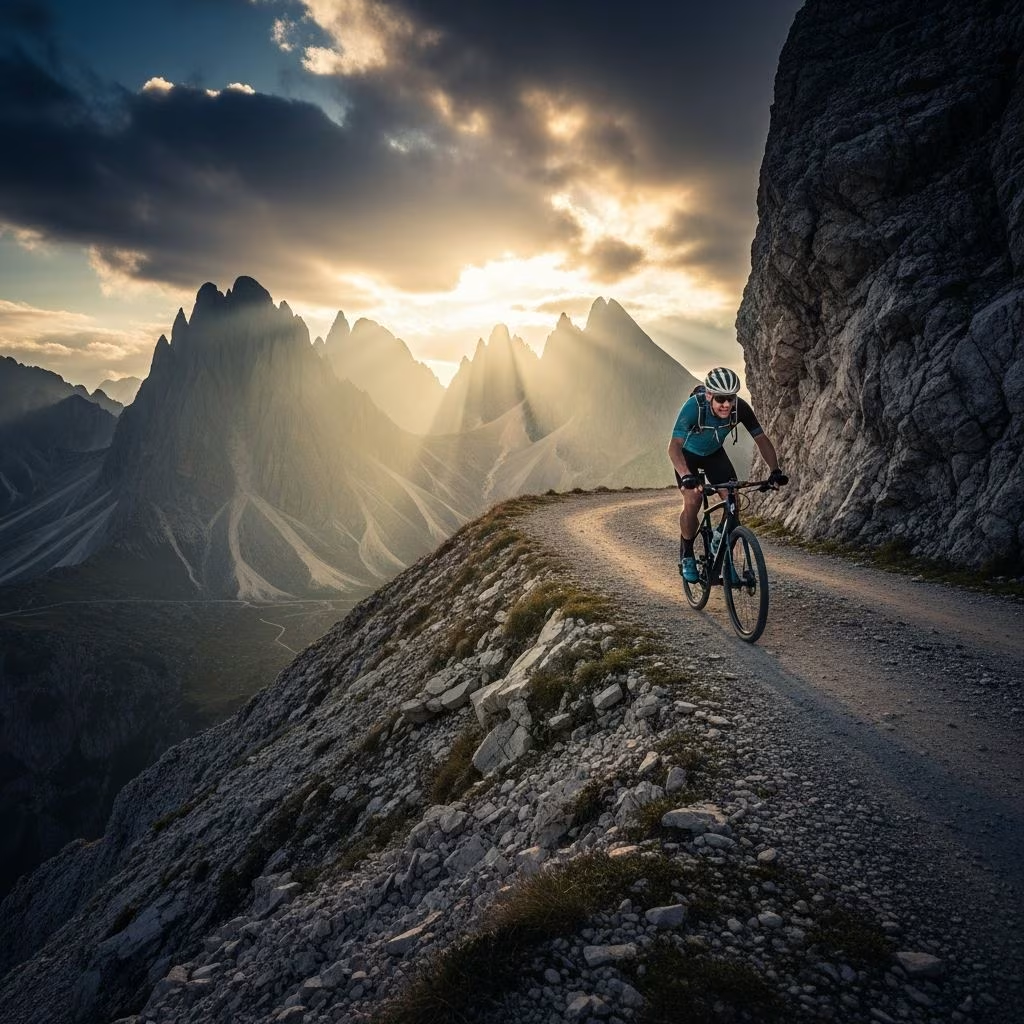
Explore the planet's toughest cycling climbs and descents, from Alpine hairpins to Andean death roads, testing endurance and skill like never before.
 Travel Essentials
Cycling enthusiasts often seek routes that blend physical torment with unparalleled natural beauty. These grueling paths, frequented by professional racers and amateur daredevils alike, demand peak fitness, mental fortitude, and specialized gear. From sky-high passes shrouded in mist to vertiginous drops along sheer cliffs, the following selections highlight routes that redefine endurance on two wheels.
The European mountains host some of cycling’s legendary ascents, where gradients bite deep and thin air tests the lungs. These climbs have etched their names into Grand Tour history, separating the elite from the pack.
Rising as the highest paved road in the Pyrenees, this French col spans 19 kilometers from the west with a relentless 1,404-meter elevation gain and 7.4% average gradient. Debuting in the Tour de France in 1910, it remains the most visited climb in the race’s annals, challenging riders with long, exposed stretches battered by wind.
In the Alps, this 13.8-kilometer beast features 21 numbered hairpin turns, each sapping energy as riders spiral upward. Its average gradient hovers around 8%, turning what looks like a scenic drive into a sufferfest immortalized in Tour de France lore.
Riders describe the psychological toll of counting down turns while legs scream in protest. The village at the top offers a triumphant beer, but the descent rewards only the brave.
Beyond Europe, South America’s rugged terrain and Hawaii’s volcanic giants present unique horrors, mixing altitude sickness with raw power.
Known locally as El Camino de la Muerte, this infamous 64-kilometer descent starts at 4,700 meters near La Paz and plummets to 1,200 meters amid cliffs and waterfalls. While organized tours thrill mountain bikers, the narrow path—littered with crash debris—claims far more vehicles than bikes annually.
| Section | Distance | Elevation Drop | Hazards |
|---|---|---|---|
| Upper Yungas | 20km | 3,500m | Cliffs, fog |
| Mid Descent | 30km | 1,000m | Waterfalls, rocks |
| Lower Road | 14km | 200m | Traffic, heat |
From sea level to 4,205 meters, Mauna Kea’s 42.5-mile haul tops global difficulty rankings with 2,300 meters of gain and final miles at 10.7% gradient amid thinning oxygen. Cyclists battle equatorial sun, headwinds, and altitude, often requiring support vehicles.
The summit observatory views justify the pain, but most turn back at the visitor center, 8.3 miles shy of glory at 10.4% average.
The Giro d’Italia and Vuelta a España showcase climbs that punish with steepness over length, creating explosive efforts.
This Italian icon climbs 15.1 miles with 5,900 feet of gain through 48 hairpins, peaking above 9,000 feet. High altitude compounds the 7.4% average gradient, making it a Giro staple where pros gasp for air.
Spain’s Vuelta king, this 12.5-kilometer grind averages 10.13%, with ramps hitting 23%. Mud and crowds add chaos, as seen in decisive Grand Tour stages.
Not all brutality comes in single climbs; some routes span days or defy norms with cobblestones and off-road ferocity.
This eight-day mountain bike odyssey covers 698 kilometers with 15,650 meters of climbing through karoo deserts and mountains. Annual route tweaks keep it fresh, demanding recovery as much as power.
At 10.5 kilometers with 11.5% average—and 15% on the finale—this Giro monster shreds pelotons. Narrow roads amplify the fear factor.
England’s Lake District hides a 2.3-kilometer pass with 33% gradients on crumbling Roman roads. Short but savage, it’s a granny-gear grinder.
Spain’s longest climb at 37 kilometers gains 2,100 meters through lunar landscapes at 5.5% average, taxing pacing over hours.
Tackling these requires more than legs. Build base miles, interval train gradients, and acclimate to altitude. Gear up with low gears (34×32 minimum), reinforced tires for gravel sections, and GPS for navigation.
| Climb | Avg Gradient | Elevation Gain | Pro Race Appearances |
|---|---|---|---|
| Col du Tourmalet | 7.4% | 1,404m | Tour de France (80+) |
| Mauna Kea | 5.5% | 2,300m | Informal challenges |
| Stelvio | 7.4% | 1,800m | Giro d’Italia |
| Angliru | 10.13% | 1,200m | Vuelta a España |
These routes traverse fragile ecosystems. Stick to trails, support local guides on Death Road, and respect closures like Stelvio’s winter shutdowns. Cycling boosts economies in remote areas, but leave no trace.
Factors include length, gradient, elevation, altitude, road surface, and weather. Metrics like PJAMM Difficulty Index weigh these holistically.
No, but structured training helps. Many complete these as multi-day efforts with e-bikes gaining popularity for accessibility.
June-September; avoid shoulder seasons for snow risk. South America: dry season May-October.
Guided tours strongly recommended due to traffic and drops.
Use altitude tents or hypoxic training; ascend gradually.
