

 Travel Essentials
 Travel Essentials

Explore Theodore Roosevelt National Park's three units: scenic drives, hikes, bison herds, and Roosevelt's legacy in this comprehensive visitor guide.
 Travel Essentials
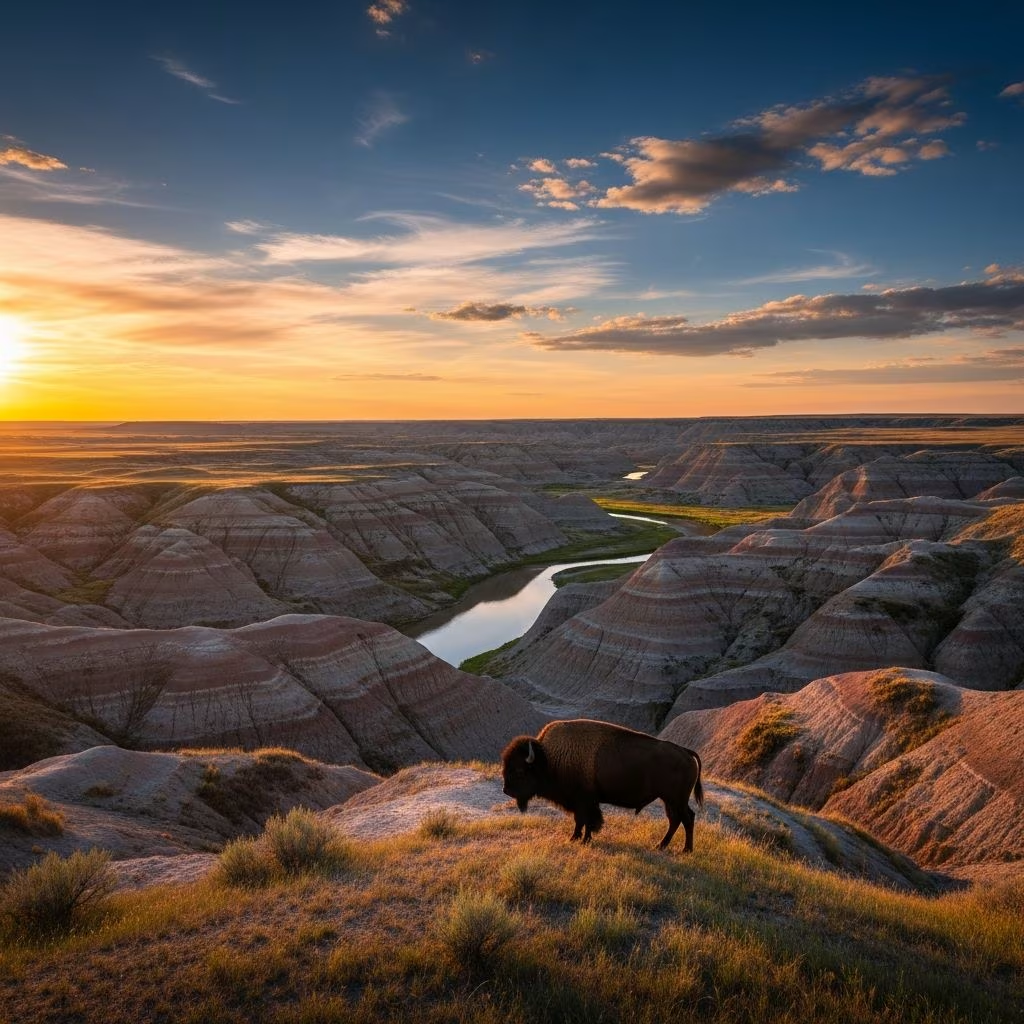
Hidden in the expansive prairies of western North Dakota, Theodore Roosevelt National Park preserves a dramatic landscape of layered badlands, winding rivers, and abundant wildlife that profoundly shaped the 26th U.S. President. Spanning 70,000 acres across three disconnected units, the park offers visitors a chance to trace Roosevelt’s footsteps while immersing in untamed American wilderness.
Theodore Roosevelt first arrived in the Dakota Territory in 1883 as a young politician seeking adventure after personal tragedy. He established two ranches here—the more famous Maltese Cross and the remote Elkhorn Ranch—experiencing the harsh realities of frontier life that fueled his lifelong passion for conservation. Today, the park honors this era with preserved sites amid colorful canyons carved by the Little Missouri River.
Established in 1947, the park divides into the accessible South Unit near Medora, the quieter North Unit, and the primitive Elkhorn Ranch Unit. Each offers distinct experiences: the South Unit buzzes with visitor facilities and loop roads, the North Unit delivers solitude and river vistas, and Elkhorn provides raw backcountry immersion. Note the time zone split—South Unit on Mountain Time, North on Central—which can surprise travelers.
The park’s fragmented layout requires strategic planning. The South and North Units are about 70 miles apart via scenic highways, taking 1-1.5 hours by car. Elkhorn demands high-clearance vehicles on rough roads. Entrance fees are $30 per vehicle for seven days, covering all units.
Open year-round, the park welcomes explorers anytime, though summer (June-August) brings peak crowds and heat (80-90°F), while winter offers snowy solitude with occasional road closures. Visitor centers operate seasonally: Painted Canyon (South) and North Unit centers provide maps, films, and exhibits from 8am-6pm in summer, shorter in off-seasons.
No lodges or restaurants inside; stock up in Medora for groceries, fuel, and dining. Primitive campgrounds like Cottonwood (South) and Roundup Group (North) stay open year-round with vault toilets but no hookups—first-come, first-served, $14/night. Pets allowed on leashes in developed areas but not trails.
| Season | Weather | Best For | Road Status |
|---|---|---|---|
| Summer | Warm, dry | Hiking, wildlife | Fully open |
| Fall | Cool, colorful | Foliage drives | Open |
| Winter | Cold, snowy | Snowshoeing | Possible closures |
| Spring | Mild, muddy | Birdwatching | Variable |
Scenic drives form the park’s backbone, perfect for all vehicles with frequent pullouts. In the South Unit, the 36-Mile Scenic Loop Drive circles badlands plateaus, prairie dog towns, and bison herds. Key stops include Wind Canyon Overlook for river views and Buckhorn Trail trailhead.
The North Unit’s 28-Mile Scenic Drive climbs from river bottoms to rimrock, culminating at Oxbow Overlook where the Little Missouri forms a dramatic U-bend—a geologic marvel with interpretive panels. Allow 2-3 hours per drive, binoculars essential for distant wildlife like pronghorn and wild horses.
Over 100 miles of trails range from wheelchair-accessible boardwalks to strenuous loops. Start easy in the South Unit with the Painted Canyon Nature Trail (0.8 miles), descending into striped canyons from the visitor center.
Intermediate options include the Wind Canyon Trail (1.5 miles roundtrip, South Unit) rewarding with panoramic vistas, or Cottonwood Trail (9 miles, North Unit) along the river amid cottonwoods. Challenge yourself with the Maah Daah Hey Trail segments, like the 11-mile Buck Hill Loop through ravines once used by ranchers.
In Elkhorn, hike to the ranch foundation (4 miles roundtrip) amid bird-filled draws. Always carry water (1 liter/hour), bear spray for rare grizzlies, and check for rattlesnakes in summer.
The park teems with 185 bird species, 36 mammals, and prairie ecosystems. Bison, America’s national mammal, roam freely—over 700 in the South Unit alone; maintain 100-yard distance from roadsides. Prairie dog towns buzz with activity; watch for burrowing owls and black-tailed dogs.
Other stars: feral horses galloping ridges, elk bugling in fall, bighorn sheep scaling cliffs, and coyotes hunting dawn/dusk. Prime viewing at dawn or dusk along loop roads; Riverbend Overlook (South) shines for sunsets framing herds. Birders tally ferruginous hawks, golden eagles, and wild turkeys.
Visit the Maltese Cross Cabin replica (South Unit), where Roosevelt lived in 1884—rangers lead tours sharing tales of his ranching days. The Peaceful Valley Ranch historic site offers ranger programs on pioneer life.
Elkhorn Ranch foundation evokes Roosevelt’s reflective solitude; he wrote, “Here in the lonely stretches I have learned the joy of nature.” Access requires gravel roads; combine with hiking for full immersion.
Five campgrounds provide shaded riverside spots: Cottonwood Campground (South, 50 sites), Juniper Campground (South, 13 sites), and North Unit’s 13-site option. Backcountry camping free with permit; dispersed sites abound off-trail.
Medora offers motels, dude ranches, and glamping. Evening entertainment includes the Medora Musical amphitheater show and steakhouses like Theodore’s Dining Room.
Enter South Unit via Painted Canyon, drive Scenic Loop, hike Wind Canyon, spot bison, exit to Medora for dinner.
Day 1: South Unit full exploration, camp or Medora stay. Day 2: Drive to North Unit for Oxbow Overlook and Caprock hike.
Add Elkhorn Ranch day trip, ranger programs, and stargazing—minimal light pollution yields Milky Way views.
Absolutely—underrated gem with fewer crowds than Yellowstone, epic wildlife, and Badlands drama.
Two days ideal for both main units; one day covers South Unit basics.
$30/vehicle (7 days), $25/motorcycle, $15/foot; America the Beautiful pass accepted.
Yes, leashed in parking lots/roads, not trails or buildings.
Year-round, best dawn/dusk along drives; rut in July-August.
Follow Leave No Trace: pack out waste, stay on trails to protect fragile soils, report invasive species. Support via donations or volunteering. This park’s wild spirit endures, inviting all to connect with Roosevelt’s conservation ethos.
