

 Travel Essentials
 Travel Essentials

Explore Graz, Austria's second-largest city, featuring historic landmarks, contemporary art venues, and culinary delights in this comprehensive travel guide.
 Travel Essentials
Nestled in the heart of southeastern Austria, Graz stands as the nation’s second-largest city and serves as the capital of Styria, a region rich in history and cultural significance. This charming destination has earned recognition as a UNESCO World Heritage Site for both its historic old town and architectural landmarks. Whether you’re drawn to centuries-old fortifications, cutting-edge contemporary art installations, or authentic local gastronomy, Graz presents an extraordinary tapestry of experiences for the discerning traveler.
Graz occupies a unique position within Austria, serving not merely as a secondary urban center but as a vibrant cultural hub with distinct character. The city’s location in Styria provides access to rolling green hills, forested landscapes, and rural heritage sites that complement the urban experience. This combination of metropolitan amenities and proximity to natural regions makes Graz an ideal base for both city exploration and regional excursions.
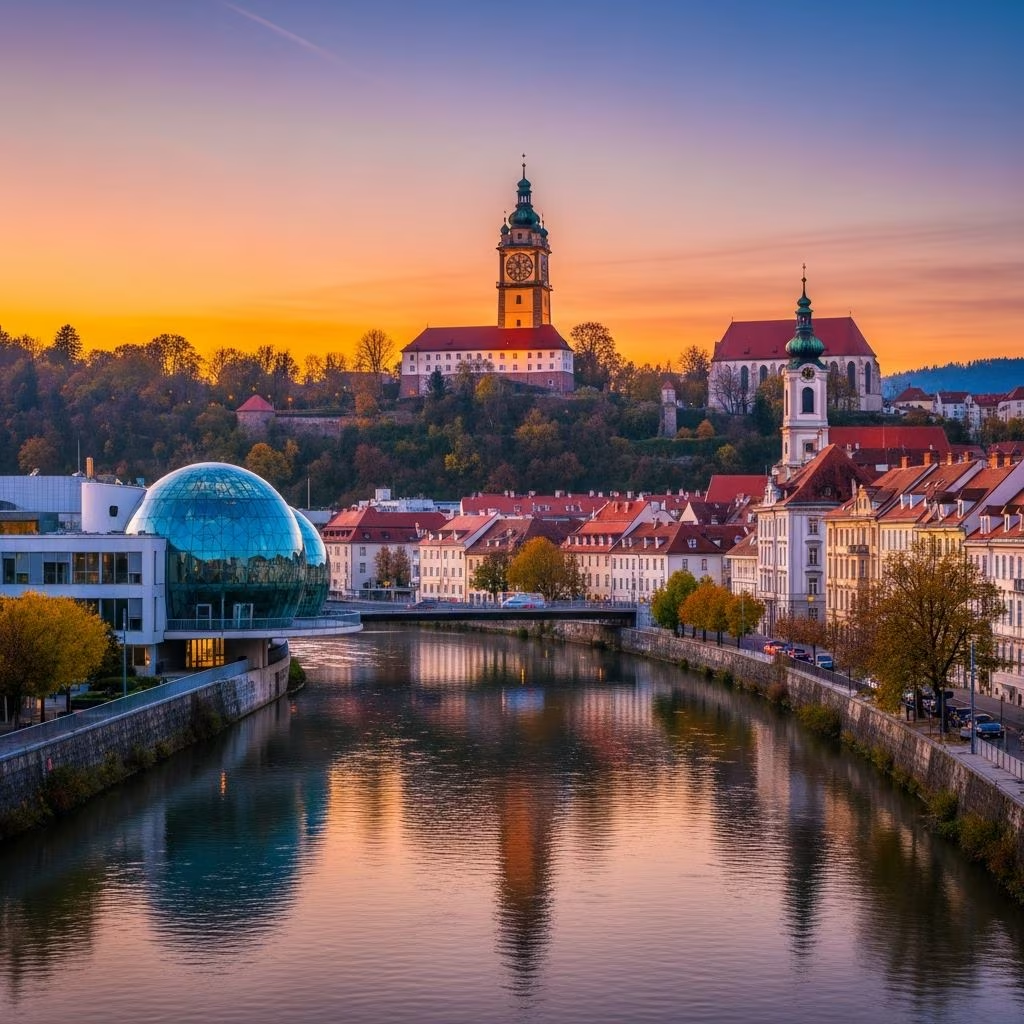
Rising prominently above the city’s charming streets, the Schlossberg (castle hill) represents one of Graz’s most recognizable features. This elevated fortress remnant crowned by the distinctive Uhrturm (clock tower) offers visitors multiple pathways to reach its summit. Those preferring gentle ascension can utilize the funicular railway or modern elevator system, while more adventurous visitors enjoy climbing the stone steps that wind through the hillside. Upon reaching the top, visitors encounter sweeping panoramic views of the surrounding cityscape and countryside, complemented by meticulously maintained gardens featuring vibrant rose displays.
The clock tower itself deserves particular attention from architecture enthusiasts. Dating to the 15th century, this iconic structure exhibits an unusual characteristic: its minute hand measures shorter than its hour hand. During the Napoleonic era, when military forces threatened to dismantle the tower alongside other fortifications, the residents of Graz famously raised substantial ransom funds to preserve this beloved landmark. This historical act of community dedication underscores the tower’s emotional significance to local inhabitants.
For those seeking unconventional descent, the Schlossberg Rutsche provides Europe’s longest indoor slide, allowing visitors to glide through the hillside’s interior back toward ground level.
The historic city center, designated as Altstadt, preserves remarkable examples of medieval and Renaissance architectural heritage. This pedestrian-friendly zone features narrow lanes bordered by ornately decorated buildings that reflect centuries of construction and renovation. The facades throughout this district display intricate details, arched entryways, and period-appropriate renovations that maintain historical authenticity while accommodating contemporary use.
The Burg, serving as the official headquarters of the regional government, contains one of the city’s most remarkable architectural features: the Doppelwendeltreppe, or double spiral staircase. This 1499-era stone masterpiece earned the poetic designation “staircase of reconciliation” due to its ingenious design wherein two opposing staircases briefly merge, diverge, and then rejoin on each floor. This architectural puzzle represents a testament to Renaissance engineering principles and artistic vision.
Several religious and governmental structures anchor Graz’s cultural landscape. The Graz Cathedral stands as a significant spiritual center, its architecture reflecting various historical periods of construction and modification. Adjacent to the cathedral lies the Mausoleum of Emperor Ferdinand II, a baroque-era monument demonstrating the city’s historical connections to imperial governance. These adjacent structures create a contemplative spiritual zone at the heart of the old town.
The Rathaus (town hall) dominates one side of the main square, its façade exemplifying civic pride and architectural ambition. This building frequently serves as a focal point for seasonal celebrations and public gatherings.
Hauptplatz functions as the throbbing heart of Graz’s social and commercial activities. Ringed by the city’s most impressive historical structures, this central square serves multiple purposes throughout the year. During daylight hours, it bustles with street food vendors offering both traditional Austrian wurst and international cuisine options. Visitors can purchase their selections and settle onto benches to observe the constant flow of local residents and tourists navigating the plaza.
The fountain at the square’s center, dedicated to Archduke Johann, provides a focal point for gathering and orientation. During the winter season, this location transforms into a festive Christmas market, attracting regional shoppers and holiday celebrants.
Near the central plaza stands an architectural curiosity: the Musical Clock at Glockenspiel Platz Square. This mechanical marvel performs daily at 11 AM, 3 PM, and 6 PM, as two statues emerge from the clock face to dance in synchronized movement to melodies produced by a 24-bell carillon. This charming daily performance connects modern visitors to traditions of mechanical artistry that predate electronic timekeeping.
Schloss Eggenberg represents the pinnacle of 17th-century aristocratic architecture and stands as a UNESCO World Heritage Site component. This sprawling palace complex was constructed as an ostentatious demonstration of political authority and dynastic power. The state rooms flow sequentially, each space more elaborate than the previous, with magnificent ceiling paintings commanding attention throughout.
Beyond the palace interior, extensive grounds encompass formal gardens, archaeological museums, and galleries dedicated to historical paintings. This comprehensive complex requires several hours for thorough exploration, making it an essential destination for those interested in baroque aesthetics and aristocratic lifestyle.
Kunsthaus Graz, colloquially known as “The Friendly Alien,” represents a dramatic stylistic departure from the city’s historical architecture. Constructed in 2003 when Graz received designation as the European Capital of Culture, this futuristic structure features an undulating glass facade and houses rotating exhibitions of modern and contemporary art. The exterior transforms dramatically at night when LCD screens illuminate the building’s surface, creating a striking visual contrast to the ancient fortifications nearby.
The Murinsel (island in the Mur) stands as a remarkable contemporary engineering achievement. This glass and steel floating platform sits within the center of the Mur River, accessible via bridges extending from both riverbanks. Originally designed for development in New York’s Hudson River, this structure ultimately found its home in Graz as another product of the city’s cultural capital designation.
The multi-level interior accommodates a café for casual refreshment, seasonal outdoor theater performances, and designated children’s play areas. The upper viewing platform provides privileged perspectives of the old town’s skyline with Schlossberg as a dramatic backdrop, particularly impressive when illuminated after sunset.
Graz has emerged as a significant gastronomic destination within Austria, earning recognition for its distinctive regional cuisine and innovative culinary approaches. The city’s food culture emphasizes locally-sourced ingredients from surrounding agricultural regions, particularly products from Styrian farms and specialty producers.
Beyond formal restaurant dining, the street food culture at Hauptplatz and surrounding markets provides accessible entry points to authentic local flavors. Traditional wurst preparations, fresh baked goods from historic bakeries, and prepared vegetables from regional farmers constitute the everyday sustenance of Graz residents.
The countryside surrounding Graz offers compelling excursions for those interested in agricultural traditions and rural heritage. The Stud Farm at Piber Castle represents a notable destination within this regional context, providing opportunities to observe equestrian husbandry practices and classical horse training methods.
Multiple institutions throughout Graz house significant art collections and historical artifacts. The Universalmuseum Joanneum Pass provides visitors access to numerous venues simultaneously, representing economical value for those planning comprehensive museum visits. Facilities showcase 19th-century and modern paintings, including works by prominent artists such as Egon Schiele and Gustav Klimt.
Throughout the calendar year, Graz hosts various festivals, markets, and cultural celebrations. The December Christmas Market transforms Hauptplatz into a festive gathering space featuring regional handicrafts, seasonal foods, and holiday beverages. These temporary installations activate public spaces and create opportunities for community engagement beyond typical tourist activities.
| Transportation Method | Primary Uses | Accessibility Features |
|---|---|---|
| Walking | Exploring old town, navigating between attractions | Pedestrian zones, though some steps present challenges |
| Funicular | Ascending Schlossberg | Accommodates mobility-limited visitors |
| Elevator | Reaching hilltop gardens and clock tower | Wheelchair accessible |
| Public Transportation | Traveling to outlying attractions | Accessible stations and vehicles available |
Late spring through early autumn offers pleasant weather for exploring the city on foot. However, December brings festive holiday markets, while winter provides a quieter atmosphere for those preferring fewer crowds.
A minimum of two to three days allows for exploration of major attractions, including hilltop sites, old town wandering, and at least one museum visit. Extended stays enable deeper cultural engagement and regional excursions.
While many outdoor sites require no reservations, larger museums such as Schloss Eggenberg may benefit from advance planning, particularly during peak season months.
Street food markets at Hauptplatz provide affordable sustenance. Traditional bakeries offer inexpensive pastries and bread products from centuries-old establishments.
While historic old towns inevitably include challenging terrain, Graz provides elevator and funicular alternatives to stair climbing. Many indoor venues maintain accessible facilities.
Successful visits to Graz benefit from balanced itineraries incorporating both structured attractions and spontaneous wandering. The compact scale of the historic center permits efficient coverage, while generous spacing between major sites provides opportunities for sidewalk café pauses and unplanned discoveries. Whether prioritizing architectural heritage, contemporary art, or regional cuisine, Graz accommodates diverse travel priorities within an accessible, manageable geographic area.
