

 Travel Essentials
 Travel Essentials

How Thomas Cook’s collapse triggered mass repatriation, reshaped travel deals, and revealed the risks of debt, disruption, and outdated strategy.
 Travel Essentials
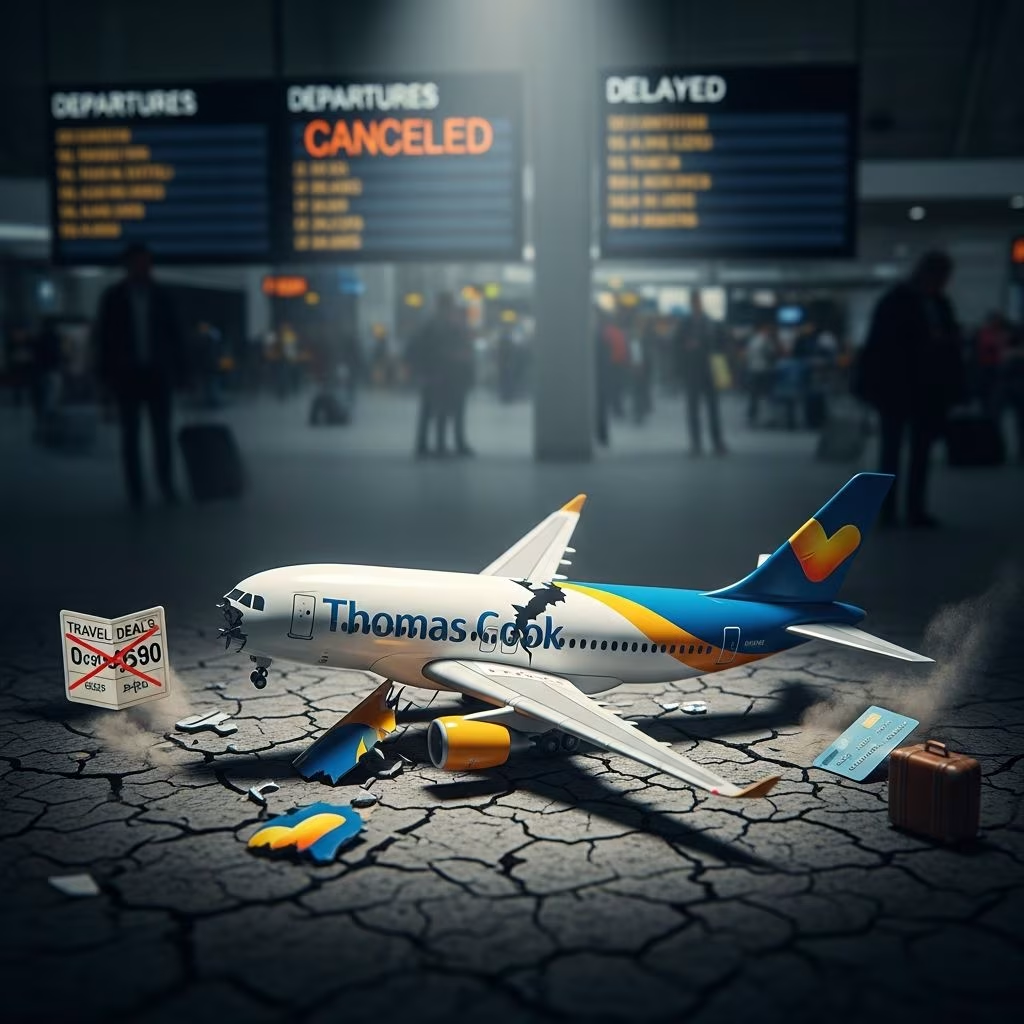
The sudden liquidation of Thomas Cook in September 2019 marked the end of a 178-year legacy in travel, leaving 600,000 customers worldwide in limbo and 21,000 employees jobless. This event not only disrupted holidays but ignited a surge in competitive travel deals as rivals snapped up market share.
Thomas Cook’s downfall stemmed from chronic financial strain, exacerbated by the 2007 merger with MyTravel Group, which burdened the company with £1.1 billion in debt—a figure it struggled to manage since a near-collapse in 2011. Ill-timed expansions and failure to adapt to digital disruption compounded issues, as online platforms offered cheaper, customizable alternatives.
External pressures like rising fuel costs, Brexit uncertainties, and aggressive price wars from competitors such as TUI and Jet2 eroded profitability. The company’s integrated model—spanning airlines, hotels, and retail—proved vulnerable when creditors demanded an extra £200 million in winter funding, derailing last-minute rescue talks on September 21, 2019. Aviation expert John Strickland noted these efforts were “too little too late.”
The UK Civil Aviation Authority (CAA) declared Thomas Cook ceased trading on September 23, 2019, launching Operation Matterhorn—the largest repatriation since World War II. Over 135,000 British holidaymakers were flown home via 100 aircraft over two weeks.
Helplines buzzed: UK/Ireland callers reached 0300-303-2800, overseas +44-1753-330-330. Claims required ATOL docs and payment proofs.
ATOL and ABTA schemes shielded most package bookings, ensuring repatriation and refunds. However, solo flight bookings exposed vulnerabilities, with some travelers footing alternative travel bills. The scale overwhelmed systems, delaying refunds for months.
| Booking Type | Protection Scheme | Outcome |
|---|---|---|
| Package Holiday (Flight + Hotel) | ATOL/ABTA | Full refund + free return flight |
| Flight Only | Travel Insurance/Credit Card | Reimbursement claims, potential out-of-pocket costs |
| Non-UK Customers | Local Regulations | Varies; self-arrange in some cases |
Post-collapse, rivals hiked prices temporarily due to demand spikes, but competition soon restored affordability.
21,000 staff faced redundancy, but Hays Travel emerged as a winner, acquiring 555 Thomas Cook stores for £6 million. By late November 2019, 450 reopened, rehiring 2,330 workers and planning 1,500 more, boosting its workforce to 5,700. This consolidation highlighted high street travel’s resilience.
The vacuum propelled bargains. TUI, Jet2, and On the Beach slashed prices on Mediterranean and Canary Islands packages. Hays Travel offered 20-30% discounts on former Thomas Cook routes. Online disruptors like Booking.com and Expedia gained traction with dynamic pricing.
Travelers scored deals like £199 all-inclusives to Spain, down from £300 pre-collapse averages.
Analyzing via Porter’s model reveals threats: high rivalry from TUI/Jet2, buyer power via online comparisons, supplier leverage on fuel, new entrants like Airbnb, and substitutes in independent travel. Thomas Cook’s outdated package model ignored these.
SWOT underscores weaknesses: heavy debt, rigid structure; threats from digital natives and economic woes.
Thomas Cook ignored low-end budget airlines (Ryanair) and high-end specialists, failing to pivot. Brexit and Eurozone fears deterred bookings, while fuel hikes squeezed margins. The collapse warned incumbents: embrace agility, cut debt, modernize.
Post-2019, protections strengthened, but savvy travelers diversify:
Rivals now offer flexible packages blending high street trust with app tech.
Debt from mergers, failure to secure £200M funding, digital disruption, and external shocks like Brexit.
ATOL packages: yes, full refunds/returns. Flight-only: via insurance.
Submit ATOL certificate and payment proof to CAA.
Hays Travel acquired stores cheaply, rehiring staff. Deals proliferated.
Yes, with enhanced regulations, but independents must verify protections.
The Thomas Cook saga underscores resilience: protections worked, deals emerged, and adaptation rules. In 2026, hybrid models dominate—book smart, stay protected.
