

 Travel Essentials
 Travel Essentials

Explore Tiananmen Square's rich history from imperial gates to modern monuments, key events, and practical visitor advice for an unforgettable Beijing experience.
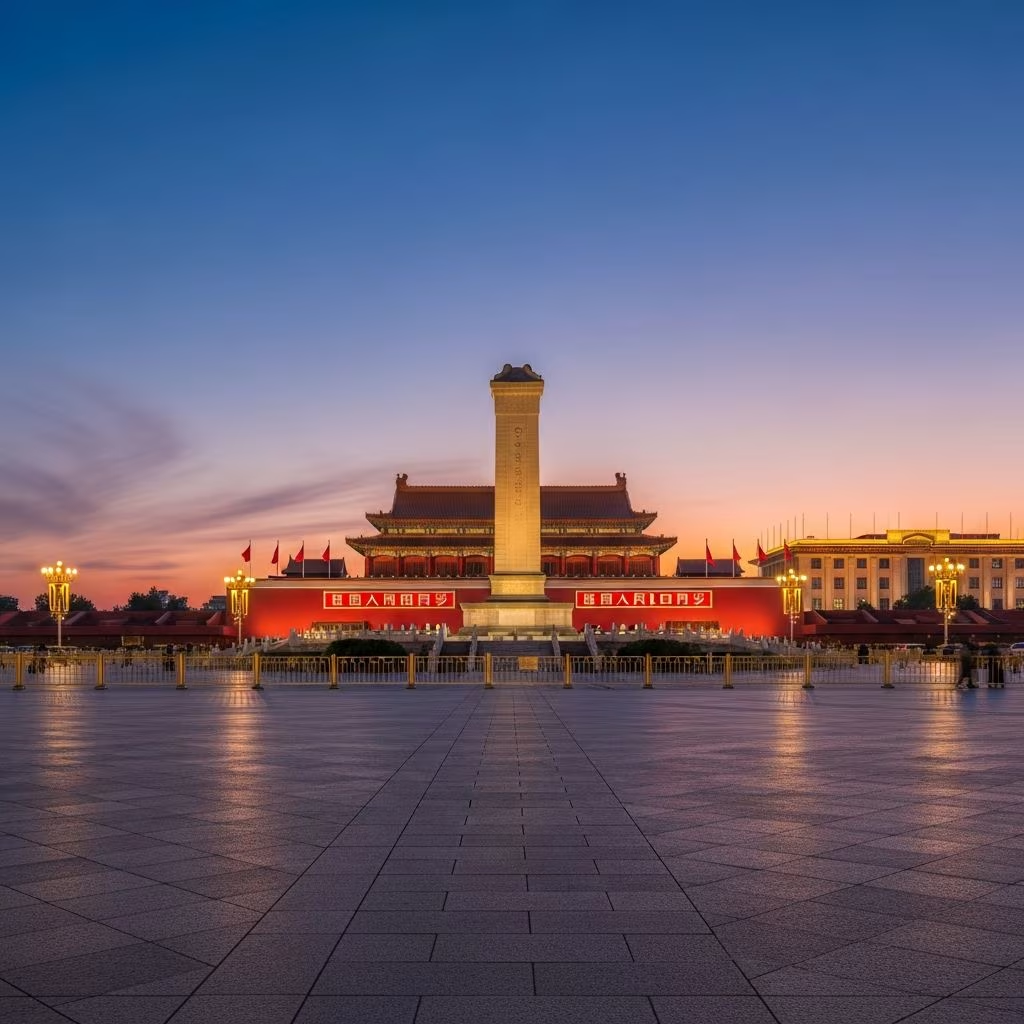 Travel Essentials
The vast expanse of **Tiananmen Square** stands as Beijing’s pulsating core, blending ancient imperial legacy with revolutionary fervor. Spanning 100 acres (40.5 hectares), it ranks among the world’s largest public squares, drawing millions to witness its monumental architecture and storied past.
Tiananmen Square’s story begins in the Ming Dynasty. The iconic Tiananmen Gate, meaning “Gate of Heavenly Peace,” was first erected in 1417 as the grand southern entrance to the Forbidden City, the imperial palace complex. This double-tiered structure, topped with yellow-glazed tiles symbolizing imperial authority, served as a platform for proclaiming edicts to gathered officials and crowds during key ceremonies like coronations and celestial worship.
Initially a confined space enclosed by railings for elite access, the area evolved amid turmoil. Invading forces, including British troops in 1860 during the Second Opium War and rebels in the 1900 Boxer Rebellion, trampled its grounds. The modern square took shape in 1651 but remained modest until Mao Zedong’s era. Post-1949, it expanded fourfold, paved with numbered flagstones for parade precision, cementing its role as a stage for national spectacles.
Tiananmen Square’s periphery hosts architectural marvels reflecting China’s ideological shifts. At the northern edge, the towering Tiananmen Gate looms with Mao Zedong’s massive portrait, evoking the 1949 proclamation of the People’s Republic of China.
In 2024, the square and its axis earned UNESCO World Heritage status, underscoring its cultural axis from Yongle Emperor’s designs.
Beyond monuments, Tiananmen embodies China’s turbulent path. Mao’s October 1, 1949, speech from the gate birthed the People’s Republic, igniting communist transformation. The May Fourth Movement of 1919 saw intellectuals rally here against imperialism, sparking modern Chinese thought.
The 1989 pro-democracy protests culminated in tragedy on June 3-4, when troops cleared demonstrators, resulting in significant casualties amid calls for reform. The next day’s “Tank Man” image—a solitary figure halting tank columns—became a global emblem of defiance. These events highlight the square’s dual role as unity symbol and protest arena.
| Year | Event | Significance |
|---|---|---|
| 1417 | Tiananmen Gate built | Imperial entrance to Forbidden City |
| 1651 | Square initial layout | Early public space formation |
| 1949 | PRC proclamation | Mao founds modern China |
| 1958 | Expansion & monuments | Fourfold size increase |
| 1989 | Protests & crackdown | Iconic global incident |
| 2024 | UNESCO listing | Heritage recognition |
Accessing Tiananmen demands preparation amid security. Enter via metro Line 1 at Tiananmen East/West stations or Line 2 at Qianmen. Open 5am-10pm daily, but expect closures for events.
Security screenings mirror airports: no liquids, sharp objects, or drones. Passports mandatory for foreigners; queues peak mornings for Mao Hall (8-12am Tue-Sun, free but ticketed). Dress modestly; photography restricted near portraits.
Avoid July-August heat; winter smog can obscure views. Download translation apps for signage.
Positioned centrally, Tiananmen anchors multi-day explorations. Day 1: Square to Forbidden City (world’s largest palace, 720,000 sqm). Day 2: West to Great Hall exhibits; east to museum’s artifacts like Terracotta replicas.
Nearby: Hutongs for contrast, Temple of Heaven south. Evening: Wangfujing snacks. Guided tours (100-200 RMB) decode history; audio guides free via WeChat.
Tiananmen transcends tourism, symbolizing resilience. Imperial railings yielded to open forums, mirroring societal shifts. Mao-era builds embody collectivism; 1989 scars remind of censorship persistence.
Today, parades and holidays fill it, flag-raising ceremonies at dawn drawing crowds. Respect protocols: no protests, orderly lines. It reflects China’s blend of tradition and modernity.
Yes, the square itself is free; specific halls like Mao Memorial require free tickets issued same-day.
Student-led pro-democracy protests escalated, leading to military intervention on June 4.
Directly adjacent; buy combo tickets online to skip lines.
Yes, via apps, official audio, or licensed tours.
Generally yes, but restricted at Mao portrait and memorial queues.
UNESCO status mandates conservation, balancing tourism with integrity. Visit responsibly: no littering, follow paths. This plaza, from Ming gates to Mao’s vision, encapsulates 600 years of drama, inviting reflection on power and people.
