

Food & Culture Stays Travel Essentials Travel Guides Trip Ideas
Categories
From the Blog
Remy’s Ratatouille Adventure at EPCOT: Ride Review, Tips & 2D Update
Travel Essentials

Tibetan Buddhist Monasteries: Top Gompas to Visit

An in-depth guide to the most significant Tibetan Buddhist monasteries, their history, architecture, rituals, and essential travel tips for respectful visits.
Travel Essentials

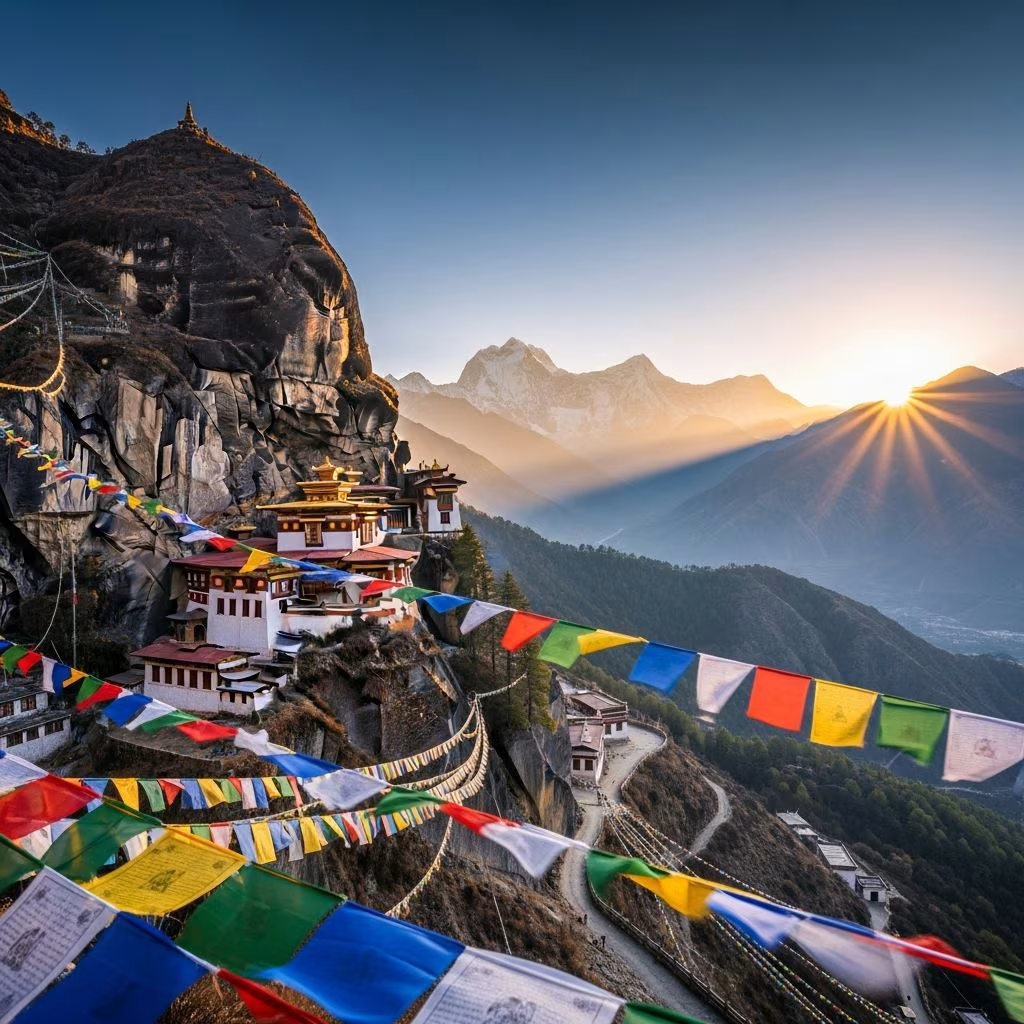
Tibetan Buddhist monasteries, known as gompas, stand as profound centers of spiritual practice, architectural brilliance, and cultural preservation. These sacred complexes house monks and nuns dedicated to meditation, study, and rituals that have shaped Himalayan traditions for centuries. From the bustling halls of Lhasa to remote mountain retreats, they offer travelers a glimpse into the enduring legacy of Tibetan Buddhism.

The Spiritual Foundations of Gompas

Monasteries in Tibetan Buddhism serve multiple roles: they are places of worship, educational institutions, and community hubs. Established primarily during the 11th to 17th centuries, they align with major sects like Gelug, Sakya, Kagyu, and Nyingma. The Gelugpa, or ‘Yellow Hat’ sect, dominates with grand institutions emphasizing philosophical debate and monastic discipline.

These sites often feature multi-tiered structures perched on hillsides, symbolizing the path to enlightenment. Intricate murals depict deities, mandalas, and historical narratives, while golden statues of Buddha and bodhisattvas dominate assembly halls. Pilgrims engage in kora—clockwise circumambulations around the perimeter—spinning prayer wheels to accumulate merit.

Iconic Monasteries in Central Tibet

Central Tibet, particularly around Lhasa, hosts the most revered gompas, drawing thousands of devotees annually.

  • Jokhang Temple: The holiest site in Tibetan Buddhism, built in the 7th century by King Songtsen Gampo. It enshrines the Jowo Shakyamuni statue, believed to be a life-sized image of the historical Buddha. The surrounding Barkhor Street buzzes with prostrating pilgrims.
  • Potala Palace: Though a former Dalai Lama residence, its chapels and shrines function as a vast monastery. Rising 13 stories with over 1,000 rooms, it exemplifies Tibetan fortress-like architecture.
  • Sera Monastery: Founded in 1419, 5 km north of Lhasa, it’s renowned for afternoon monk debates. Monks gesture emphatically while testing philosophical knowledge, a tradition unique to Gelugpa shedra (monastic universities).
  • Drepung Monastery: Once the world’s largest, with 10,000 monks at its peak. Its Tagtse College focuses on deep sutra studies, featuring vast assembly halls and serene meditation caves.
  • Ganden Monastery: The ancestral seat of the Gelugpa sect, established by Tsongkhapa in 1409. Perched at 4,300 meters, its kora path offers panoramic views and spiritual reflection.

Major Sites Beyond Lhasa

Venturing outside the capital reveals equally compelling gompas tied to regional histories.

MonasteryLocationKey FeatureSect
TashilhunpoShigatseSeat of Panchen Lamas; massive Maitreya statueGelug
Sakya MonasterySakya CountyGrey soil hillside; principal Sakya sect hubSakya
Palcho MonasteryGyantseMulti-sect chapels; towering kumbum stupaMixed

Tashilhunpo, founded in the 15th century, spans 150,000 square meters and houses the world’s largest gilded Buddha image. Sakya, built in 1073 amid grey earth hills, preserves rare Sakya scriptures and murals.

Monasteries in Exile and Neighboring Regions

Tibetan Buddhism extends beyond political borders, with thriving gompas in India, Nepal, and Bhutan.

  • Tawang Monastery: In Arunachal Pradesh, India, the second-largest after Potala. At 3,000 meters, its three-story Dukhang hall features a 7.6-meter golden Buddha. Visit during Losar (Tibetan New Year) for vibrant festivals.
  • Labrang Monastery: In China’s Gansu province, a Gelugpa powerhouse with a 3 km prayer wheel circuit. Accessible without Tibet permits, it’s ideal for dawn pilgrim chants.
  • Thiksey and Hemis: In Ladakh, India. Thiksey mirrors Potala in miniature, while Hemis hosts dramatic summer festivals with masked dances.
  • Namdroling Golden Temple: Karnataka, India, home to thousands of exiled monks, boasting enormous golden Buddhas.
  • Kopan Monastery: Near Kathmandu, Nepal, popular for Western meditation retreats.

These diaspora sites maintain lineages like Kagyu (Tsurphu, seat of Karmapa) and Sakya (Ngor, Shalu).

Architectural Marvels and Artistic Treasures

Gompas blend fortification with sanctity: thick walls withstand harsh climates, while interiors dazzle with thanka paintings, butter sculptures, and chörtens (stupas). Assembly halls (dukhang) host rituals, and protector chapels guard against malevolent forces. Unique to Tibet are tsatsas—clay prayer molds pressed by pilgrims—and sky burials near select sites, though discreet.

Many feature kumbums, multi-tiered pagodas like Palcho’s 9-story version with 108 chapels, each a microcosm of Buddhist cosmology.

Essential Etiquette for Mindful Visits

Respect is paramount in these living sanctuaries. Dress modestly (long pants, shoulders covered), remove hats, and walk clockwise during kora paths. Avoid pointing or photographing without permission, especially during debates or pujas (rituals). Offer khata (white silk scarves) to monks, and donate small amounts to butter lamps.

Best times: Early mornings for chants, afternoons for Sera debates. Altitude acclimatization is crucial—Lhasa sits at 3,650 meters. Permits required for Tibet proper; join guided tours for access.

Planning Your Monastery Journey

A 10-14 day itinerary might include: Days 1-4 in Lhasa (Potala, Jokhang, Sera, Drepung); Days 5-7 to Shigatse (Tashilhunpo) and Sakya; optional Ganden trek. For India/Nepal extensions, allocate time for Tawang or Kopan retreats.

Travel tips: Hire local guides for context; stay hydrated; participate in vegetarian feasts during festivals.

Frequently Asked Questions

What should I wear to a Tibetan monastery?

Opt for modest clothing: long sleeves, pants or skirts below knees. Shoes off in temples.

Are cameras allowed?

Often yes in outer areas, but no-flash in inner sanctums; ask first, tip for photos of monks.

Can women enter all areas?

Most yes, but some protector chapels restrict; nuns’ quarters usually off-limits.

Best season to visit?

May-October for mild weather; festivals like Losar (Feb-Mar) or Saga Dawa (May-Jun).

Do I need a guide?

Mandatory in Tibet; recommended elsewhere for cultural insights.

Preserving These Sacred Spaces

Climate change, tourism, and political sensitivities challenge gompas. Support via ethical travel: avoid single-use plastics, respect ‘no photo’ zones, and choose operators funding restorations. These efforts ensure future generations witness the timeless chants echoing through Himalayan valleys.

References

  1. Top 10 Most Important Monasteries in Tibet — Tibet Discovery. 2023. https://www.tibetdiscovery.com/travel-guide/monasteries-in-tibet/
  2. Top Monasteries to Explore in Tibet — Best Heritage Tour. 2024. https://www.bestheritagetour.com/blog/top-monasteries-to-explore-in-tibet
  3. Tibetan Buddhist Monasteries Around the World — Mandalas Life. 2023. https://mandalas.life/list/tibetan-buddhist-monasteries-around-the-world/
  4. The Ultimate Guide to Tibetan Buddhist Monasteries — Lonely Planet. 2023-04-15. https://www.lonelyplanet.com/articles/guide-to-tibetan-buddhist-monasteries
  5. How to Visit a Tibetan Monastery — Tibet Travel Org. 2024. https://www.tibettravel.org/tibet-travel-advice/how-to-visit-tibetan-monastery.html
ME
medha deb
Medha Deb is an editor with…

Medha Deb is an editor with a master's degree in Applied Linguistics from the University of Hyderabad. She believes that her qualification has helped her develop a deep understanding of language and its application in various contexts. Medha specializes in the areas of beauty, health, sports, and wellness and is committed to ensuring that the content on the website is of the highest quality.Medha's passion for writing and editing began early in life when she joined a book writer's club with her mother. It was there that she discovered her love for the written word and the power it holds to inform, inspire, and transform lives. Since then, she has honed her skills as a writer and editor, working with a variety of clients and publications to produce compelling and informative content. Currently, she writes and edits for CultureTreker.She is also an ardent animal lover and dedicates her time and resources to the foster care of neonatal kittens, providing them with the love and attention they need to thrive. Her commitment to animal welfare is a testament to her compassion and empathy, and it underscores her belief in the importance of caring for the most vulnerable members of our society.

← Previous
Best Day Trips from Almaty: Lakes, Canyons & Mountain Escapes
‹›
