

 Travel Essentials
 Travel Essentials

Discover Tierra del Fuego National Park's pristine sub-Antarctic landscapes, diverse ecosystems, and unforgettable outdoor adventures at the end of the world.
 Travel Essentials
At the southernmost reaches of Argentina lies one of the world’s most extraordinary natural destinations—Tierra del Fuego National Park. Established in 1960, this protected wilderness encompasses vast territories of untouched sub-Antarctic landscape, making it a pinnacle destination for travelers seeking authentic wilderness experiences. The park represents a convergence of ecosystems rarely found elsewhere, where towering mountain ranges blend seamlessly with coastal marine environments and dense ancient forests. This article explores the comprehensive experience of visiting this remarkable destination.
Tierra del Fuego National Park spans approximately 63,000 hectares and is distinguished as Argentina’s first shoreline national park. Located just 12 kilometers west of Ushuaia, the southernmost city in Argentina, the park stretches 60 kilometers north from the Beagle Channel along the Chilean border. The park serves as a remarkable ecological crossroads, representing the only Argentine national park that combines marine, forest, and mountain environments within a single protected area.
The park encompasses two primary ecoregions: the Altos Andes and the Patagonian Forest. These distinct ecological zones create a mosaic of habitats that support extraordinary biodiversity. The western boundary aligns with the Chilean border, while the northern border meets Lago Fagnano, and the southern boundary touches the Beagle Channel, which serves as the marine shoreline. This geographic positioning at the terminus of the Pan-American Highway makes it one of South America’s most accessible remote wilderness areas.
The park’s name “Tierra del Fuego” translates to “Land of Fire” in Spanish, a designation originating from Portuguese explorer Ferdinand Magellan in 1520. As Magellan navigated the waters around the southern tip of South America, he observed fires burning around the peninsula, ignited by indigenous inhabitants who used them for warmth and signaling during the region’s brutal winters.
The region’s history runs deeper than European contact, however. The park’s territory was inhabited for thousands of years by the Yámana and Ona (Selk’nam) indigenous peoples. Today, the park protects archaeological vestiges that document the life and culture of these communities, making it not solely a natural preserve but also a repository of indigenous heritage.
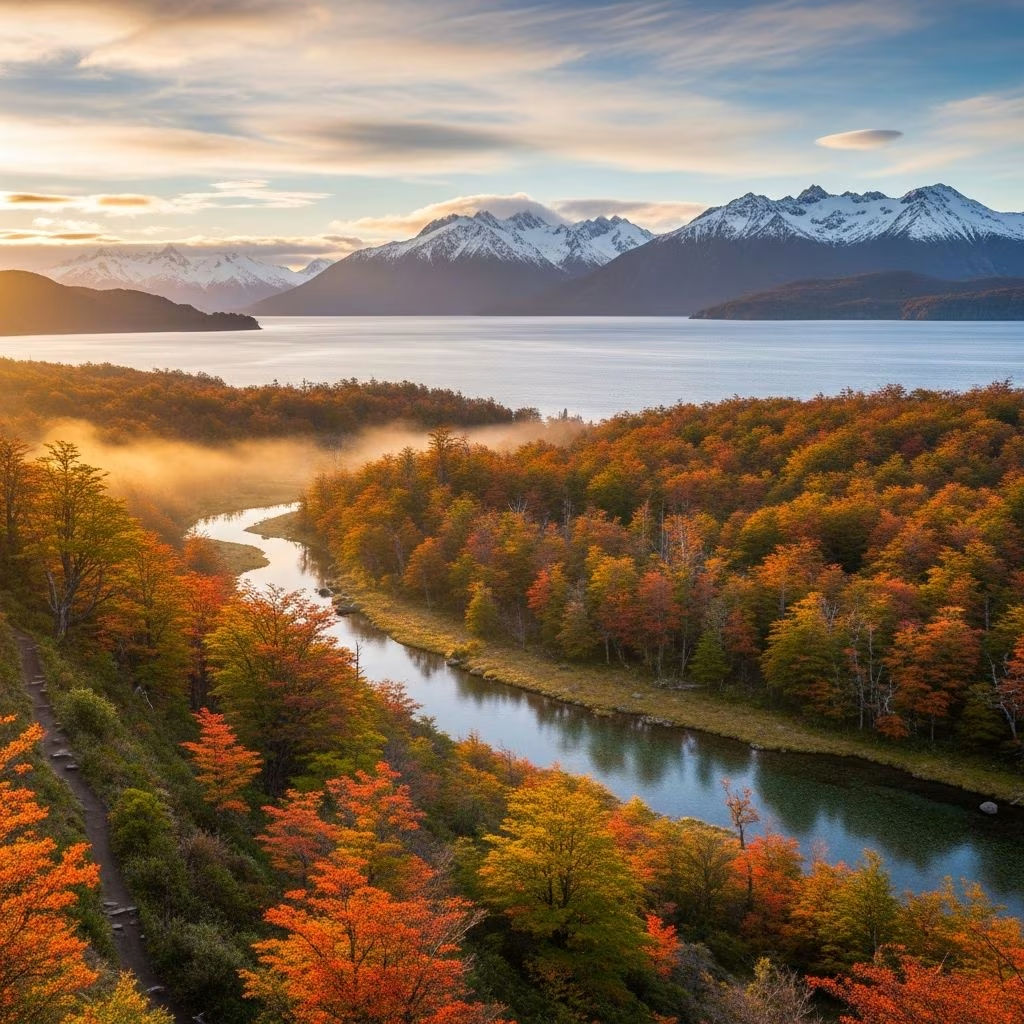
The park functions as a living repository of sub-Antarctic biodiversity. The magnificent forests are dominated by lenga and guindos trees, complemented by ñire forests and cherry species typical of the sub-Antarctic region. The landscape also features extensive peat bogs that extend across significant portions of the park, contributing to its distinctive character.
The botanical diversity transforms dramatically with the seasons. During spring and summer, the park evolves into a canvas of vibrant colors with blooming species including yellow flowers and notro, whose vibrant red tones create striking contrasts against the deep green forest backdrop.
Wildlife observation opportunities abound throughout the park. Visitors frequently encounter emblematic species such as the Fuegian red fox and an impressive variety of birds adapted to the sub-Antarctic climate. The park’s coastline functions as a critical habitat for marine mammals, including sea lions and occasionally dolphins. Rivers throughout the park, particularly those framed by towering mountain ranges, support populations of otters, beavers (an invasive species in the region), and diverse waterfowl.
The park offers multifaceted opportunities for both active adventurers and those seeking serene natural immersion.
Several well-marked hiking trails accommodate varying fitness levels and time constraints:
Lapataia Bay represents one of the park’s premier attractions, offering a breathtaking coastal inlet where the Andes Mountains meet the sea. Scenic trails and wooden walkways meander through grasses and forests, showcasing pristine and largely untouched natural beauty. This location holds particular symbolic significance as it marks the terminus of Route 3—the final stretch of the Pan-American Highway, which spans 30,000 miles across 14 countries from Prudhoe Bay, Alaska, to this remote southern endpoint.
The park’s landscapes and rich biodiversity provide endless opportunities for photography enthusiasts. From expansive panoramic vistas to intimate close-ups of flora and fauna, virtually every corner offers compelling visual opportunities. Birdwatching enthusiasts particularly appreciate the park’s diverse avian population, making binoculars an essential accessory.
Multiple transportation options facilitate access to this remote destination. The park can be reached by car or train from Ushuaia. National Road 3 provides direct vehicular access, with the park located 11 kilometers west of the city. The Southern Fuegian Railway, commonly called the “End of the World Train,” offers an alternative scenic journey through the landscape.
For travelers seeking unique experiences, the park features the southernmost post office in South America, where visitors can have their passports stamped—a memorable souvenir of reaching the continent’s southern terminus.
Visitors should prepare for the sub-Antarctic climate characterized by variable weather patterns. The region experiences relatively mild summers compared to more northern Antarctic regions, yet temperatures remain cool year-round. The purest air one can breathe characterizes the atmospheric quality, contributing to the park’s appeal for those seeking clean air and pristine natural conditions.
Established under Law 15.554 and expanded in 1966, the park holds designation as an IUCN category II protected area. This classification reflects its status as a national park managed for ecosystem protection and public enjoyment. Additionally, the park functions as a UNESCO Biosphere Reserve, acknowledging its global ecological significance.
Beyond its obvious appeal as a tourist destination, Tierra del Fuego National Park serves crucial conservation functions. The protected wilderness preserves irreplaceable ecosystems, maintains habitat for endangered species, and protects archaeological and cultural resources. The park demonstrates Argentina’s commitment to environmental stewardship at the continental scale, protecting landscapes that represent millions of years of evolutionary history.
For travelers, the park offers transformative experiences that transcend typical tourism. Standing at the intersection of three ecosystems—mountains, forests, and marine environments—visitors encounter nature in its most pristine and powerful expression. The experience of hiking trails along the Beagle Channel or ascending mountain summits provides visceral connection to landscapes largely unchanged by human activity.
Travelers should allocate minimum 4-6 hours for a basic park exploration, though multi-day visits reveal far greater depth. The park’s accessibility from Ushuaia makes it feasible as a day trip or the centerpiece of extended Patagonian adventures. Visitors should pack layered clothing suitable for variable sub-Antarctic conditions and bring adequate water and snacks, as services within the park remain limited.
December through February represents the austral summer, offering the most favorable weather conditions and longest daylight hours. However, spring and fall provide additional advantages through fewer crowds and spectacular floral displays.
Half-day visits accommodate basic trail exploration, while full-day visits allow comprehensive experience of multiple trails and attractions. Multi-day stays enable deeper immersion and higher-altitude hiking opportunities.
Several trails accommodate families with varying fitness levels. The Coastal Trail and Hito XXIV Trail offer moderate difficulty suitable for families, while Cerro Guanaco challenges more experienced hikers.
Common sightings include Fuegian red foxes, diverse bird species, marine mammals along coastal areas, and various native flora. Marine mammals such as sea lions and occasional dolphins inhabit coastal regions.
Yes, though winter months (June-August) present challenging weather conditions with shorter daylight and colder temperatures. Most facilities and services operate primarily during summer and shoulder seasons.
