

 Travel Essentials
 Travel Essentials

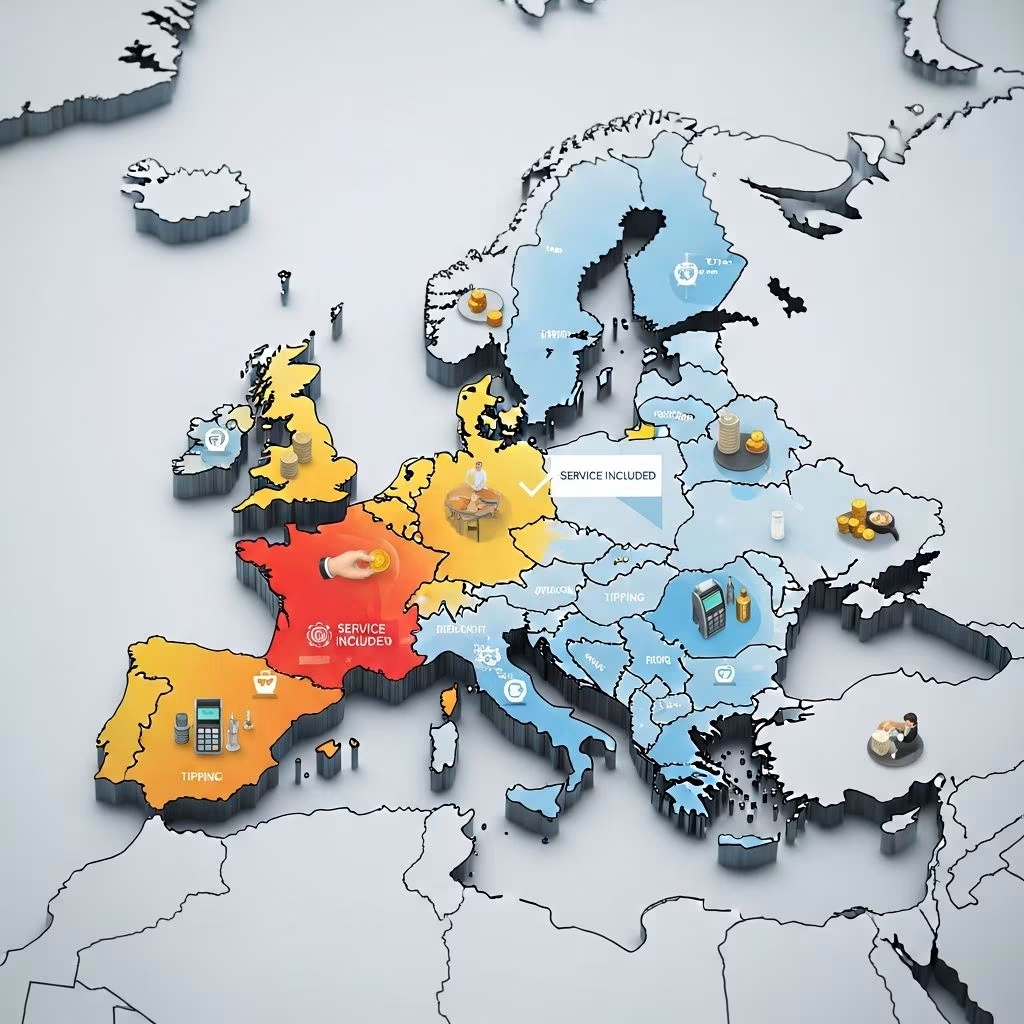
Discover how tipping customs vary significantly across European countries, from mandatory service charges to optional gratuities based on local culture.
 Travel Essentials
When traveling throughout Europe, understanding local gratuity expectations represents one of the most important cultural knowledge areas for visitors. Unlike North America, where tipping carries mandatory social expectations, European nations maintain diverse approaches shaped by labor laws, service industry wages, and historical customs. This comprehensive guide examines how gratuity practices vary across distinct European regions, helping travelers navigate these nuances with cultural sensitivity and practical confidence.
The foundation of European tipping philosophy differs markedly from American customs. Across most European nations, hospitality workers receive living wages mandated by employment law, meaning gratuities function as recognition for exceptional service rather than income replacement. Service charges are typically incorporated into menu prices and bill totals, eliminating the necessity for patrons to calculate percentages mentally before payment.
This structural difference reflects broader economic and labor policy distinctions. European countries have historically legislated minimum wage standards that provide adequate living compensation without relying on customer generosity. Consequently, tipping remains optional and discretionary, appearing only when service quality genuinely exceeds baseline expectations.
Germany and Austria exemplify Western European tipping culture where gratuities hold moderate customary significance. In these nations, leaving between 5% and 10% represents standard practice for sit-down restaurant experiences, though many locals exercise the option to round up bills to the nearest euro without additional percentage calculations. The German term “Trinkgeld” (drinking money) reflects historical origins, though modern application typically applies to all service contexts.
France maintains a distinctive position within this region. Menu bills frequently display “Service Compris,” explicitly confirming that service charges are already included. French diners traditionally demonstrate minimal tipping inclination, with bar purchases rarely receiving gratuities. When tipping occurs at French establishments, amounts rarely exceed 10%, and many patrons choose not to tip at all.
Spain presents another interesting case where tipping lacks regulatory mandate or consistent expectation. While some establishments and servers may anticipate 10% gratuities for meals, no legal requirement or widespread cultural obligation exists. Spanish patrons frequently leave no additional payment beyond the bill total, treating tipping as entirely discretionary.
Italy requires navigation of specific terminology and payment structures. When service charges appear on Italian bills, they display as “servizio”. Separate from servizio, bills may include “coperto” (cover charge), which goes toward restaurant operations rather than server compensation. If no servizio appears, leaving 10% to 15% represents customary practice. However, patrons should recognize that coperto charges do not substitute for server gratuities.
Greece approaches tipping more conservatively, with 5% representing appropriate gratuity for high-end dining establishments and 10% suitable for more casual restaurants. This graduated approach reflects price-point differentiation, where diners at premium venues leave proportionally smaller percentages than those at budget-conscious establishments.
Central and Eastern European nations demonstrate stronger tipping inclinations compared to Western counterparts. Croatia expects 10% to 15% gratuities at restaurants, while Czech Republic establishes 15% as customary. Estonia maintains lower expectations at 5% to 8%. These regional variations reflect economic conditions, service industry compensation structures, and cultural traditions where tipping retains greater social significance.
Romania implements a unique regulatory framework where tips must appear on bills and face taxation as of January 2023. Amounts typically range from 1 to 5 RON or 10% of the bill, with card payments often supplemented by cash tips left separately. This formalized approach contrasts with less regulated Western European practices.
Scandinavian and Northern European countries maintain the continent’s most restrictive tipping cultures. Denmark establishes through law that service charges must be included in all displayed prices, rendering tipping entirely optional and not expected even for exceptional service. This legal mandate reflects broader Nordic labor philosophy prioritizing comprehensive wage compensation.
The Netherlands similarly prohibits service charge additions without explicit customer consent, as all service costs are incorporated into listed prices. Tipping remains legal but purely voluntary, with no social expectation for patrons to add gratuities. Iceland and Scandinavian nations collectively discourage tipping practices, treating them as unnecessary given statutory wage protections.
Taxi tipping across Europe follows straightforward but geographically varied conventions. Most Continental taxi drivers do not expect gratuities, though rounding fares to convenient amounts represents accepted practice. Modern card payment systems increasingly accompany taxi services, yet drivers remain unambitious regarding tip solicitation.
Significant exceptions exist in France, Russia, and Switzerland, where taxi drivers commonly anticipate 10% to 15% tips upon ride completion. Scandinavia and Iceland contrast sharply by discouraging even rounding-up practices, as wage structures eliminate driver reliance on gratuity income.
Hotel staff, tour guides, and professional drivers operate under separate gratuity frameworks across European nations. These specialized service providers typically receive tips independently from restaurant experiences, with 10% to 20% representing customary amounts in Central and Eastern European countries and Italy. Western European nations generally consider a few euros or modest percentage appropriate for hotel housekeeping, concierge assistance, and tour facilitation.
Tour guides and professional drivers benefit from clearer tipping expectations than restaurant servers, as these individuals frequently receive direct compensation requests or pre-established gratuity norms. Travelers should budget separately for these services when booking organized excursions.
European tipping practices reflect underlying labor legislation more than cultural preferences alone. The United Kingdom exemplifies this principle, where service charges may appear on bills for large parties (typically six or more diners), with 12.5% representing a commonly reported amount. Legal requirements mandate that any mandatory charges display clearly before ordering, preventing surprise additions.
Germany’s controversial “Tip is not included” notices appearing on some tourist-oriented restaurant bills intentionally mislead patrons. These establishments falsely suggest that prices exclude service charges when German law mandates inclusion in all displayed menu prices. Knowledgeable travelers should disregard such deceptive notices and maintain standard tipping practices.
Throughout Europe, tipping serves primarily as recognition for service exceeding baseline expectations. Exceptional attentiveness, problem-solving, special accommodations, or memorable interactions warrant gratuities, while routine competent service requires no additional payment. This distinction fundamentally separates European from American customs, where baseline tipping occurs regardless of service quality.
| Region/Country | Restaurant Gratuity | Taxi Service | Hotel Staff |
|---|---|---|---|
| Germany/Austria | 5-10% or round up | Round up | Few euros |
| France | 0-10% (optional) | 10-15% | Few euros |
| Spain | Discretionary | Round up | Few euros |
| Italy | 10-15% (if no servizio) | Round up | Few euros |
| Greece | 5-10% | Round up | Few euros |
| Central/Eastern Europe | 10-15% | Varies | 10% |
| Scandinavia | Optional/rare | Not expected | Optional |
Cash payments remain the standard for European tipping, particularly when leaving coins or supplementary amounts beyond bill totals. Many establishments accept card gratuities, though servers may receive payment delays or accounting complications with non-cash tips. When paying by card, patrons typically hand cards to servers who process transactions, allowing customers to add tip amounts during this exchange.
Currency considerations matter when traveling across European nations using both Euro and non-Euro currencies. Travelers should maintain local change for tipping purposes, avoiding scenarios where excessive gratuities result from currency confusion.
Tipping remains discretionary throughout most European nations. No country mandates customer gratuities, though some establishments include automatic service charges on bills for large parties. Patrons may refuse automatic charges if they dispute service quality.
Examine bill language carefully—terms like “Service Compris,” “servizio,” or “Service Charge Included” confirm that gratuities are incorporated. No additional tipping obligation exists when service charges appear unless you wish to reward exceptional service.
While some tourist-oriented establishments may harbor higher tipping expectations, local customs remain consistent. Following standard regional practices demonstrates cultural respect and avoids overpaying.
European travelers should prioritize paying restaurant bills before considering gratuities. Modest tips or rounding up represent acceptable alternatives to percentage-based amounts. Service workers understand that not all patrons can afford discretionary additions.
Counter service and takeout situations rarely warrant gratuities across Europe, as these formats involve minimal personalized service. Rounding up at casual establishments remains acceptable but not expected.
Understanding and respecting local tipping customs demonstrates cultural awareness and appreciation for service industry workers. Rather than applying American tipping standards universally, travelers should embrace regional variations as legitimate alternative approaches reflecting different labor philosophies and economic structures.
Service workers across Europe appreciate visitors who make genuine efforts to understand local expectations, even when execution proves imperfect. Excessive tipping may create awkward situations for staff unaccustomed to American-style gratuities, while respectfully following local norms builds positive cross-cultural interactions.
Before departing for European destinations, travelers should research specific country tipping practices relevant to their planned activities. Budgeting separately for anticipated gratuities, particularly for specialized services like tours and hotels, prevents financial surprises.
Carrying appropriate local currency in small denominations facilitates casual tipping situations where card payments prove impractical. Installing translation apps or downloading offline guides helps navigate bill language when service charge inclusion remains unclear.
Communicating with accommodation providers or tour operators about standard tipping practices offers personalized context specific to individual travel itineraries. This proactive approach transforms potential confusion into confident, culturally-aware service interactions.
