


 Food & Culture
Food & Culture
Tirana Travel Guide: History, Culture, Food & Nightlife
Tirana evolves from Ottoman markets to Hoxha's bunkers and colorful rebirth, offering history buffs and nightlife seekers a dynamic destination.
 Food & Culture
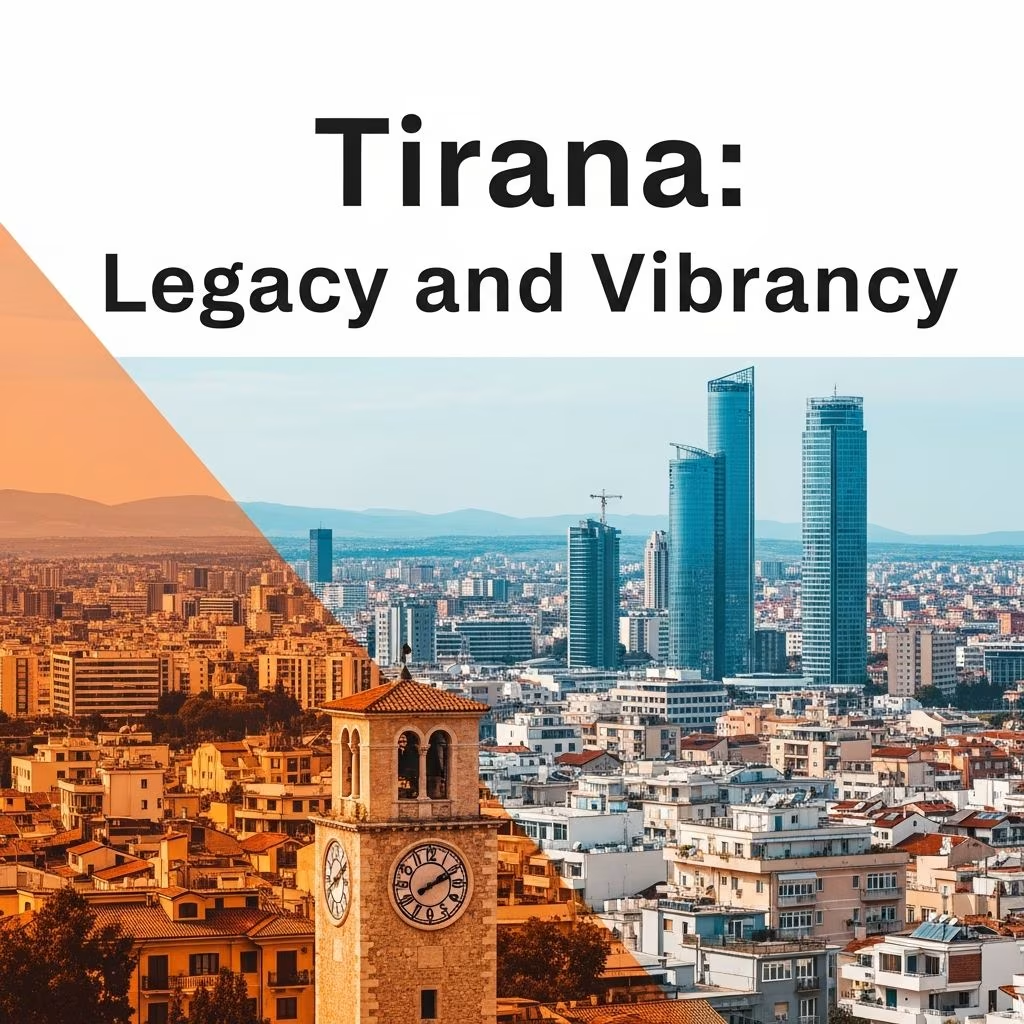
Tirana, Albania’s bustling capital, stands as a testament to resilience, weaving together millennia of cultural layers with a bold contemporary spirit. From prehistoric Illyrian tribes to the stark remnants of a repressive regime, the city has reinvented itself into a hub of creativity and indulgence.
Ancient Foundations: Illyrians to Romans
The story of Tirana begins long before its official founding in 1614. The region was home to Illyrian tribes, fierce warriors who dominated the western Balkans. Roman conquest in the 2nd century BC transformed the area into part of Illyricum province, bringing roads, fortifications, and trade.
By the 6th century, Byzantine Emperor Justinian I ordered the construction of a fortress in central Tirana, laying stones that still whisper of imperial ambition. This site, now known as Tirana Castle, anchors the old town’s charm amid trendy cafes. Ottoman expansion in the 15th century integrated Albania into a vast empire, fostering bazaars and mosques that shaped the city’s early skyline.
Ottoman Era and Path to Independence
Under Ottoman rule for nearly five centuries, Tirana emerged as a key crossroads for caravans linking ports like Durrës. Markets buzzed with merchants trading spices, textiles, and silks, while Sufi orders built tekkes—spiritual lodges—that dotted the landscape.
The 19th-century Albanian National Awakening sparked resistance, culminating in independence in 1912. Tirana was named capital in 1920, a nod to its central location. King Zog I’s brief monarchy modernized infrastructure but ended with Italian invasion in 1939, ushering in World War II chaos[10].
The Shadow of Communism: Hoxha’s Iron Grip
Post-WWII, Enver Hoxha’s regime plunged Albania into isolationist paranoia. Ruling from 1944 to 1985, Hoxha built over 170,000 bunkers to guard against imagined invasions, dotting the landscape like concrete mushrooms. Tirana’s Pyramid, erected in 1988 as a museum to his ‘thoughts,’ epitomized this cult of personality—a 21-meter concrete behemoth now repurposed.
Architecture reflected subjugation: Soviet-style blocks prioritized function over form, erasing Islamic symbols in a quest for atheistic modernity. Blloku neighborhood, once exclusive to elite party members, symbolized privilege amid widespread poverty. Hoxha’s Vila 31, a lavish modernist villa with Italian marble and Western luxuries, starkly contrasted public austerity.
| Era | Key Feature | Modern Status |
|---|---|---|
| Communist (1944-1991) | Pyramid as Hoxha museum | Tech-cultural hub |
| Communist | Blloku gated elite zone | Trendy nightlife district |
| Communist | Bunkers everywhere | Art installations, cafes |
Post-Communist Rebirth: Color and Renewal
Communism’s 1991 collapse unleashed turmoil, but recovery came swiftly. Mayor Edi Rama (later Prime Minister) launched a 2000s revitalization, painting drab facades in vivid hues—pinks, greens, yellows—to inject joy and reclaim public space. This ‘color revolution’ turned gray monotony into a psychedelic canvas, boosting tourism and morale.
The Pyramid’s fate sparked debate: demolish for a convention center or preserve as heritage? Community activists won, transforming it into a maze of slides, galleries, and co-working spaces—a symbol of defiance. House of Leaves, a former secret police HQ, now chronicles surveillance horrors with eerie artifacts.
Blloku: From Forbidden Enclave to Party Central
South of Skanderbeg Square, Blloku pulses with reinvention. Once barred to ordinary Albanians, its villas now host farm-to-table eateries, craft cocktail bars, and boutiques. Hoxha’s residence, Vila 31, operates as an art explora, showcasing Hoxha-era opulence alongside contemporary exhibits.
- Try Era Restaurant for seasonal Albanian fusion.
- Sip negronis at Folie Terrace overlooking lanterns.
- Browse indie fashion in restored communist flats.
This district exemplifies Tirana’s hedonistic pivot: history reframed for pleasure.
Central Landmarks: Echoes of the Past
Skanderbeg Square honors the 15th-century hero who battled Ottomans, flanked by the Et’hem Bey Mosque—a rare Ottoman survivor with delicate frescoes. Nearby, the Clock Tower chimes since 1822, while Resurrection Cathedral’s golden domes gleam post-1990s reconstruction.
Tirana Castle blends ruins with cafes; climb for panoramic views. The New Bazaar revives Ottoman markets with street food stalls hawking byrek and qofte.
Culinary Scene: Farm-Fresh to Fusion
Tirana’s food mirrors its evolution. Traditional taverns serve tavë kosi—lamb yogurt bake—while Blloku innovates with organic spots using local produce. Mullixhiu leads fine dining; Oda offers rustic vibes.
Craft beer brews at Përbindja, and raki flows freely. Vegan and gluten-free options abound, reflecting global influences.
Nightlife and Arts: Unrestrained Energy
Sunset ushers in revelry. Radio Bar thumps with DJs; Bunker 55 converts a Hoxha relic into a club. Street art festivals paint narratives of freedom.
Performances at Tirana Live fuse folk with electronica. Festivals like Kala draw crowds for indie sounds amid castle walls.
Practical Tips for Visitors
- Getting Around: Walk Blloku; taxis or BRT buses for outskirts. Rent e-bikes.
- Best Time: Spring/fall for mild weather, fewer crowds.
- Stay: Boutique hotels in Blloku; hostels near Pyramid.
- Budget: Meals €5-15; beers €2-4.
FAQs
Is Tirana safe for solo travelers?
Yes, low crime; vibrant but use caution at night.
How long to spend in Tirana?
3-5 days for sites, food, day trips to Durrës.
What’s the Pyramid now?
Interactive cultural center with events.
Vegetarian-friendly?
Abundant options in modern eateries.
Visa needed?
Many nationalities visa-free 90 days.
Why Tirana Captivates
Tirana defies expectations: raw, colorful, hospitable. It confronts dark history head-on while embracing excess—perfect for those seeking depth beyond beaches. Plan your visit to this phoenix city rising anew.
References
- History and hedonism in Tirana — Lonely Planet. 2023. https://www.lonelyplanet.com/articles/history-and-hedonism-in-tirana
- Fragments of Old Tirana — Intrepid Times. 2026-02. https://intrepidtimes.com/2026/02/fragments-of-old-tirana/
- Tirana Overcomes Tyranny — 43BlueDoors. 2024-05-27. https://43bluedoors.com/2024/05/27/tirana-albania/
- How a haunted dictator’s house became Albania’s unlikeliest art — Plaster Magazine. 2024. https://plastermagazine.com/features/albania-art-explora-travel/
- Inorganic City: A Living Autopsy of Tirana — Full Stop. 2025-03-27. https://www.full-stop.net/2025/03/27/features/barbarahalla/inorganic-city-a-living-autopsy-of-tirana/
- A walk through the history of Tirana — Oak Hall Expeditions. 2019-02-08. https://oakhallexpeditions.wordpress.com/2019/02/08/a-walk-through-the-history-of-tirana/
- Revolutionary hedonism in Tirana — The Times. 2024. https://www.thetimes.com/travel/destinations/uk-travel/england/london-travel/revolutionary-hedonism-in-tirana-wq99mksq6dp
On This Page
Ancient Foundations: Illyrians to Romans Ottoman Era and Path to Independence The Shadow of Communism: Hoxha's Iron Grip Post-Communist Rebirth: Color and Renewal Blloku: From Forbidden Enclave to Party Central Central Landmarks: Echoes of the Past Culinary Scene: Farm-Fresh to Fusion Nightlife and Arts: Unrestrained Energy Practical Tips for Visitors FAQs Why Tirana Captivates← Previous
Top Things to Do in Vilnius, Lithuania
Next →
Primorska Wine Region: Slovenia’s Western Winelands Guide
Related Reading
More in Food & Culture
Food & Culture Food & Culture
 Food & Culture
Best Places to Eat in Rome: Neighborhood Dining Guide
 Food & Culture
 Food & Culture