

 Travel Essentials
 Travel Essentials

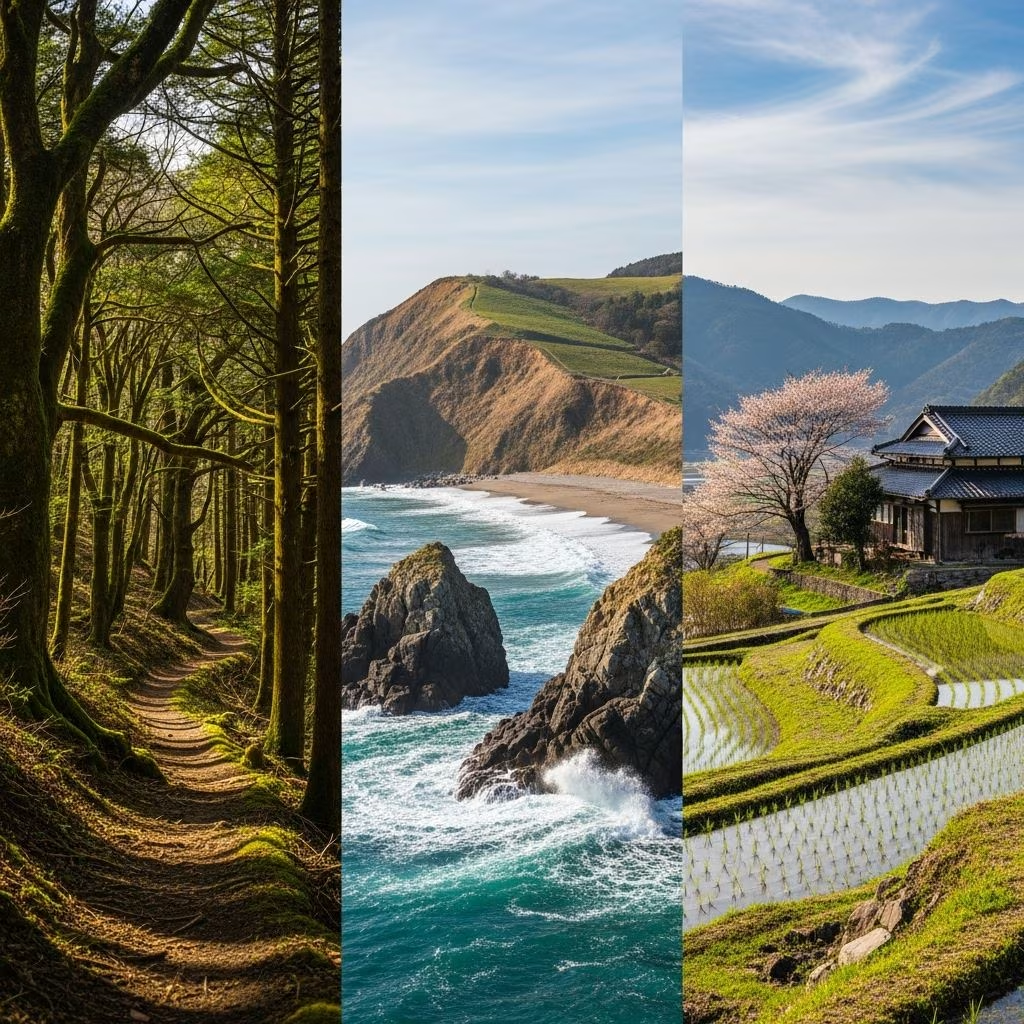
Explore the Michinoku Coastal Trail in Tohoku, Japan, blending forested paths, dramatic cliffs, beaches, and community revival post-2011 disaster.
 Travel Essentials
The Tohoku region in northeastern Japan offers a hiking paradise where misty forests meet dramatic seaside landscapes. The **Michinoku Coastal Trail**, stretching over 1,000 kilometers along the Pacific coast, invites adventurers to traverse beaches, cliffs, and woodlands while witnessing local resilience.
Established by Japan’s Ministry of the Environment, the Michinoku Coastal Trail connects Hachinohe in Aomori Prefecture to Soma in Fukushima, promoting recovery after the 2011 Great East Japan Earthquake and tsunami. This long-distance path highlights the interplay of forests, rivers, villages, and sea, fostering appreciation for nature’s bounty and human perseverance.
Spanning Aomori, Iwate, Miyagi, and Fukushima prefectures, the trail embodies Tohoku’s rugged Sanriku Coast, known for its rias coastline—deeply indented bays formed by tectonic forces. Hikers encounter dynamic ocean views, from sheer cliffs to abundant fishing grounds, the world’s third largest.
The full trail demands 40-60 days, but modular sections suit various schedules and fitness levels. Northern starts at Kabushima Shrine in Hachinohe feature seabird colonies (March-August), fishing ports, shrines, beaches, and forests with gentle ascents ending at Tanesashi Natural Lawn.
Self-guided options like Walk Japan’s Michinoku Coastal Wayfarer provide maps, sea-view lodgings, and seafood meals.
Tohoku’s hikes extend beyond coasts into primeval forests. Shirakami-Sanchi, a UNESCO site, preserves beech woodlands home to Mount hawk-eagles, black woodpeckers, and Asiatic black bears. Trails lead to Anmon Falls, Juniko Lakes, and Dairakyo Gorge, ideal for all levels.
Oirase Stream offers romantic gorge walks with 18 waterfalls like ‘Lifelong Partnership’ and ‘White Silk,’ amid autumn foliage. Hachimantai’s trails reveal red foxes, golden eagles, and Japanese serow in volcanic landscapes.
| Forest Trail | Highlights | Difficulty | Best Season |
|---|---|---|---|
| Shirakami-Sanchi | Beech forests, waterfalls, wildlife | Moderate | Spring/Summer |
| Oirase Stream | 18 waterfalls, streams | Easy | Autumn |
| Hachimantai | Volcanic woods, rare animals | Beginner-Advanced | Summer |
The trail’s coastal drama shines on Sanriku’s peaks and valleys. ‘Alps of the Sea’ sections involve ladders, hand-carved tunnels, and wildlife like antelopes, squirrels, hares, and occasional black bears. Pine forest promenades frame reefs and sandy beaches at Tanesashi Kaigan.
Fishing villages dot the path, offering fresh seafood and glimpses of daily life. Dramatic rias coastlines provide endless vistas, enhanced by sea breezes.
Best Time: April-November for mild weather; avoid winter snow. Summer brings seabirds; autumn, foliage.
Preparation: Sturdy boots for uneven terrain, rain gear for mists, hat for birds. Water, snacks essential; resupply in villages. Self-guided tours include luggage forwarding.
Accommodations: Minshuku (guesthouses), ryokans, campsites like Tanesashi. Many overlook the sea with local cuisine.
Access: Fly to Sendai or Hanamaki airports; trains to trailheads. Buses connect sections.
Beyond nature, the trail weaves history. Dewa Sanzan pilgrimage routes, inspired by monk Kobo Daishi and poet Matsuo Basho, traverse Mount Haguro year-round, with summer access to Gas-san and Yudono-san. Join yamabushi hikes or stay in temple shukubo for shojin ryori vegetarian meals.
Post-disaster, trails spotlight rebuilt communities. Interact with locals sharing revitalization efforts, fostering reflection on life’s fragility.
Tohoku teems with life. Coastal sections host seabirds at Kabushima; forests shelter bears, eagles, serow. Inland, Shirakami’s biodiversity thrives in untouched canopies. Respect nature: stay on trails, secure food from bears.
For experts, combine coastal and mountain hikes. Tackle Michinoku’s steeper southern climbs or Shirakami’s rugged paths. Guided options via Oku Japan mix terrains. Training: Build endurance for 20+ km days with elevation.
Approximately 1,000+ km from Hachinohe to Soma, taking 40-60 days fully.
Yes, many sections like Hachinohe-Tanesashi are gentle; others have steep parts.
Seabirds, black bears, eagles, serow, foxes.
Fully safe; trails promote recovery.
Waterproof jacket, trekking poles, insect repellent.
Tohoku’s trails offer solitude, beauty, and meaning. Misty forests refresh the spirit; coastal vistas awe; recovery narratives inspire. Whether a day hike or epic thru-hike, this region delivers transformative adventures.
