

 Travel Essentials
 Travel Essentials

Discover Tohoku’s living traditions, from samurai districts and sacred mountains to vibrant festivals, folklore, crafts, and music.
 Travel Essentials
Japan’s Tohoku region, stretching across the northeastern expanse of Honshu, stands as a bastion of enduring cultural practices amid rugged landscapes and seasonal extremes. This area, encompassing prefectures like Aomori, Akita, Iwate, Miyagi, Yamagata, and Fukushima, preserves rituals, festivals, and crafts that echo centuries of history, offering travelers an authentic glimpse into Japan’s soul.
Deep within Tohoku, preserved districts evoke the feudal era’s grandeur. Kakunodate in Akita Prefecture features one of the nation’s finest samurai quarters, established in the early 17th century by the Satake clan. Here, elegant wooden residences with thatched roofs line cobblestone paths, many now serving as museums that detail the daily lives of warriors and their families. Visitors can step inside these structures, admiring intricate black-lacquered interiors and gardens designed for contemplation. During cherry blossom season, ancient trees transform the streets into a pink canopy, drawing crowds for hanami picnics.
These sites not only showcase architectural mastery but also highlight Tohoku’s role in samurai history. Artifacts like armor, swords, and scrolls reveal the blend of martial discipline and artistic refinement that defined these communities.
Tohoku’s spiritual heart lies in Dewa Sanzan, three sacred peaks—Mount Haguro, Mount Gassan, and Mount Yudono—revered in Shugendo, a syncretic faith merging mountain worship with Buddhism and Shinto. Symbolizing life’s cycle of birth, death, and rebirth, these mountains draw yamabushi ascetics and pilgrims for arduous treks. Mount Haguro’s ancient cedar-lined path, dotted with shrines, leads to a summit temple where rituals persist unchanged for over 1,400 years.
Pilgrimages often involve endurance tests, like fasting or traversing hidden trails, fostering a profound connection to nature. Modern visitors join guided hikes, experiencing goma fire ceremonies that purify the spirit amid misty forests.
Folklore permeates Tohoku, with sites embodying yokai tales and divine protectors. Osorezan Bodaiji on the Shimokita Peninsula, near Honshu’s northern tip, is a volcanic wasteland temple dedicated to Jizo, guardian of lost children. Its eerie gray sands, sulfur vents, and stone statues create a portal-like atmosphere, intensified post-2011 disaster as a solace for grieving families.
In Iwate’s Tono Valley, immortalized in Yanagita Kunio’s Legends of Tono, kappa water imps and zashiki-warashi house spirits come alive through local lore. The Gohyaku Rakan cliffside carvings of 500 rakan disciples gaze mysteriously, while Unedorisama Shrine promises love matches via arrow-shooting rituals.
Tohoku’s calendar peaks with summer matsuri, where communities unleash pent-up energy through parades and performances. Sendai Tanabata Matsuri in Miyagi drapes streets in vast colorful tanzaku papers, commemorating the Vega-Altair star-crossed lovers from Chinese myth. Held in August, it features towering decorations up to 10 meters high, illuminated at night.
Aomori Nebuta and Hirosaki Neputa Matsuri showcase massive illuminated floats depicting warriors and deities, paraded by hand to thunderous taiko drums and hayashi chants. These behemoths, up to 9 meters wide, are crafted yearly from washi paper over wire frames.
Akita’s Kanto Matsuri mesmerizes with performers balancing 12-meter bamboo poles topped by lanterns—up to 46 per pole—symbolizing rice sheaves. Drummers propel the procession, creating a river of light.
| Festival | Location | Highlight | Date |
|---|---|---|---|
| Sendai Tanabata | Miyagi | Colorful streamers | August 6-8 |
| Aomori Nebuta | Aomori | Illuminated warrior floats | August 2-7 |
| Hirosaki Neputa | Aomori | Mythical figure parades | August 1-7 |
| Akita Kanto | Akita | Lantern pole balancing | August 3-6 |
Akita’s Oga Peninsula hosts namahage, UNESCO-listed ogre-like figures who visit homes on New Year’s Eve to chide lazy children and bless diligence. Clad in straw capes and fearsome masks—over 150 varieties—these performers embody Shinto spirits driving out misfortune.
Museums like Namahage-kan and Oga Shinzan Folklore Museum offer year-round visits, with live demonstrations and mask displays explaining origins tied to ancient mainland Asian influences. Nearby, savor Hinai Jidori chicken and local sake amid volcanic hot springs.
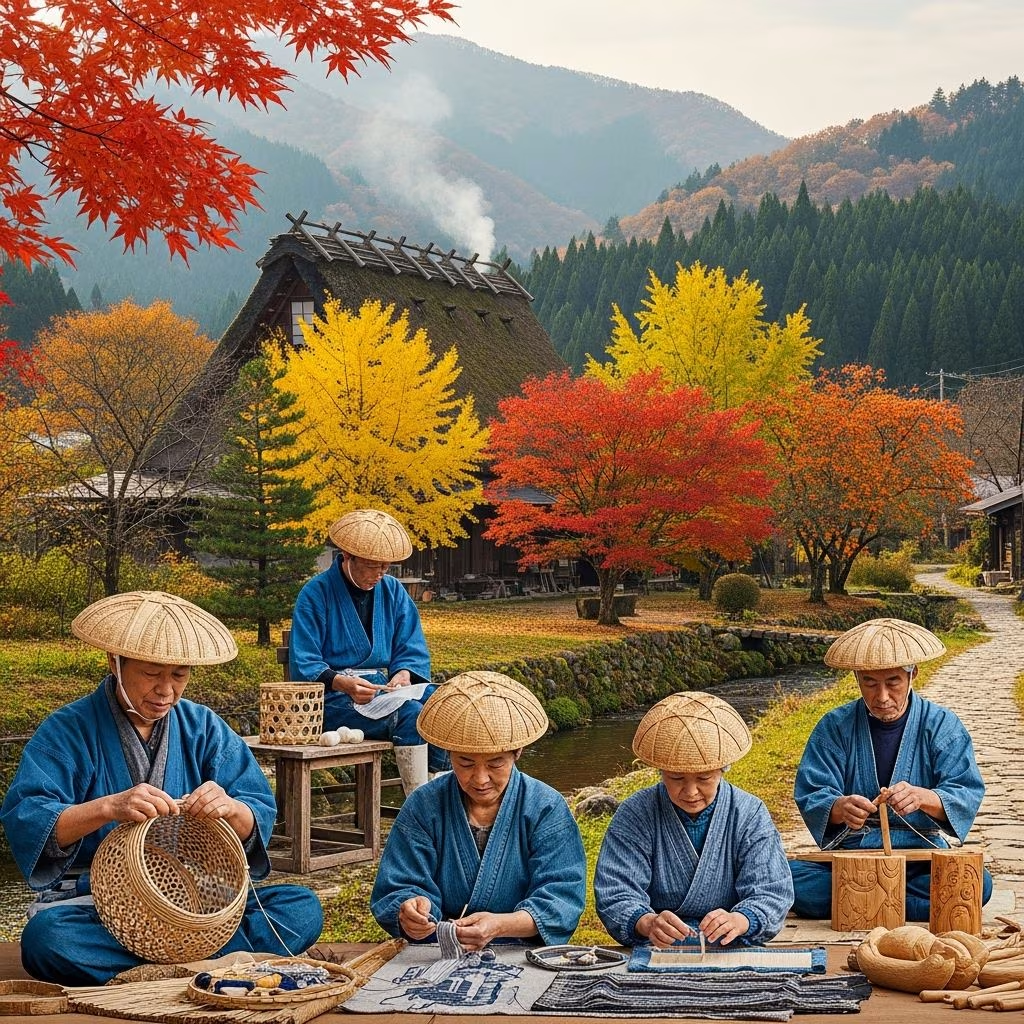
Tohoku’s crafts reflect resourcefulness, utilizing local woods, barks, and minerals. Kokeshi dolls from Miyagi’s Naruko Onsen, born in the Edo era as onsen toys, feature lathe-turned wood heads with painted faces and kimono patterns unique to each area—swirling motifs in Naruko, floral in Tsuchiyu.
Akita’s kaba-zaiku employs cherry bark for lacquered boxes and trays, woven intricately for durability and elegance. Aomori’s kogin-zashi embroidery adorns indigo fabrics with geometric ‘modoko’ patterns, originally quilting for warmth.
Iwate excels in Nambu ironware—teapots and kettles cast for heat retention—and Morioka hand-pulled noodles. Fukushima’s Aizu lacquerware shimmers with red-black finishes.
The Tsugaru shamisen, with its robust neck and thick plectrum, produces percussive strums evoking Tohoku’s harsh winters. Originating in Aomori, it’s performed in izakayas alongside seafood, as at Hirosaki’s Aiya venue. Legends like the Yoshida Brothers popularized it globally.
Tsugaru-han Neputa Village lets guests drum beside replica floats, immersing in festival vibes year-round.
Post-2011 recovery has revitalized traditions, with youth apprentices sustaining crafts amid urbanization. Initiatives like matagi hunter talks in Iwate share bear ecology and mountain lore from ‘mountain samurai.’
Tohoku’s festivals now attract global crowds, blending preservation with innovation—LED-enhanced floats maintain spirit while embracing tech.
Timing visits for festivals requires advance planning; book accommodations early. Respect customs: remove shoes indoors, join parades politely. Public transport via Tohoku Shinkansen connects sites efficiently.
August hosts major events like Nebuta and Tanabata; spring for cherry blossoms in samurai districts.
Many museums offer multilingual audio; Dewa Sanzan has English yamabushi tours.
Yes, museums simulate visits safely for all ages.
Kokeshi painting, kogin stitching, and kaba-zaiku in workshops across prefectures.
Yes, winter snow festivals complement summer spectacles; check seasonal trail closures.
