


 Food & Culture
Food & Culture
Tokaj Wine and Jewish Heritage in Hungary
Explore Tokaj's UNESCO vineyards, noble rot wines, and historic Jewish communities through synagogues, cemeteries, and family wineries in this cultural journey.
 Food & Culture
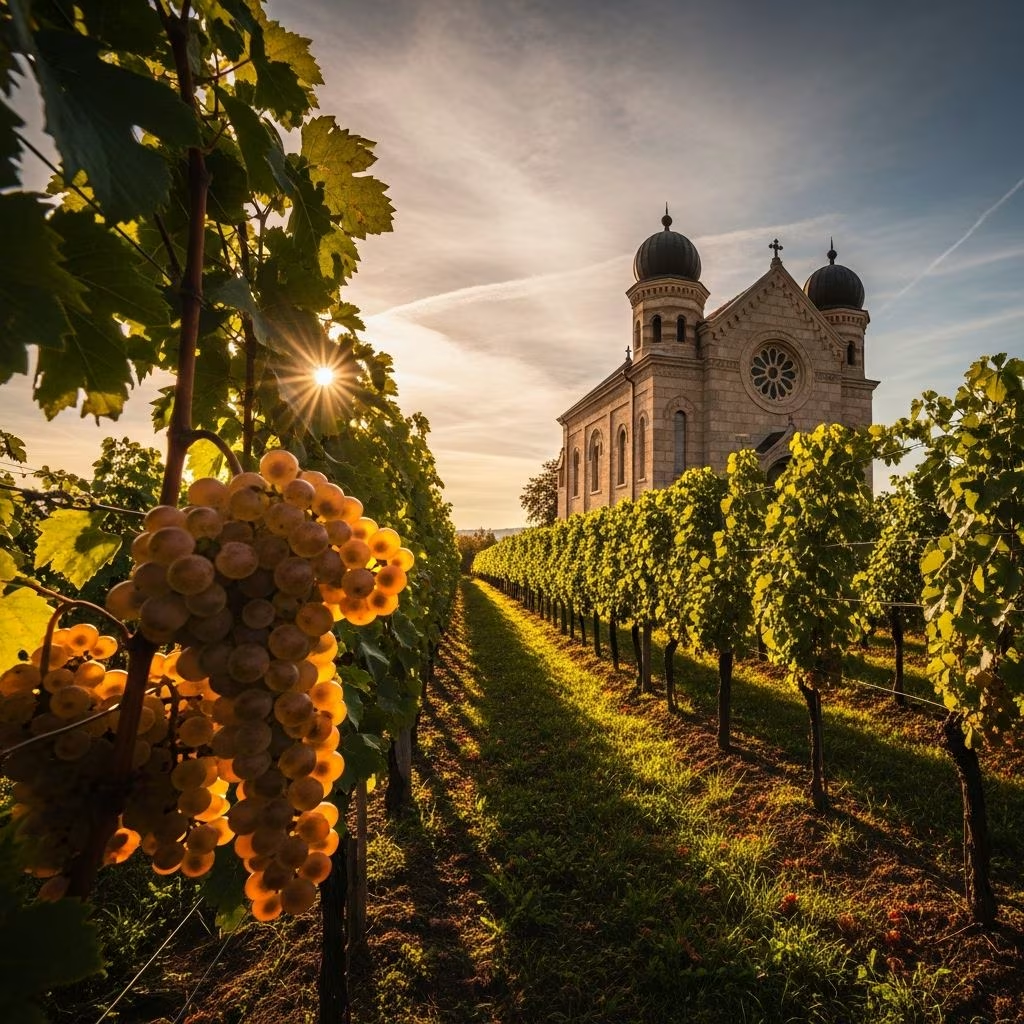
The Tokaj region in northeastern Hungary stands as a testament to both viticultural excellence and layered cultural history. Nestled among rolling hills and volcanic soils, this area produces some of the world’s most prized sweet wines while preserving traces of a once-thriving Jewish community that shaped its wine trade for centuries.
The Unique Terroir Behind Tokaj’s Famous Wines
Tokaj’s magic begins with its geography. Low mountains, forests, and the confluence of the Bodrog and Tisza rivers create a microclimate ideal for noble rot (Botrytis cinerea), a fungus that concentrates sugars in late-harvest grapes. This phenomenon, rare globally, yields Aszú—the golden, syrupy wine revered since the 16th century.
UNESCO designated Tokaj-Hegyalja a World Heritage Site in 2002 for its cultural landscapes of vine-covered slopes and ancient cellars. Volcanic ash enriches the soil, imparting minerality to wines like Szamorodni and late-harvest varieties. Modern producers blend tradition with sustainability, using organic methods to protect this fragile ecosystem.
- Furmint: The dominant grape, providing structure and aging potential.
- Hárslevelű: Adds floral aromas to blends.
- Muscat Blanc: Contributes fruity notes in Aszú wines.
- Zéta and Kabar: Emerging varieties for dry and sweet expressions.
Cellars carved into soft tuff stone maintain cool, humid conditions perfect for aging. Visitors often marvel at mold-coated walls, a sign of optimal storage.
Historical Roots of Jewish Involvement in Wine
From the 17th century, Jewish settlers from Galicia, Poland, and Ukraine were drawn to Tokaj by its burgeoning wine trade. They produced and exported kosher wines to Hasidic courts across Eastern Europe, establishing themselves as key merchants.
By the 18th century, families like the Zimmermanns in Mád built empires. Their wines won medals in Berlin (1892) and Paris (1896), fetching high prices even today at auctions. Royal Tokaji Winery recently honored them with plaques, commemorating their pre-Holocaust legacy.
In Sopron and beyond, merchants like the Klaber family dug specialized cellars for sourcing and storing Tokaj wines, later seized during wartime upheavals. These traders not only facilitated exports but fostered vibrant Orthodox communities amid the vineyards.
Key Jewish Heritage Sites Across Tokaj-Hegyalja
A journey through Tokaj reveals poignant remnants of Jewish life. In Tarcal, the Gallery of Tarcal pairs art with history, adjacent to a cemetery holding Rabbi Jakab Spira’s remains—a figure of local reverence.
Tállya, dubbed Europe’s geometric center between Zemplén Mountains and Hernád Valley, features an intact cemetery on Koldu Hill. An ohel (small mausoleum) shelters tombs of prominent rabbis, symbolizing spiritual leadership.
Mád’s synagogue and former Zimmermann residence (now Royal Tokaji) highlight commercial prowess. Tokaj town’s late-19th-century synagogue stands as an architectural gem, once central to a lively cultural hub.
| Town | Key Site | Historical Note |
|---|---|---|
| Tarcal | Jewish Cemetery & Gallery | Home to Rabbi Jakab Spira’s grave |
| Tállya | Koldu Hill Cemetery & Ohel | Resting place of notable rabbis |
| Mád | Synagogue & Winery Plaques | Zimmermann family legacy |
| Tokaj | Synagogue | 19th-century Orthodox center |
Modern Wineries Blending Tradition and Innovation
Today’s Tokaj revives its past through family estates. Demetervin in Tarcal offers intimate tastings of organic Aszú, rooted in generational knowledge. Erzsébet Pince in Tokaj town provides walks through charming streets to sample botrytized gems.
Dereszla incorporates the historic Klaber ‘Jewish cellar’ for aging dry Szamorodni, linking old merchant tunnels to contemporary production. Royal Tokaji’s commemorations ensure Holocaust stories endure alongside premium vintages.
Sustainable practices dominate: reduced yields, hand-harvesting overripe berries (picking multiple try passes), and minimal intervention yield complex wines scoring 95+ points internationally.
A Suggested 3-Day Itinerary for Wine and Heritage Lovers
Day 1: Arrival in Tokaj Town
Start with the synagogue tour, then stroll to Erzsébet Pince for lunch and Aszú tasting. Evening: Explore moldy cellars and noble rot science.
Day 2: Tarcal and Mád
Morning at Demetervin winery. Afternoon: Tarcal’s gallery and cemetery, followed by Mád’s plaques and Zimmermann history at Royal Tokaji.
Day 3: Tállya and Surrounds
Hike to Koldu Hill ohel, then vineyard walks. Depart with bottles of Fur mint-Szamorodni.
- Book guided tours for cemetery access.
- Pair wines with local goose liver or blue cheese.
- Visit in autumn for harvest festivities.
The Impact of History on Today’s Tokaj
The Holocaust decimated Tokaj’s Jewish population, erasing families and businesses. Post-war nationalization scattered legacies, but recent decades see restoration: synagogues refurbished, cemeteries maintained, wineries acknowledging Jewish roots.
This duality—sweet nectar from rotted grapes mirroring resilience—attracts reflective travelers. Tokaj teaches that great wine, like history, layers complexity over time.
Practical Tips for Your Tokaj Adventure
- Best Time: September-October for harvest; summer for festivals.
- Getting There: Train from Budapest (2.5 hours) to Tokaj station.
- Accommodation: Boutique guesthouses in wine estates.
- Costs: Tastings €10-30; heritage tours €20.
- Sustainability: Choose organic-certified producers.
Frequently Asked Questions (FAQs)
What makes Tokaj Aszú unique?
Aszú berries, shriveled by noble rot, are hand-picked and mashed into a paste (puttonyos) added to base wine, creating unparalleled sweetness and acidity balance.
Are Jewish sites accessible to visitors?
Many cemeteries require guides; synagogues often open for tours. Contact local heritage groups in advance.
Which wineries highlight Jewish history?
Royal Tokaji (Mád), Dereszla (Klaber cellar), and family-run spots like Demetervin.
Is Tokaj suitable for dry wine fans?
Yes—modern dry Fur mints and Szamorodnis showcase terroir without sweetness.
How did Jews contribute to Tokaj’s fame?
As merchants and producers from the 1700s, exporting kosher wines globally and winning awards.
References
- Tokaj: World-Class Wines and Jewish Heritage — AFAR. 2023. https://www.afar.com/journeys/tokaj-world-class-wines-and-jewish-heritage
- A Jewish Family’s Lost Vineyard in Hungary — Tablet Magazine. 2018-06-24. https://www.tabletmag.com/sections/food/articles/in-wine-truth
- The Jewish face of the Tokaj Region — Budapest Jewish Walk. N/A. https://budapestjewishwalk.hu/the-jewish-face-of-the-tokaj-region/
- Tokaj – jewish heritage, history, synagogues — JGuide Europe. N/A. https://jguideeurope.org/en/region/hungary/carpathian-foothills/tokaj/
- The Lost World of The Jewish Wine Trade in Hungary — Taste Hungary. N/A. https://tastehungary.com/journal/the-lost-world-of-the-jewish-wine-trade-in-hungary-and-the-old-habsburg-empire/
- The Jews of Tokaj — Wine, Culture & Society. 2021-12-01. https://wineandculture.net/2021/12/01/the-jews-of-tokaj/
- Commemoration in Mád — WineSofa. N/A. http://www.winesofa.eu/articles/commemoration-in-mad
On This Page
The Unique Terroir Behind Tokaj's Famous Wines Historical Roots of Jewish Involvement in Wine Key Jewish Heritage Sites Across Tokaj-Hegyalja Modern Wineries Blending Tradition and Innovation A Suggested 3-Day Itinerary for Wine and Heritage Lovers The Impact of History on Today's Tokaj Practical Tips for Your Tokaj Adventure Frequently Asked Questions (FAQs)← Previous
Sopron Travel Guide: History, Wine & Nature Near Vienna
Next →
7-Day Jordan Itinerary: Amman, Petra, Wadi Rum & Dead Sea
Related Reading
More in Food & Culture
Food & Culture Food & Culture
 Food & Culture
Best Places to Eat in Rome: Neighborhood Dining Guide
 Food & Culture
 Food & Culture