


 Food & Culture
Food & Culture
Tokyo Food Culture: Edo Roots to Global Culinary Capital
Explore Tokyo's dynamic food scene shaped by Edo-period heritage, regional influences, and contemporary culinary techniques that define the city's gastronomic identity.
 Food & Culture
The Historical Foundations of Tokyo’s Food Scene
Tokyo’s gastronomic identity is fundamentally rooted in its transformation from Edo, the shogunate’s political center that flourished from 1603 onwards. During this pivotal era, the city experienced unprecedented demographic changes as regional lords maintained residences and spent alternating years in the capital. This administrative requirement created a remarkable culinary convergence where traditional cooking methods and ingredients from across Japan’s provinces merged into a unified food culture. The period marked a philosophical shift in how food was perceived—transitioning from mere sustenance to an art form worthy of refinement and pleasure.
The concentration of power and population in Edo necessitated culinary adaptations that would define Tokyo’s approach to food for centuries. Strong regional flavors were systematically moderated to appeal to diverse populations, creating a more balanced palate that reflected the collective preferences of inhabitants from Hokkaido to Kyushu. This democratization of taste established a foundation for what would become Tokyo’s signature culinary philosophy: accessibility without compromising sophistication.
Specialty Establishments and Artisanal Mastery
The Edo period witnessed the emergence of specialized food establishments that transformed basic preparations into distinguished culinary disciplines. Shops dedicated exclusively to sushi, tempura, unagi, and soba shops proliferated, each employing skilled artisans who devoted lifetimes to perfecting their craft. These establishments weren’t merely commercial ventures; they represented philosophical commitments to technique refinement and ingredient quality. Knowledge transferred across generations within families, creating unbroken chains of expertise that continue to characterize Tokyo’s restaurant landscape today.
The specialization model proved remarkably durable because it combined practical efficiency with quality assurance. By focusing exclusively on single dishes or narrow categories, chefs could develop profound understanding of ingredient variations, seasonal availability, and preparation nuances that generalists could never achieve. This approach established standards that influenced culinary practices throughout Japan and eventually internationally.
Edomae: Tokyo’s Defining Culinary Signature
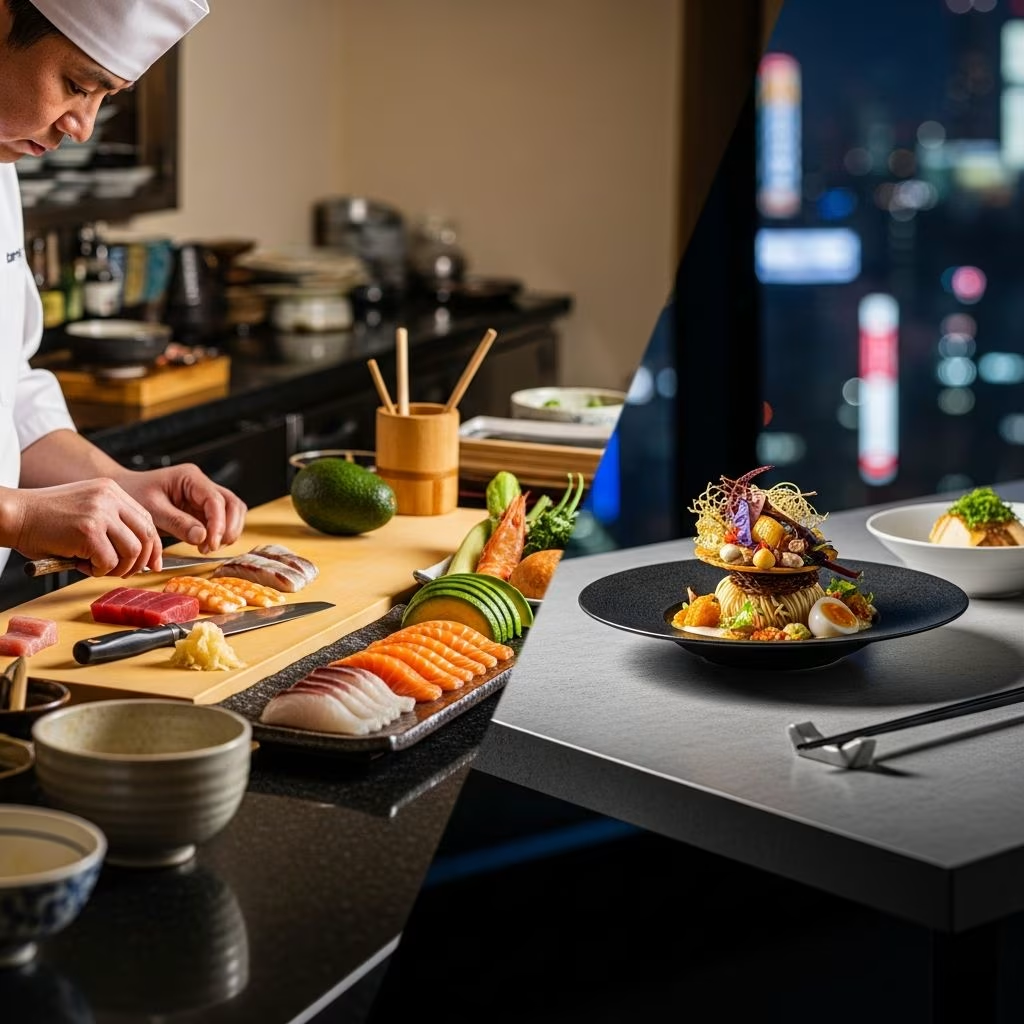
No dish better exemplifies Tokyo’s culinary evolution than sushi, specifically Edomae sushi—the foundational style that birthed modern nigirizushi (hand-pressed vinegared rice with fish topping). Edomae sushi originated as a revolutionary street food solution during the Edo period, offering quick, affordable nutrition to working-class populations engaged in port activities and urban commerce. The style deliberately featured seafood harvested from nearby Tokyo Bay, incorporating local ingredients into convenient portions sold from mobile stalls.
Edomae sushi descended from far older fermentation techniques like narezushi, where salt preserved fish for extended periods. The transition from fermented preservation to fresh preparation with vinegar and rice represented a quantum leap in culinary sophistication. This evolution demonstrates how necessity (rapid urbanization and food preservation requirements) catalyzed innovation that ultimately created a globally recognized culinary art form.
Contemporary Edomae sushi continues this evolutionary trajectory. Modern practitioners reinterpret classical flavors while integrating influences from Japanese regional cuisines, Western techniques, and Asian cooking traditions. This adaptability ensures that Tokyo’s signature dish remains vital and relevant rather than becoming ossified museum pieces.
Regional Integration and Flavor Development
Tokyo’s position as Japan’s political capital established it as a convergence point for regional cuisines. The system requiring regional lords to maintain capital residences inadvertently created an incubator for culinary cross-pollination. Chefs accompanying their employers brought distinctive cooking methods, ingredient preferences, and flavor profiles from Tohoku’s miso traditions to Kyushu’s shochu culture. Rather than competing, these regional approaches merged into Tokyo’s broader food identity.
This regional integration process wasn’t random cultural blending; it followed specific principles of taste modification and ingredient adaptation. What emerged was distinctly Tokyoite—recognizable as Japanese but distinctly different from any individual region’s isolated cuisine. The city became culinary referee and synthesizer, developing standards that would eventually influence how Japan itself defined its national food identity.
Modern Infrastructure and Global Connectivity
Contemporary Tokyo’s food revolution depends fundamentally on systems developed during and after industrialization. The metropolitan area’s exceptional transportation infrastructure—combining road networks, rail systems, and air cargo capabilities—enables ingredients to flow from production regions to restaurant kitchens with remarkable efficiency. This logistical sophistication means Tokyo chefs access ingredients at peak freshness while maintaining relationship networks with producers across the nation.
Tokyo’s expanded trading and cultural connections to international markets have exponentially broadened the flavor palette available in the city’s restaurants. What began as Western cuisine introduction during the late 19th century modernization period evolved into comprehensive global culinary representation. Contemporary Tokyo simultaneously offers authentic French, Italian, Korean, Chinese, and Indian cuisines while maintaining distinct Japanese communities representing cuisines from across Asia and beyond.
Michelin Recognition and Quality Standards
Tokyo boasts the highest concentration of Michelin-starred restaurants globally—a distinction rooted in the city’s commitment to culinary excellence and systematic technique development. With approximately 150,000 restaurants operating within the metropolitan area, Tokyo represents an evolutionary laboratory where culinary concepts are tested, refined, and either elevated or abandoned based on rigorous standards.
This restaurant density creates competitive pressure that drives continuous innovation while maintaining traditional standards. Establishments must justify their existence through either distinctive innovation or exceptional execution of classical traditions. The result is an ecosystem where mediocrity struggles to survive and excellence becomes normalized.
Craftsmanship, Seasonality, and Contemporary Sustainability
Tokyo’s food culture operates according to three integrated principles that distinguish it from many international culinary traditions. Craftsmanship emphasis reflects the artisanal legacy inherited from Edo-period specialty establishments, where technique mastery represents fundamental value. Seasonality consciousness connects modern dining to natural cycles and ingredient availability patterns, creating dynamic menus that evolve throughout the year rather than maintaining static offerings.
Innovation represents the third pillar—the commitment to evolution that prevents tradition from calcifying into irrelevance. These three principles coexist within Tokyo’s food ecosystem, each complementing rather than contradicting the others. Craftsmanship provides technical foundation, seasonality grounds chefs in natural reality, and innovation prevents stagnation.
A growing movement toward ecological responsibility represents Tokyo’s latest culinary evolution. Chefs increasingly confront challenges of sustainable sourcing, ingredient waste reduction, and environmental stewardship. This consciousness reflects broader societal concerns while maintaining the artisanal quality standards that define Tokyo’s gastronomic identity.
Collaborative Networks and Culinary Ecosystems
Tokyo’s food scene functions through intricate collaboration networks connecting chefs, ingredient producers, craftspeople, and service professionals. These relationships facilitate knowledge transfer, ingredient sourcing, and quality assurance mechanisms that individual establishments could never achieve independently.
The collaborative structure enables small establishments to access premium ingredients, maintain quality standards, and participate in broader culinary conversations without resources available only to large restaurant groups. A ramen shop proprietor might source noodles from specialized craftspeople, broths from ingredient suppliers with particular expertise, and complementary proteins from regional producers. This network approach distributes opportunity across the food ecosystem rather than concentrating success among capital-intensive operations.
Adaptation to Diverse Dietary Requirements
Contemporary Tokyo’s food culture increasingly accommodates diverse dietary preferences and restrictions without compromising flavor depth or culinary sophistication. Vegan establishments employ vegetables and seaweed to create umami-rich experiences previously associated exclusively with animal proteins. Halal-certified restaurants offer premium experiences featuring carefully sourced ingredients prepared according to religious guidelines. Gluten-free preparations utilize rice flour and traditional Japanese ingredients to maintain textural and flavor characteristics.
This adaptation capacity reflects Tokyo’s fundamental culinary philosophy: flexibility in service of excellence rather than rigid adherence to historical practices. Modern chefs view dietary accommodations as technical challenges requiring creativity rather than limitations restricting culinary expression.
Traditional Sweets and Aesthetic Refinement
Wagashi—traditional Japanese confections—represent Tokyo’s commitment to aesthetic refinement and ingredient quality. These delicate preparations employing mochi, red bean paste, matcha, and other traditional ingredients emerged during the Edo period as culinary art forms worthy of serious study. Contemporary wagashi shops maintain centuries-old production methods while occasionally introducing subtle innovations respecting traditional foundations.
The wagashi tradition demonstrates how culinary specialization creates depth impossible within generalist approaches. Master practitioners develop intuitive understanding of how moisture content, fermentation timing, ingredient ratios, and seasonal variations affect final products. This expertise cannot be rushed or mechanized without compromising the fundamental qualities that make wagashi distinctive.
Tokyo’s Influence on Japanese National Identity
As Japan’s political center for over four centuries, Tokyo exerted gravitational influence on national cuisine definition. Dishes originating within Tokyo became so dominant that they’re now recognized as standard Japanese preparations rather than regional specialties. This process continued through modernization, international trade expansion, and Tokyo’s emergence as a global cultural capital.
Tokyo’s culinary standards became aspirational models replicated across Japan and internationally. The city’s quality expectations, ingredient sourcing practices, and refinement standards influenced how Japanese cuisine is understood and practiced worldwide. This cultural influence extends beyond specific dishes to encompass entire philosophical approaches regarding ingredients, technique, and the relationship between food and cultural identity.
International Recognition and Contemporary Relevance
Tokyo’s recognition as one of the world’s most exciting culinary destinations reflects centuries of systematic refinement, institutional infrastructure, and philosophical commitment to food quality. The city’s diverse offerings—from hundred-year-old soba shops to innovative fusion establishments—create an environment where culinary curiosity finds endless satisfaction.
This recognition isn’t promotional hyperbole but reflects structural characteristics distinguishing Tokyo from other major culinary centers. The concentration of skilled practitioners, ingredient availability, consumer expectations regarding quality, and collaborative networks create conditions where culinary excellence becomes normalized rather than exceptional.
References
- Exploring Tokyo’s Food Culture: Meet Tokyo’s Specialists — Japan Travel. Accessed April 2026. https://en.japantravel.com/tokyo/tokyo-food-culture/72341
- Serving up Tokyo’s modern taste — Lonely Planet. https://www.lonelyplanet.com/articles/tokyo-food-culture-influence
- Tokyo Food Guide — Japan Guide. https://www.japan-guide.com/e/e3075.html
- Tokyo Food Culture: A Historical Overview — KaguAruoo Blog. August 30, 2023. https://kaguaruoo.com/blog/2023/08/30/tokyo-food-culture-a-historical-overview/
- Enjoy Diverse Culinary Culture in Tokyo — Go Tokyo Official. https://www.gotokyo.org/en/plan/diverse-culinary-culture/index.html
On This Page
The Historical Foundations of Tokyo's Food Scene Specialty Establishments and Artisanal Mastery Edomae: Tokyo's Defining Culinary Signature Regional Integration and Flavor Development Modern Infrastructure and Global Connectivity Michelin Recognition and Quality Standards Craftsmanship, Seasonality, and Contemporary Sustainability Collaborative Networks and Culinary Ecosystems Adaptation to Diverse Dietary Requirements Traditional Sweets and Aesthetic Refinement Tokyo's Influence on Japanese National Identity International Recognition and Contemporary Relevance← Previous
Tokyo Food Ingredients: Koji, Dashi, Nori & Urban Farming
Next →
Best Things to Do in Izmir, Turkey: Top Sights, Markets & Day Trips
Related Reading
More in Food & Culture
Food & Culture Food & Culture
 Food & Culture
Best Places to Eat in Rome: Neighborhood Dining Guide
 Food & Culture
 Food & Culture