

 Travel Essentials
 Travel Essentials

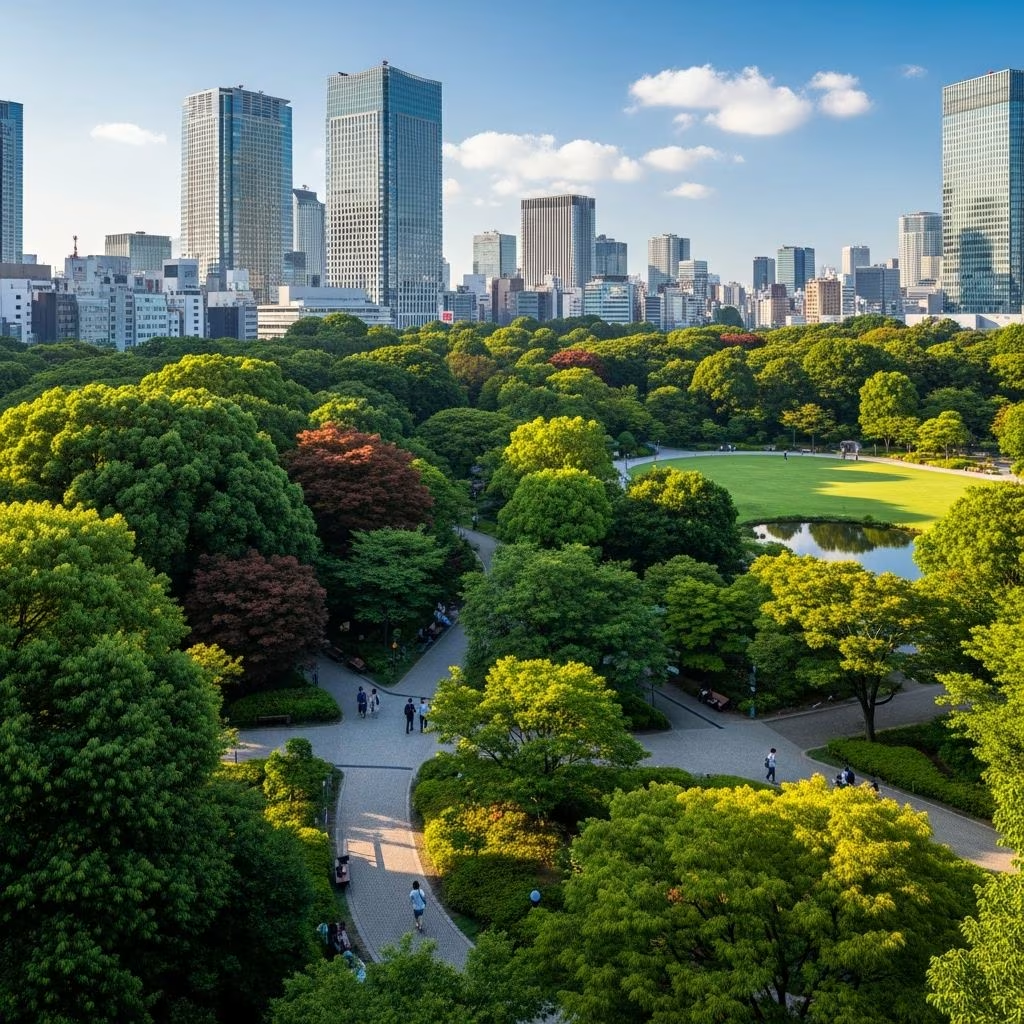
Tokyo surpasses global cities with the most green spaces at 159, offering serene escapes amid skyscrapers. Learn top parks, stats, and why it's the greenest metropolis.
 Travel Essentials
Tokyo, the bustling heart of Japan, has been crowned the world’s leading city for green spaces, boasting 159 parks and nature attractions that provide vital respites from urban intensity. This recognition from a comprehensive Freepik study analyzing Google reviews across the 100 most populous cities highlights Tokyo’s commitment to integrating nature into metropolitan life, far exceeding runner-up London with its 78 sites.
In an era where concrete jungles dominate skylines, cities worldwide are prioritizing green infrastructure for health, biodiversity, and quality of life. Tokyo exemplifies this trend, transforming potential urban sprawl into accessible natural havens. The Freepik analysis not only counted attractions but also evaluated visitor popularity through nearly 359,000 reviews, placing Tokyo 11th globally for most-visited green spots despite its top quantity ranking.
This dual achievement underscores a strategic urban planning philosophy rooted in Japan’s post-war reconstruction, where green belts were woven into city fabrics alongside skyscrapers and efficient transit. Unlike denser Asian counterparts, Tokyo’s layout balances high-rises with verdant expanses, fostering mental well-being amid a population exceeding 14 million in its metro area.
Freepik’s methodology involved scraping Google data for parks, gardens, and nature sites, revealing Tokyo’s dominance. Here’s a breakdown:
These figures challenge perceptions of Tokyo as solely neon-lit and crowded, revealing a city where 20-30% of land is dedicated to parks and forests in key districts.
| Rank | City | Green Spaces | Region |
|---|---|---|---|
| 1 | Tokyo, Japan | 159 | Asia |
| 2 | London, UK | 78 | Europe |
| 4 | Singapore | ~90 (est.) | Asia |
| 17 | Seoul, South Korea | ~50 | Asia |
| 21 | Osaka, Japan | ~45 | Asia |
This table illustrates Tokyo’s clear lead, with Japanese cities dominating Asia’s top tier.
Tokyo’s green spaces range from expansive imperial gardens to pocket parks, each offering unique seasonal charms. Ueno Park, a cherry blossom haven, draws millions during hanami festivals, blending museums with vast lawns. Yoyogi Park pulses with weekend energy—picnics, street performers, and cosplayers—adjacent to the iconic Meiji Shrine forest.
In Shinjuku Gyoen, a former private garden turned national treasure, visitors wander themed zones: French formal, English landscape, and traditional Japanese, perfect for quiet reflection. Sumida Park along the river provides skyline views with fireworks festivals, while Rikugien Gardens captivates with night illuminations showcasing Edo-period poetry-inspired scenery.
Beyond central hubs, neighborhoods like Komazawa Olympic Park offer cycling paths and sports fields from the 1964 Games legacy. These sites collectively form a network accessible via Tokyo’s world-class subway, ensuring no resident is far from foliage.
Japan’s four distinct seasons amplify Tokyo’s green appeal. Spring erupts in sakura blooms across Inokashira Park, where petals carpet paths amid swan boats on the pond. Autumn foliage paints Yebisu Garden Place in fiery hues, complementing its modern architecture.
Winter brings plum blossoms to Mukojima-Hyakkaen Gardens, a rare 19th-century site with 10,000 seasonal varieties. Summer sees hydrangeas thriving in Nezu Shrine’s sub-tropical shade, tying nature to Shinto traditions where shrines and temples preserve forested enclaves amid urbanization.
This cultural integration—temples as green sanctuaries, hanami as social rituals—elevates parks beyond recreation to communal heritage.
Tokyo’s success stems from deliberate policies. Post-1923 earthquake rebuilding emphasized parks, while 1964 Olympics spurred modern facilities. Today, the Tokyo Metropolitan Government mandates green ratios in developments, preserving sites like the Imperial Palace moat gardens.
Compared to Yokohama’s extension, Tokyo proper maintains higher density of accessible spaces. Challenges persist—space constraints push vertical gardens and rooftop farms—but innovations like Odaiba Seaside Park’s artificial beaches show adaptability.
Global cities can learn: prioritize quantity with quality, integrate transit links, and culturally embed nature for sustained use.
Visitors should allocate 3-5 days for park-hopping. Start with JR Yamanote Line-accessible Ueno and Yoyogi. Use apps like Google Maps for real-time crowd data and Hyperdia for trains. Best times: weekdays for serenity, weekends for vibrancy. Pack bento for picnics; rentals for bikes abound.
Annual passes for multiple gardens save costs; seasonal tickets for illuminations add magic.
Studies affirm green exposure reduces stress, boosts immunity via forest bathing (shinrin-yoku). Tokyo’s parks facilitate this—walk Meiji Jingu’s 100,000-tree canopy for proven cortisol drops. Post-pandemic, usage surged, affirming mental health roles in dense cities.
Olympics 2020 legacy includes new waterfront parks; sustainability goals target carbon-neutral greens by 2050. Community gardens expand, countering aging populations. Tokyo remains a model for blending hyper-urbanity with nature abundance.
Strategic planning since the 20th century, cultural reverence for nature, and policies mandating green quotas in developments give Tokyo its edge, with 159 sites confirmed by Freepik data.
Ueno Park hosts massive hanami crowds, but quieter Meguro River offers stunning night views.
Most are free, like Yoyogi; gardens like Shinjuku Gyoen charge ~500 yen, with student discounts.
Excellent—95% within 1km walk or short train ride, thanks to subway density.
Absolutely; it’s a cultural staple. Designated areas prevent littering.
