

 Travel Essentials
 Travel Essentials

A practical guide to Tokyo’s trains, subways, buses, IC cards, airport links, and transit passes for smooth, stress-free city travel.
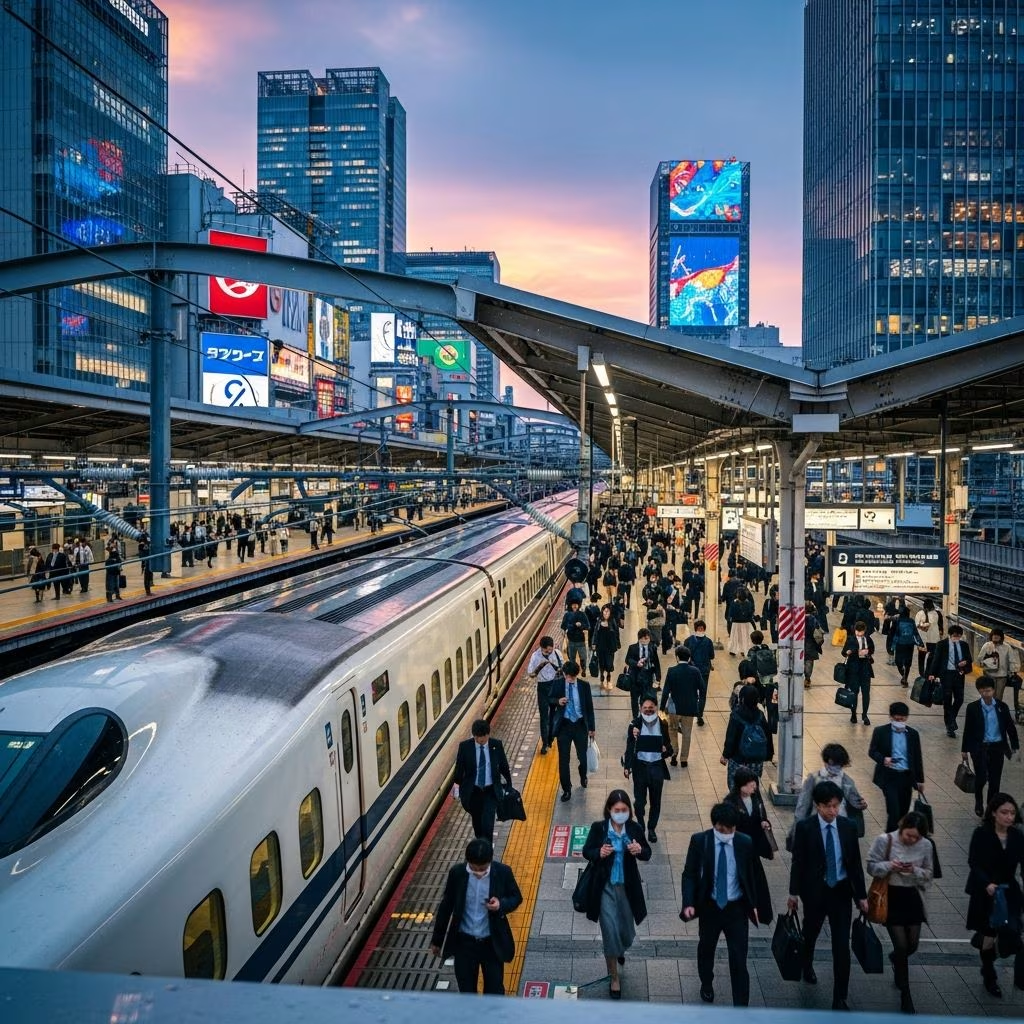 Travel Essentials
Tokyo’s public transportation system stands as one of the world’s most efficient and extensive networks, enabling visitors to traverse the sprawling metropolis with remarkable ease. Comprising trains, subways, and buses operated by multiple companies, it connects key districts seamlessly.
The city’s transport infrastructure revolves around a combination of overground trains and underground subways, supplemented by buses for peripheral areas. Japan Railways (JR) East manages major lines like the iconic Yamanote Line, which forms a vital loop linking central hubs such as Tokyo Station, Shinjuku, Shibuya, and Ueno. Subways, run by Tokyo Metro and Toei, provide dense coverage within this loop and adjacent zones.
With over 50 lines in total, the system prioritizes punctuality, cleanliness, and safety, making it ideal for tourists. Buses fill gaps in outer neighborhoods, while taxis offer convenience for short hops.
Understanding primary lines is crucial for efficient travel. The Yamanote Line serves as the backbone, circling central Tokyo and stopping at six major stations: Tokyo, Ueno, Ikebukuro, Shinjuku, Shibuya, and Shinagawa. It operates frequently, ideal for hopping between attractions.
Shinkansen bullet trains halt at Tokyo and Shinagawa for high-speed connections beyond the city.
Tokyo boasts 13 subway lines: nine from Tokyo Metro and four from Toei, blanketing the area inside the Yamanote loop, Ginza vicinity, and eastern sectors. These lines interconnect smoothly, with color-coded maps aiding navigation.
Stations feature multilingual signs, elevators, and clear platforms. Apps like Google Maps or Navitime simplify route planning by factoring in transfers and crowding.
| Operator | Lines | Coverage Focus |
|---|---|---|
| Tokyo Metro | 9 lines | Central Tokyo, Ginza area |
| Toei | 4 lines | Eastern districts, loop interiors |
Rechargeable IC cards like Suica, Pasmo, or Welcome Suica revolutionize fares by allowing tap-and-go access across JR, subways, and buses. Purchase at stations or airports; no need for paper tickets.
They auto-calculate optimal fares, support vending machines, and even convenience stores. For tourists, cards without deposit fees are available. Top up via cash or card; balances display at gates.
Haneda Airport, closer to the center, links via Keikyu Line to Shinagawa (Yamanote access) or Monorail to Hamamatsucho. Narita offers Narita Express to Tokyo Station or Keisei Skyliner to Ueno.
Limousine buses provide direct hotel drops, especially convenient for first-timers laden with luggage.
Rush hours (7-9 AM, 5-7 PM weekdays) pack Yamanote and subways. Avoid if possible; use women-only cars during peaks for safety.
Off-peak, lines run every 2-5 minutes. Platforms have yellow lines for waiting; mind closing doors.
Buses serve suburbs and scenic routes, though less tourist-friendly due to Japanese announcements. IC cards work here too; front-door boarding, rear alighting.
Taxis are spotless, metered (¥500+ base), with English signs proliferating. Ideal for late nights or groups; apps like GO summon rides.
Hyperdia or Jorudan for schedules; Google Maps integrates real-time data. Station signs in English/Japanese/Chinese/Korean guide exits.
Download Navitime for offline maps and voice navigation.
Central Tokyo’s compact size suits bikes; rentals abound via apps like Hello Cycling. Sidewalks accommodate walkers between stations.
JR Pass covers JR lines regionally; Tokyo Subway Ticket (24/48/72-hour) unlimited on Metro/Toei. Calculate savings for heavy users.
| Pass Type | Duration | Covers |
|---|---|---|
| Tokyo Subway Ticket | 24/48/72 hrs | Metro + Toei |
| JR Tokyo Wide Pass | 3 days | JR lines in area |
Balances are retrievable at JR stations with ID; replacements cost a fee.
Yes, coin lockers at major stations; oversized items use services like Yamato.
No, last trains around midnight; first at 5 AM. Night buses for late owls.
IC cards auto-deduce; same-fare gates common for short hops.
Most stations have elevators; priority seats marked.
No eating/drinking on trains; silence phones; yield seats to elderly/pregnant. Lost items return via stations’ diligent staff.
Tokyo’s system is remarkably safe, with low crime and constant surveillance.
