

 Travel Essentials
 Travel Essentials

Discover how to navigate Tokyo's complex rail network, including JR lines, Tokyo Metro, Toei subways, ticketing options, and essential tips for visitors.
 Travel Essentials
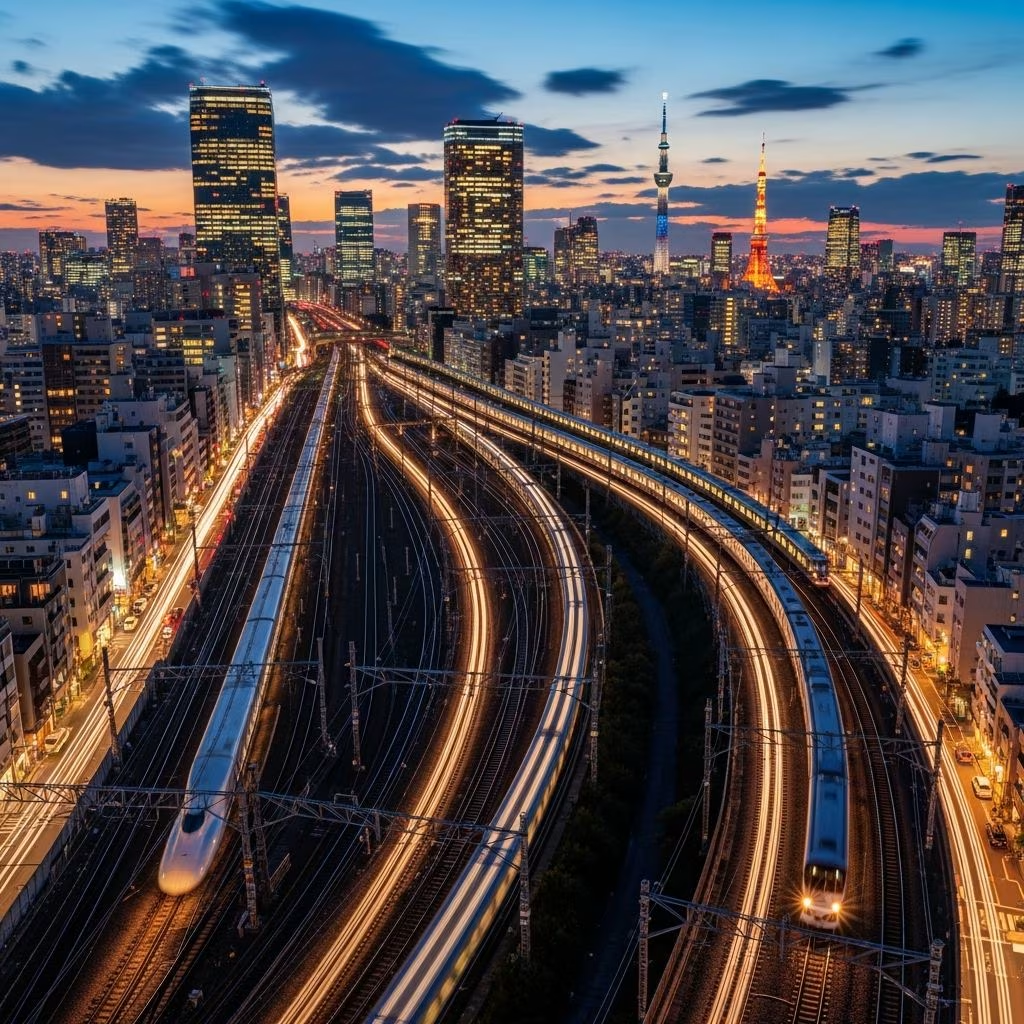
Tokyo’s rail system stands as one of the world’s most intricate and reliable transportation networks, ferrying millions daily with remarkable precision. Spanning surface trains, subways, and high-speed connections, it links every corner of the city and extends to surrounding regions. This guide breaks down the essentials, from key lines to payment methods, empowering visitors to travel like locals.
The capital’s mobility hinges on a blend of operators: JR East for major commuter lines, Tokyo Metro with nine subway routes, and Toei Subway’s four lines, plus private railways fanning out to suburbs. Together, they handle over 9 million passengers daily, with Tokyo Metro alone serving 6.84 million in FY2024 and Toei around 2.64 million. Color-coded lines and multilingual signage simplify navigation, while apps like Google Maps provide real-time routes.
Surface trains dominate outer loops, subways weave through central districts, and interchanges allow seamless transfers. The iconic JR Yamanote Line circles the core, connecting hubs like Tokyo, Shinjuku, and Shibuya.
JR East operates pivotal routes for central Tokyo travel. The Yamanote Line, a green-loop icon, links major stations in a 60-minute circuit, ideal for sightseeing from Ueno’s museums to Shibuya’s crossings.
Shinkansen bullet trains stop at Tokyo and Shinagawa for intercity jaunts, with Nozomi (yellow), Hikari (red), and Kodama (blue) services displayed on boards.
Subways burrow beneath the bustle, operated by Tokyo Metro (195 km, 180 stations) and Toei (106 stations). Tokyo Metro’s lines radiate from key nodes like Ginza and Otemachi, while Toei’s include the looping Oedo Line and airport-bound Asakusa Line.
| Operator | Main Lines | Key Connections | Daily Riders (FY2024) |
|---|---|---|---|
| Tokyo Metro | Ginza (orange, G), Marunouchi (red M), Hanzomon (purple Z) | Shibuya, Ginza, Tokyo SkyTree | 6.84 million |
| Toei | Asakusa, Mita, Shinjuku, Oedo | Narita/Haneda Airports, city loop | 2.64 million |
These networks densely cover inside the Yamanote loop and eastward areas, with direct ties to private lines for broader reach.
Beyond JR and subways, private firms like Odakyu, Tobu, and Keisei serve suburbs and airports. Odakyu runs from Shinjuku to Hakone; Tobu links to Nikko; Keisei to Narita. Hanzomon Line interlinks with Tobu Skytree and Tokyu Den-en-toshi for Yokohama. These extend metro efficiency outward.
Fares are distance-based, starting at ~160 yen for short trips. Station maps highlight your location with a red arrow, showing fares to destinations.
Options include:
Always tap in and out; forgotten exits deduct maximum fare.
1. Plan Ahead: Use Google Maps (select train icon) for routes, transfers, and times. Download Tokyo Metro maps in multiple languages.
2. At the Station: Identify your line by color/symbol (e.g., Ginza: orange G). Overhead boards list platforms and destinations.
3. Through Gates: Tap IC or insert ticket. Follow escalators/signs to platforms.
4. On Board: Announcements in English/Japanese; next-station LEDs.
5. Exiting: Tap out; buy ticket if needed via fare adjustment machines.
Peak hours (7-9 AM, 5-7 PM) pack trains; women-only cars operate mornings.
Station free Wi-Fi aids planning.
Narita: Keisei Skyliner or Narita Express (JR). Haneda: Toei Asakusa or monorail to Yamanote. Oedo loops centrally; Chuo spans west-east.
Buses supplement for niche spots; bikes/walking suit short hops.
IC cards like Suica for flexibility; one-day subway passes if staying central.
Every 2-5 minutes in peaks, reliable year-round.
Yes, extensively in stations, trains, maps.
IC cards yes; paper tickets often require new buys at transfers.
Refund balance at stations (fee applies).
Tokyo’s rails evolve with tech like cashless gates and AI crowd management. Stay updated via official sites amid post-pandemic tweaks.
