

 Travel Essentials
 Travel Essentials

Compare Tokyo's futuristic buzz with Kyoto's timeless traditions to plan your perfect Japan trip. Explore costs, attractions, transport, and tips for first-timers.
 Travel Essentials
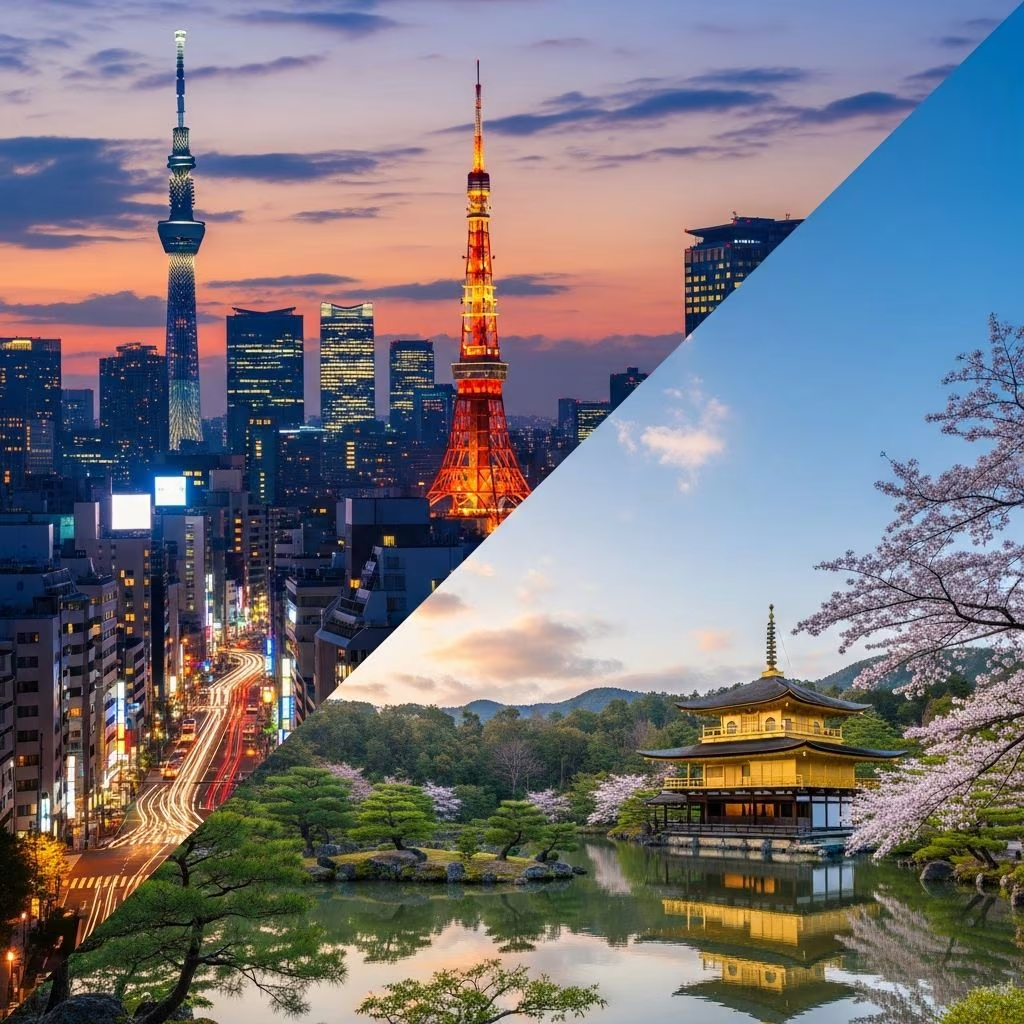
Japan’s two premier destinations, Tokyo and Kyoto, embody contrasting facets of the nation’s soul—one a whirlwind of innovation and urban excitement, the other a sanctuary of historical grace and cultural depth. Choosing between them depends on your travel style, time constraints, and interests, but with efficient rail links, combining both is often ideal for deeper immersion.
Tokyo represents contemporary Japan with its towering skyscrapers, cutting-edge technology, and vibrant nightlife, drawing parallels to global hubs like Shanghai. In contrast, Kyoto preserves imperial legacies through its shrines, temples, and seasonal festivals, evoking tranquil spots like Luang Prabang.
These distinctions shape visitor experiences: Tokyo energizes with diversity, while Kyoto soothes with introspection.
Each city offers unique draws, from Tokyo’s eclectic neighborhoods to Kyoto’s spiritual landmarks.
Dive into Tokyo’s dynamic quarters for a mix of history, pop culture, and futurism. Start at Shibuya Crossing, the world’s busiest intersection, then ascend Shibuya Sky for panoramic views possibly framing Mt. Fuji on clear days. Shinjuku’s neon labyrinth leads to izakaya taverns and Golden Gai’s cozy bars, once a post-war black market.
Kyoto shines with over 2,000 temples and shrines. Fushimi Inari Taisha’s thousands of vermillion torii gates create an iconic hike. Kinkaku-ji’s golden pavilion reflects in serene ponds, while Arashiyama’s bamboo grove offers ethereal walks.
| Aspect | Tokyo | Kyoto |
|---|---|---|
| Iconic Sights | Shibuya Crossing, Senso-ji | Fushimi Inari, Kinkaku-ji |
| Theme | Modern eclectic | Historical spiritual |
| Best For | Nightlife, tech | Temples, nature |
Navigating these cities reveals further contrasts. Tokyo’s 13 subway lines and extensive rail network make it a transit powerhouse, covering vast distances efficiently. Buses supplement in outer areas.
Kyoto relies more on buses, two intersecting subway lines (Karasuma and Tozai), and private rails like JR, Keihan, and Hankyu. Its smaller size suits cycling or walking, especially in central zones.
Tokyo edges out as pricier by roughly 30% across lodging, meals, transport, and entries, though the weak yen keeps both affordable globally. Expect ¥15,000-25,000 daily in Tokyo versus ¥10,000-18,000 in Kyoto for mid-range travelers.
| Category | Tokyo (Daily Avg.) | Kyoto (Daily Avg.) |
|---|---|---|
| Hotel | ¥12,000 | ¥9,000 |
| Meals | ¥4,000 | ¥3,000 |
| Transport | ¥1,500 | ¥1,000 |
| Attractions | ¥2,000 | ¥1,500 |
Tips: Use IC cards (Suica/Pasmo in Tokyo, Icoca in Kyoto) for seamless fares; JR Pass covers shinkansen for longer stays.
Both serve as gateways to Japan’s diverse regions. From Tokyo, reach Nikko’s shrines (2 hours), Kamakura’s temples and beaches (1 hour), or Fuji Five Lakes (2 hours).
Kyoto connects to Nara’s deer park (45 minutes), Himeji Castle (1 hour), Osaka’s food scene, or Kobe’s wagyu (30-60 minutes).
Tailor your plans to available days.
Focus on one: Tokyo for urban thrill (3 days: Shibuya/Shinjuku Day 1, Asakusa/Akihabara Day 2, Ginza/Harajuku Day 3); Kyoto for heritage (3 days: Fushimi Inari/Gion Day 1, Arashiyama/Kinkaku-ji Day 2, Higashiyama Day 3).
Split time: 2-3 days Tokyo, 2-3 days Kyoto, via shinkansen. Add day trips like Kamakura or Nara. Sample 5-day: Tokyo Days 1-2, train to Kyoto Days 3-4, Nara Day 5.
Tokyo boasts unmatched variety: Michelin-starred sushi, ramen alleys, international fusion—over 200 starred spots. Nightlife pulses in Roppongi, Shibuya clubs.
Kyoto emphasizes kaiseki multi-course meals, yudofu tofu hotpots, and seasonal kaiseki with geisha entertainment in Gion. Quieter evenings suit teahouses or riverside bars.
Visit Tokyo in spring for sakura in Ueno Park or autumn Shinjuku Gyoen foliage. Summer festivals like Sumida River fireworks add buzz. Kyoto peaks during cherry blossoms (Philosopher’s Path) or fall maples (Tofuku-ji), but crowds surge—book ahead.
Tokyo offers DisneySea, teamLab exhibits; Kyoto’s parks and deer in Nara appeal to kids.
Yes, its pace exhausts; Kyoto’s calm suits quieter souls.
Absolutely: 3 days Tokyo, shinkansen, 3 days Kyoto, 1 day trip.
Tokyo: Weekdays; Kyoto: Winter (non-New Year).
Tokyo: 10-15km/day across districts; Kyoto: 8-12km, more scenic.
Tokyo fuels adventure-seekers with its endless options; Kyoto captivates culture enthusiasts with profound history. With 4+ days, embrace both for Japan’s full spectrum—modern marvels and ancient whispers united by seamless travel.
