

 Travel Essentials
 Travel Essentials

Tokyo’s see-through public restrooms use smart glass to prove cleanliness, boost trust, and turn everyday sanitation into urban art.
 Travel Essentials
Tokyo has long been a city that blends cutting-edge technology with everyday functionality, and its latest urban innovation exemplifies this perfectly. Public restrooms, often overlooked or avoided in many places around the world, are undergoing a dramatic makeover in Japan’s capital. Through the ambitious Tokyo Toilet initiative, these facilities are becoming symbols of hygiene, accessibility, and aesthetic appeal. Imagine approaching a restroom in a bustling park and being able to instantly see if it’s clean and unoccupied—all without stepping inside. This is the reality in Shibuya, where transparent walls and smart privacy features are redefining public sanitation.
The Tokyo Toilet project emerged from a pressing need to elevate public facilities in one of the world’s most densely populated cities. Conceived by entrepreneur Koji Yanai of Uniqlo fame and funded by the nonprofit Nippon Foundation, the initiative targets 17 locations across Shibuya’s vibrant neighborhoods, including Hatagaya, Yoyogi, and Ebisu. These areas, dotted with small parks and green spaces, previously housed outdated structures plagued by maintenance issues, limited accessibility, and poor user confidence.
The core philosophy is simple yet profound: make public toilets so inviting and reliable that people feel comfortable using parks more frequently. By commissioning renowned international architects starting in 2018, the project ensures each facility is not just utilitarian but a piece of public art. The timing was strategic, aligning with preparations for the 2020 Summer Olympics (postponed due to COVID-19), aiming to impress global visitors while benefiting locals year-round.
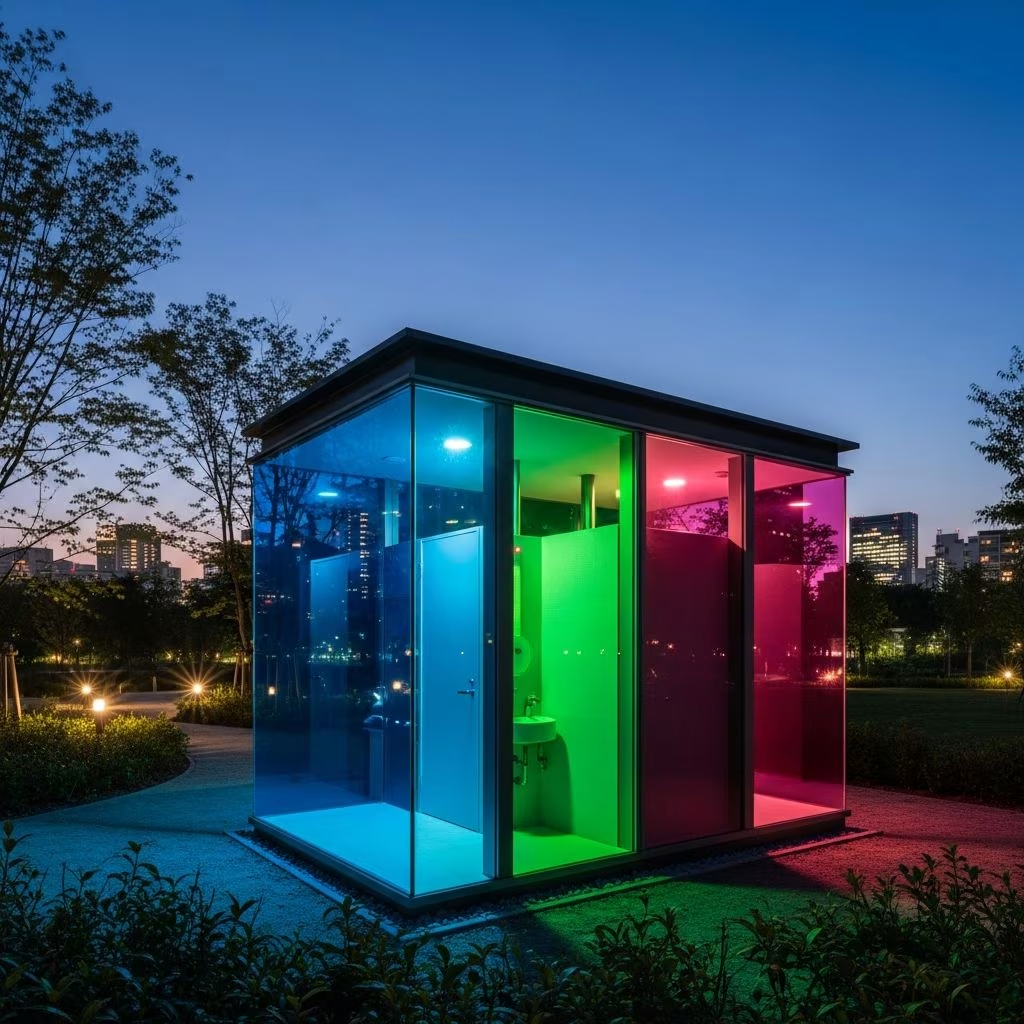
Leading the charge is Pritzker Prize-winner Shigeru Ban, whose two contributions in Yoyogi Fukamachi Mini Park and Haru-no-Ogawa Community Park have captured global attention. These restrooms feature full-height glass walls that start transparent, allowing passersby to confirm availability and spotlessness from afar. Upon locking the door, electrochromic glass technology activates, turning the exterior opaque in seconds for complete privacy.
Ban’s designs address two primary user concerns: cleanliness and occupancy. “The first is cleanliness, and the second is whether anyone is inside,” Ban explained. The transparency reassures hesitant users, particularly in Japan where public toilet aversion stems from fears of uncleanliness. At night, illuminated interiors transform the structures into glowing lanterns, adding a magical ambiance to the parks.
Each site houses three cubicles—a men’s, women’s, and accessible unisex option—separated by mirrored partitions for added seclusion. Color choices harmonize with surroundings: green-blue tints at Haru-no-Ogawa echo nearby trees, while orange, pink, and purple hues at Yoyogi Fukamachi complement playground equipment.
At the heart of these restrooms is advanced smart glass, a material that shifts from clear to frosted via electrical current. This innovation, increasingly common in high-end architecture, ensures user dignity without compromising the visibility benefits. Flushing mechanisms, ventilation, and self-cleaning surfaces further uphold impeccable standards, with regular maintenance by dedicated teams.
Beyond Ban’s works, the project incorporates diverse tech solutions. Some facilities feature touchless entry, UV sanitization, and app-based occupancy checks, adapting to post-pandemic hygiene demands. These elements collectively foster a sense of security, encouraging families, tourists, and the elderly to embrace public spaces.
| Feature | Description | Benefit |
|---|---|---|
| Electrochromic Glass | Transparent until locked | Check cleanliness/occupancy remotely |
| Mirrored Partitions | Separate cubicles internally | Enhanced privacy within units |
| LED Night Lighting | Illuminates like lanterns | Beautifies parks after dark |
| Accessible Design | Unisex stall per facility | Inclusivity for all users |
The Tokyo Toilet project boasts a roster of 17 unique designs, each by a world-class architect, turning mundane necessities into neighborhood icons. As of early 2024, all are operational, replacing subpar predecessors and revitalizing parks.
For instance, Junko Kobayashi’s Gondola Architects crafted weathering steel cylinders at Sasazuka Greenway (opened March 2023), blending industrial strength with organic rust patinas. Miles Pennington from the University of Tokyo’s DLX Design Lab delivered a multifunctional unit in Hatagaya (February 2023), doubling as an exhibition space, cinema, or kiosk—versatile for community events.
Other highlights include fluid, shell-like forms evoking seashells, futuristic pods with sustainable materials, and minimalist cubes prioritizing flow and light. This diversity ensures no two toilets look alike, injecting personality into Shibuya’s green pockets and drawing architecture enthusiasts from afar.
In Japan, public toilets carry cultural weight, often avoided due to privacy anxieties and maintenance doubts. The Tokyo Toilet project challenges this by prioritizing transparency—literally. Early feedback highlights increased park dwell time, with families picnicking confidently near these facilities. Social media buzz, from Instagram lanterns to TikTok privacy demos, has amplified their fame.
Locals appreciate the inclusivity: wider doors, lower sinks, and braille signage cater to diverse needs. Tourists, especially post-Olympics, rave about the novelty, sharing stories of spotless, high-tech havens amid Tokyo’s chaos. Challenges persist, like vandalism risks or high upkeep costs, but robust materials and 24/7 monitoring mitigate them.
Tokyo’s experiment offers blueprints for cities worldwide grappling with public sanitation. In places like New York or London, where graffiti-marred, foul-smelling restrooms deter use, similar tech-driven redesigns could reclaim urban spaces. Sustainability angles—solar-powered lighting, water recycling—align with green city mandates.
Economically, beautified parks boost local commerce, as seen in Shibuya’s rising foot traffic. The project’s success proves that investing in “unsexy” infrastructure yields outsized social returns: healthier communities, reduced litter (fewer people holding it in), and vibrant public life.
Shibuya’s parks are easily accessible via JR Yamanote Line. Start at Yoyogi Fukamachi Mini Park near Yoyogi Station for Ban’s colorful gem, then stroll to Haru-no-Ogawa. Download the Tokyo Toilet app for maps, real-time status, and architect bios. Best times: dawn for serene photos or dusk for lantern glow. Respect rules—no photos inside, queue orderly.
They use smart glass that stays clear until locked, allowing checks for cleanliness and vacancy.
The Nippon Foundation funds it, with Koji Yanai’s vision driving the Tokyo Toilet initiative.
Yes, all are public and gratis, open daily from early morning to late night.
17 unique designs across Shibuya, all completed by 2024.
Absolutely—each has an accessible cubicle with ramps and amenities.
