

 Travel Essentials
 Travel Essentials

Explore the 10 best US states for winter hiking, featuring mild climates, stunning trails, and unique landscapes that make cold-weather treks unforgettable.
 Travel Essentials
Winter hiking offers a magical way to experience America’s diverse landscapes, with fewer crowds, crisp air, and unique seasonal beauty. Unlike summer treks, these outings often feature milder temperatures in southern and western states, allowing hikers to enjoy trails without heavy snow gear. This guide ranks the top 10 states based on trail density, average winter temperatures, precipitation levels, and user ratings, drawing from comprehensive data on hiking suitability.
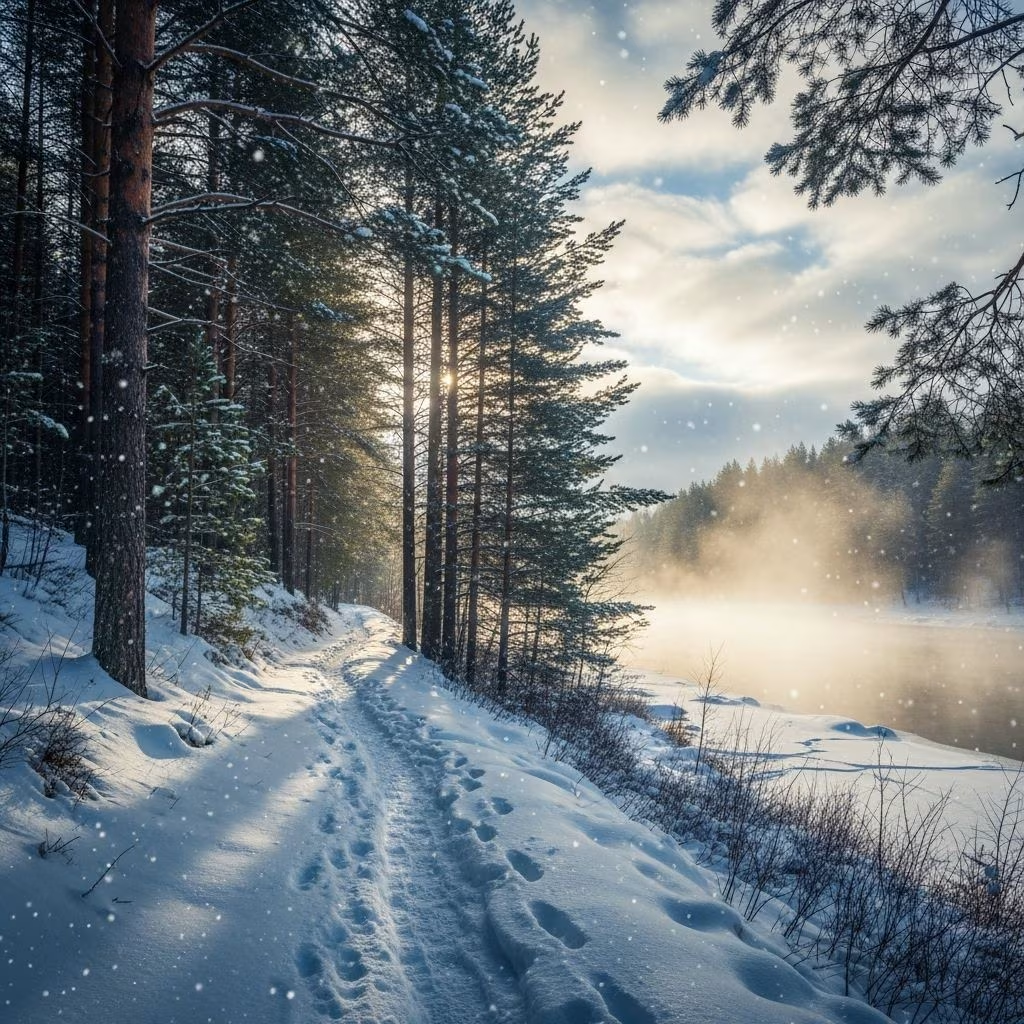
Many regions in the US transform during winter, providing serene paths through snow-capped mountains, sunlit canyons, and foggy forests. States with warmer climates dominate the list due to low precipitation and comfortable temps, ideal for day hikes. Hikers benefit from stable weather patterns, vibrant wildlife sightings, and photogenic scenery enhanced by frost or bare branches. Essential preparations include layered clothing, sturdy boots with traction, and checking park alerts for closures.
Arizona leads with a hiking suitability score of 8.04/10, boasting 3,240 trails or 43.47 per 100,000 residents, and an average rating of 4.5/5. Mild winters average around 50-60°F with minimal rain, perfect for exploring red rock formations. Flagstaff serves as a hub near the San Francisco Peaks, offering 266 sunny days annually despite higher elevation snow.
Prime spots include Devil’s Bridge Trail in Coconino National Forest, a 6.3 km moderate out-and-back rated 4.7/5, leading to a natural arch with panoramic views. Cathedral Rock near Sedona provides steep but rewarding climbs amid vortex sites. Winter visitors enjoy solitude on these paths, with wildflowers occasionally blooming post-rain.
Scoring 7.73/10, New Mexico offers 1,545 trails (73.22 per 100,000 people) and averages 54.67°F with just 3.71 inches of precipitation. The state’s vast open spaces and cultural landmarks make it a hiker’s paradise. Bandelier National Monument features ancient pueblo ruins along easy canyon trails, while White Sands National Park’s gypsum dunes create otherworldly walks.
Carson National Forest provides forested paths with occasional snow at higher elevations, but valleys remain hikeable. Taos area’s Rio Grande Gorge trails offer dramatic overlooks without extreme cold.
California’s 7.43/10 score reflects its unmatched 12,422 trails (31.92 per 100,000). Winters hit 62.81°F on average with low 2.97-inch precipitation, enabling year-round access. Yosemite National Park shines with snow-draped waterfalls like Bridalveil Fall and gentler valley loops. Death Valley National Park counters with warm hikes through badlands and colorful canyons, ideal for those avoiding chill.
Big Sur’s coastal paths along Highway 1 deliver ocean vistas, while Joshua Tree’s boulder-strewn deserts stay pleasant.
Utah’s canyons and arches beckon with winter highs in the 50s. St. George acts as a warm retreat near Zion National Park’s Angels Landing (permit required) and Snow Canyon State Park’s lava tubes. Arches National Park remains open for Delicate Arch treks under cooler temps.
Alpine in West Texas tops lists for Big Bend National Park’s Chisos Mountains, where winters average 50-60°F. Trails like Lost Mine offer 360° views without summer scorch. Guadalupe Mountains National Park’s Permian Reef geology adds unique hikes like Devil’s Hall.
Charlottesville’s Blue Ridge foothills see upper 40s temps and minimal 7-inch snow. Shenandoah National Park provides over 100 miles of Appalachian Trail with frozen waterfalls and ridge scrambles. Old Rag Mountain’s circuit is strenuous but rewarding in quiet winter.
Telluride’s 300 sunny days support safe winter trails despite ski fame. Bridal Veil Falls and Bear Creek Falls remain accessible, avoiding avalanche zones. Lower elevations near Durango offer milder Mesa Verde hikes among Ancestral Puebloan sites.
Pensacola’s panhandle delivers 40-60°F hikes through Gulf Islands National Seashore’s dunes and beaches. Timucuan Ecological Preserve features forested trails with birdwatching. Minimal elevation ensures snow-free adventures.
Chattanooga’s 40-50°F winters suit the Cumberland Trail’s segments, with low crowds enhancing the 330-mile path’s rugged beauty.Fiery Gizzard Trail offers caves and streams in South Cumberland State Park.
For snow enthusiasts, Franconia Ridge Loop (8.3 miles, strenuous) in White Mountains provides moderate snow cover and epic Whites. Winter requires microspikes, but rewards include alpine views.
| State | Suitability Score | Trails per 100k | Avg Winter Temp (°F) | Precip (in) |
|---|---|---|---|---|
| Arizona | 8.04 | 43.47 | ~55 | Low |
| New Mexico | 7.73 | 73.22 | 54.67 | 3.71 |
| California | 7.43 | 31.92 | 62.81 | 2.97 |
| Utah | -N/A- | High density | 50s | Low |
| Texas | -N/A- | Varied | 50-60 | Low |
Pack layers (base wicking, insulating fleece, waterproof shell), trekking poles, headlamp for short days, and navigation apps. Check avalanche forecasts in mountains via avalanche.org. Hydrate despite cold, and inform someone of plans. National Park Service apps provide real-time updates.
December shines for parks like Zion, Grand Canyon (rim trails), and Everglades. Avoid high Sierra passes but embrace valley floors.
Yes, in milder states like Arizona or Florida; start with short, well-marked trails and go with a partner.
California, Arizona, and Florida offer the mildest conditions with temps above 50°F.
Rarely in top 10; many are snow-free, but pack traction for higher elevations.
Most are, with some roads gated; check NPS.gov for specifics.
Hike weekdays or lesser-known state parks near popular sites.
