

 Travel Essentials
 Travel Essentials

Explore the world's foremost countries in wildlife conservation, highlighting their unique efforts, success stories, and key destinations that balance tourism with preservation.
 Travel Essentials
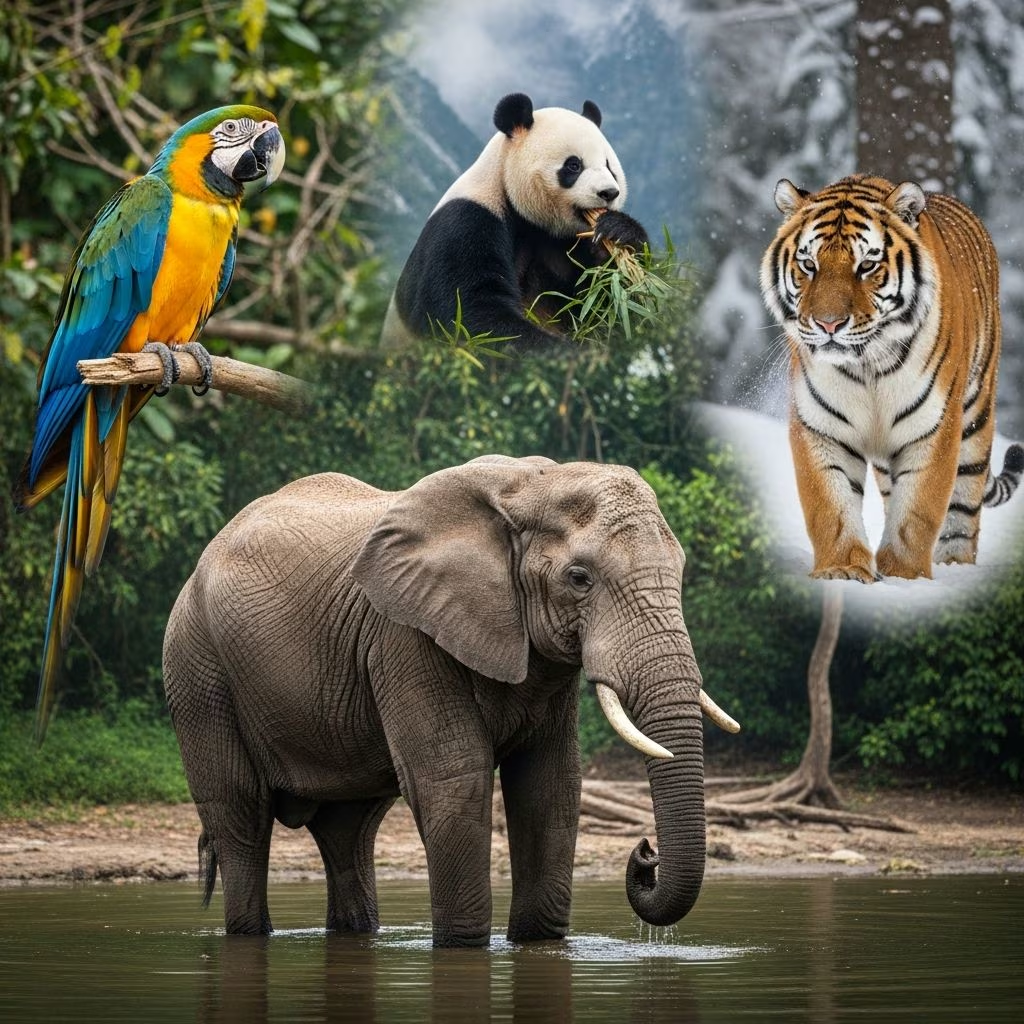
Wildlife conservation stands as a critical global endeavor, with certain countries emerging as frontrunners through dedicated policies, vast protected landscapes, and community involvement. These nations not only safeguard megafauna and diverse ecosystems but also integrate sustainable tourism to fund ongoing efforts. This article delves into standout performers, their methodologies, and iconic sites that exemplify effective preservation.
Effective wildlife protection hinges on a blend of ecological integrity, robust governance, and financial commitment. Metrics like the Megafauna Conservation Index from Oxford University assess nations based on animal distribution relative to land area, protected habitat proportions, and GDP allocated to conservation. African countries often top lists by employing sustainable use models, allowing regulated hunting and tourism to support habitats, while others excel in land protection or funding.
These elements create self-sustaining systems where wildlife thrives alongside human activity.
Africa hosts several top-ranked nations for conservation, particularly those embracing sustainable utilization. Botswana, Namibia, Tanzania, and Zimbabwe rank highly due to policies that balance human needs with wildlife viability.
The Okavango Delta in Botswana exemplifies immersive conservation. This inland delta supports elephants, buffalo, and hippos amid lush channels. Canoe and motorboat safaris minimize impact while generating funds for anti-poaching patrols. Botswana’s approach includes community trusts managing lands, ensuring locals benefit from tourism.
Namibia pioneered conservancies where locals control wildlife areas, leading to rhino and elephant recoveries. High GDP percentages funneled into protection underscore its commitment. Visitors witness desert-adapted species in Etosha National Park.
Serengeti National Park in Tanzania hosts the Great Migration of wildebeest and zebras, drawing millions annually. Revenue supports vast protected zones, maintaining one of Earth’s richest spectacles.
Despite challenges, Zimbabwe invests heavily in megafauna, with parks like Hwange showcasing elephants and lions under sustainable quotas.
Brazil dominates with the Amazon Rainforest and Pantanal wetlands, hotspots teeming with jaguars, exotic birds, and unprecedented species diversity.
Spanning Brazil, this vast expanse harbors unmatched fauna. Conservation focuses on indigenous partnerships and reforestation to combat deforestation.
The world’s largest wetland offers unparalleled jaguar sightings. Flooded landscapes foster rich wildlife viewing, with eco-lodges promoting low-impact stays.
| Region | Key Species | Conservation Highlight |
|---|---|---|
| Amazon | Jaguars, Macaws | Indigenous-led patrols |
| Pantanal | Caimans, Capibara | Wetland restoration |
Costa Rica sets the gold standard for responsible wildlife tourism, boasting 25% protected land. Sloths, monkeys, and toucans thrive in rainforests and volcanoes. Strict policies, eco-lodges, and education ensure minimal disruption.
Canada and the USA feature expansive protected areas. Yellowstone’s grizzlies, wolves, and bison draw crowds, while Canada’s parks preserve belugas and moose. The U.S. ranks 19th overall but excels in land protection. Oxford suggests habitat expansion for better ecological scores.
Zambia’s South Luangwa National Park offers walking safaris amid lions and herds, emphasizing close encounters. Other notables include Ecuador’s Galapagos for unique evolutions and South Africa’s Kruger for Big Five safaris.
Choose operators with certifications, avoid captive encounters, and opt for low-season visits to reduce pressure.
Poaching, habitat loss, and climate change persist. Top nations counter with tech like drones and international pacts, but collective action is vital.
High rankings stem from balanced ecological health, protected areas, and funding via GDP or tourism.
Yes, its model integrates conservation, sustainability, and education seamlessly.
African nations lead via sustainable use, topping indices despite smaller GDPs.
Unregulated yes, but responsible practices fund protection and limit impacts.
Serengeti, Okavango, Pantanal, and Yellowstone offer prime examples.
