

 Travel Essentials
 Travel Essentials

Explore Chicago's most captivating historical sites, including preserved architecture, pivotal neighborhoods, and sites tied to key events like the Great Migration and World's Fair.
 Travel Essentials
Chicago stands as a testament to America’s dynamic evolution, blending industrial grit with cultural renaissance. Founded in 1837, this Midwestern powerhouse rose from swampy origins to become a global icon of innovation and resilience. Its historical sites offer windows into pivotal moments—from the Great Fire of 1871 to the Jazz Age and beyond. Many of these landmarks are free or low-cost, making them accessible gateways to understanding the city’s soul.
Chicago’s skyline owes much to its ability to rebuild stronger after disasters. The Great Chicago Fire devastated the city in 1871, yet it spurred a architectural revolution led by visionaries like Louis Sullivan and Daniel Burnham.
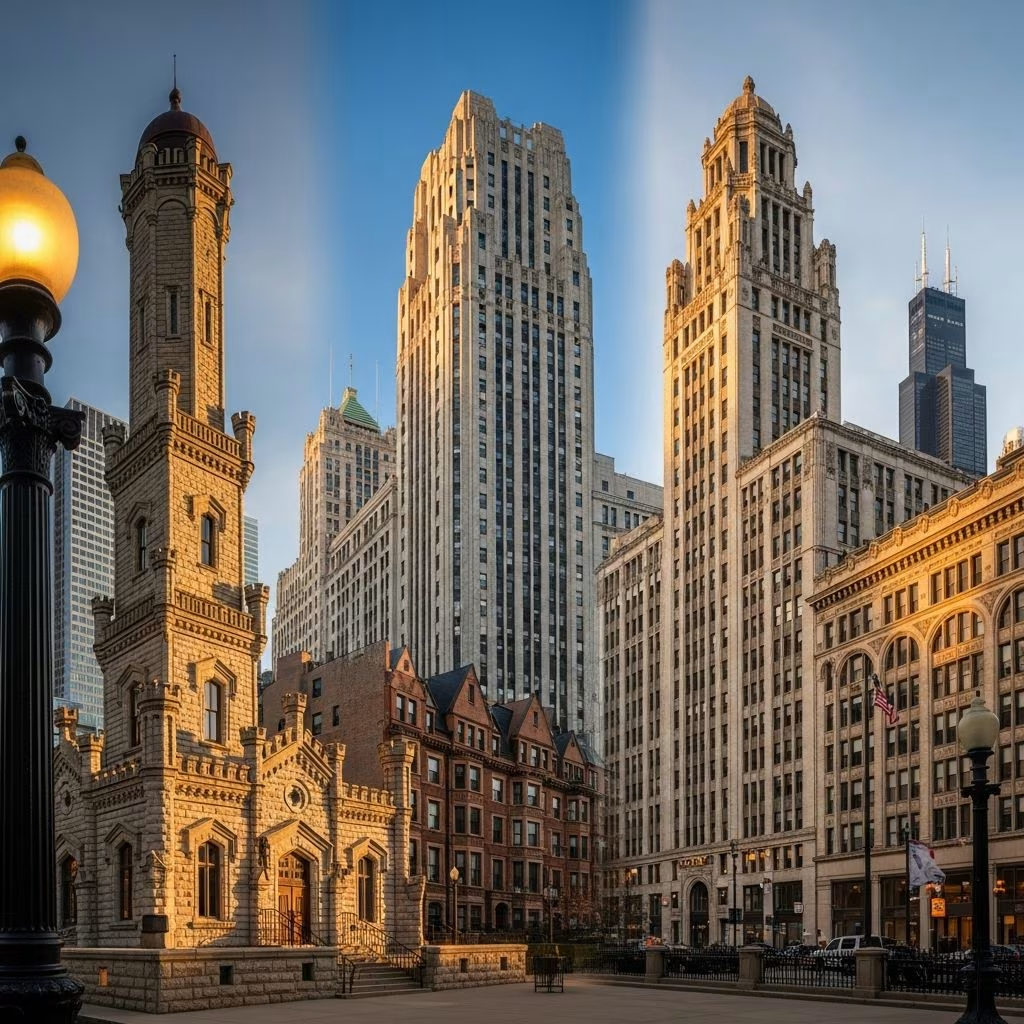
Standing at 154 feet, the turreted Chicago Water Tower is one of the few structures that endured the Great Fire. Constructed in 1867 from rugged limestone, it symbolized the city’s defiance. Today, it houses the City Gallery, showcasing photography exhibits. Its Gothic Revival style contrasts sharply with modern skyscrapers, drawing visitors for selfies and stories of survival.
Adjacent to the Water Tower, the Chicago Water Pumping Station also survived the blaze. These limestone beauties on Michigan Avenue highlight 19th-century engineering prowess, pumping water from Lake Michigan to fuel urban growth.
Cemeteries in Chicago are more than burial grounds; they are open-air museums chronicling the elite and innovators who built the city.
Spanning 119 acres in Uptown, Graceland Cemetery is a Victorian masterpiece designed in 1860. Graves of luminaries like Marshall Field (retail magnate) and Potter Palmer (real estate baron) dot the landscape. Eternal Silence sculpture by Lorado Taft guards a tomb with haunting realism. Nature trails wind past pyramids and obelisks, blending art with ecology.
| Iconic Grave | Figure | Legacy |
|---|---|---|
| Bronze Casket | M.A. Macy | Inventor, philanthropist |
| Victory Monument | 8th Regiment | Honors Black soldiers in Spanish-American War |
| Payne Tomb | John Payne | Business tycoon |
Chicago’s meatpacking district fueled the nation’s dinner tables and Upton Sinclair’s The Jungle.
The limestone Stock Yards Gate, erected in 1879, marks the entrance to what was once the world’s largest meatpacking hub. By 1924, it processed 15 million cattle yearly. Though slaughterhouses closed in 1971, the gate evokes labor struggles and immigrant stories. The adjacent Packingtown neighborhood preserves this gritty heritage.
Jean Baptiste Point DuSable, a Haitian trader, is credited as Chicago’s founder around 1780. His story challenges Eurocentric narratives.
The reconstructed DuSable Home at the Chicago History Museum site highlights his fur trading post. DuSable built the first permanent settlement, trading with Native Americans and setting the stage for growth. Exhibits detail his mixed-race background and contributions to early commerce.
Chicago hosted transformative expositions that redefined leisure and innovation.
This 500-acre lakefront oasis hosted the World’s Columbian Exposition, drawing 27 million visitors. Daniel Burnham’s “White City” showcased neoclassical wonders, electricity, and the Ferris Wheel. Today, the Museum of Science and Industry occupies the surviving Palace of Fine Arts.
Established in 1836 as Lake Park, Grant Park faced battles over its public status. Legal fights ensured it remained open space, hosting Lollapalooza and the Bean sculpture. It’s a green anchor amid skyscrapers.
Chicago’s diversity shines in its ethnic enclaves, each with distinct historical imprints.
Bronzeville buzzed during the Great Migration (1910-1970), when 500,000 Black Southerners arrived, fleeing Jim Crow for factory jobs. It birthed jazz legends at the Regal Theater and housed the Chicago Defender newspaper. Street art and blues clubs revive this legacy.
Originally Czech in the 1860s, Pilsen became a Mexican hub post-1960s. Murals on 16th Street depict migration tales and resistance. Thalia Hall hosts music, preserving Bohemian roots amid taquerias.
Explore Ukrainian Village’s Holy Trinity Cathedral or Pullman’s planned worker town, a National Monument for labor history.
Chicago boasts over 350 National Register sites, including 83 historic districts. The city’s Landmarks Commission protects gems like the Rookery Building, Frank Lloyd Wright’s early masterpiece.
The Loop holds 55 Register listings, from the Art Institute to movable bridges like Michigan Avenue’s.
Many sites cluster downtown, reachable by CTA trains or Divvy bikes. Download Chicago History Museum apps for self-guided tours.
Many exteriors and parks like Grant Park are free; museums charge $15-30. Water Tower gallery is gratis.
The Chicago Water Tower, a limestone survivor amid total devastation.
Bronzeville, becoming Black Chicago’s cultural epicenter.
Over 350, with 34 National Historic Landmarks.
Chicago History Museum in Lincoln Park.
Organizations like Landmarks Illinois ensure these sites endure. Visitor support via ethical tourism aids preservation. Chicago’s history isn’t static—it evolves, inviting you to connect past with present.
