

 Travel Essentials
 Travel Essentials

Explore New England's rich heritage at top sites like Plimoth Patuxet, Freedom Trail, and Adams National Park, offering immersive journeys into colonial and revolutionary past.
 Travel Essentials
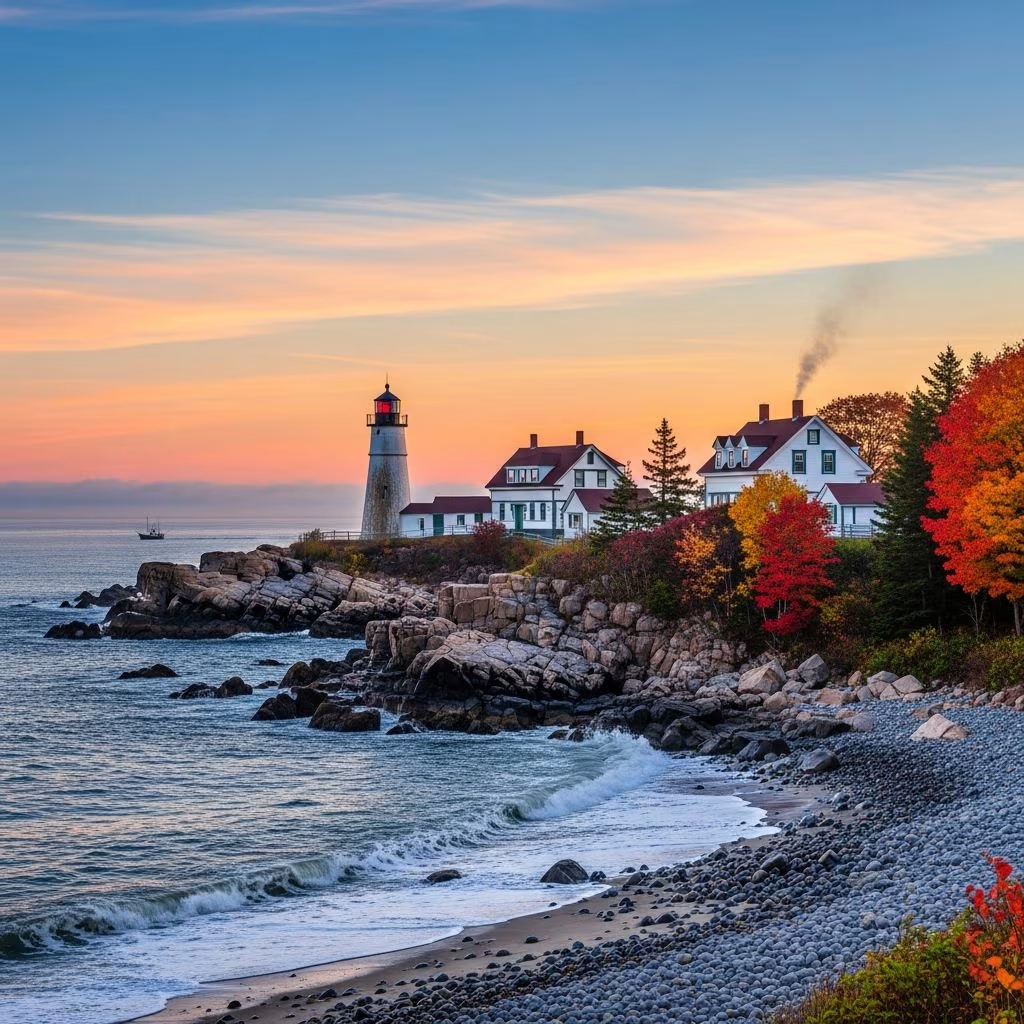
New England stands as a living testament to America’s foundational chapters, where colonial settlements, revolutionary fervor, and industrial ingenuity shaped the nation. From the rocky shores of Massachusetts to the verdant hills of Vermont, these six states—Maine, New Hampshire, Vermont, Massachusetts, Rhode Island, and Connecticut—preserve sites that transport visitors back in time. This guide highlights essential destinations, blending immersive exhibits, preserved architecture, and interactive experiences to reveal the stories of pilgrims, patriots, and pioneers.
The region’s history begins with intrepid European arrivals seeking religious freedom and new opportunities. These early outposts evolved into thriving communities, their legacies captured in meticulously restored villages and homes.
Nestled in Plymouth, Massachusetts, Plimoth Patuxet recreates the daily existence of English colonists and Wampanoag Native Americans from 1627. Costumed interpreters inhabit thatched-roof homes, tending crops, crafting tools, and sharing firsthand narratives of survival amid harsh winters and cultural exchanges. Visitors board a replica of the Mayflower II, exploring its cramped quarters, and witness traditional milling at the Grist Mill. This multifaceted site underscores the complex interplay between settlers and indigenous peoples, offering ticket packages for full immersion across its historic homesite, craft center, and village.
In Duxbury, Massachusetts, the Alden Historic Site honors John and Priscilla Alden, Mayflower voyagers who built a family legacy here. Their homestead, dating to the mid-17th century, features period furnishings and gardens evoking self-sufficient farm life. Exhibits detail their roles in Plymouth Colony governance and the enduring Alden family story, providing a personal lens on early American resilience.
New England’s streets and taverns buzzed with dissent against British rule, igniting the American Revolution. Walk in the footsteps of founding figures at these pivotal locations.
The iconic Freedom Trail winds through Boston, linking 16 landmarks from Boston Common to the Bunker Hill Monument. Red-brick paths guide explorers past the Granary Burying Ground—resting place of Paul Revere and Samuel Adams—the Old North Church where lanterns signaled “one if by land,” and Faneuil Hall, the “Cradle of Liberty.” Costumed guides animate tales of the Boston Tea Party and midnight rides, making history vivid for all ages.
| Key Freedom Trail Stops | Historical Significance |
|---|---|
| Old State House | Site where Declaration of Independence was read aloud in 1776. |
| Paul Revere House | Home of the silversmith famous for his warning ride. |
| USS Constitution | Oldest commissioned warship, “Old Ironsides,” from the War of 1812. |
| Bunker Hill Monument | Commemorates the 1775 battle that tested colonial resolve. |
Boston’s Old State House, a red-brick gem amid skyscrapers, served as Massachusetts’ colonial seat. Inside, artifacts and audio reenactments recount lion-and-unicorn balcony ceremonies and revolutionary debates. Its lion-topped balcony proclaimed independence to cheering crowds, symbolizing the shift from colony to nation.
Quincy, Massachusetts, claims two presidents in the Adams dynasty, whose homes chronicle leadership across generations.
This park encompasses the birthplaces of John Adams (second U.S. President) and John Quincy Adams (sixth), plus Peacefield—the family estate from 1720 to 1927—and the Stone Library with 14,000 volumes. Tours reveal diplomatic triumphs, abolitionist stances, and domestic life, illuminating how this intellectual clan influenced American ideals.
John Adams drafted the Massachusetts Constitution, while his son advanced foreign policy; their preserved quarters offer intimate insights into presidential formative years.
New England’s seafaring past thrives in preserved homes and churches tied to trade and whaling booms.
Perched on Nantucket’s Sunset Hill, this 1686 saltbox house—gift to unite feuding families—stands on its original foundation. Amid herb gardens, rooms freeze in time with low ceilings and wide floorboards, evoking Quaker whalers’ lives when Native Wampanoags dominated the population. Tours run June to October, free entry.
In Newport, Rhode Island, Trinity Church (1726) boasts Wren-inspired design, Tiffany windows, and a rare three-tiered pulpit where George Washington prayed. The Wanton-Lyman-Hazard House (1697), Newport’s oldest, expanded from a simple chimney-centered structure, housed Loyalists amid revolutionary tensions.
Beyond cities, New England’s countryside preserves agrarian and pre-war stories.
One mile from Woodstock village, this 19th-century farmstead founded by railroad magnate Frederick Billings showcases Jersey cows, heritage breeds, and vintage tools for threshing and sugaring. A documentary, A Place in the Land, contextualizes sustainable farming evolution.
In Lexington, Massachusetts, Buckman Tavern sheltered minutemen before the 1775 “shot heard round the world.” Bullet-pocked walls and muskets recount the skirmish that launched the Revolution, with guides in tricorn hats bringing dawn chaos to life.
New England’s sites cluster for efficient itineraries: base in Boston for Freedom Trail and day trips to Plymouth or Quincy; island-hop to Nantucket and Newport; venture north to Vermont farms.
Allow 3-4 hours self-guided or 90 minutes with a tour; start early to avoid crowds.
Yes—Plimoth Patuxet and Billings Farm excel with hands-on activities for kids.
June-October; combine with whale-watching for maritime context.
Most have ramps and guides; check NPS.gov for Adams Park details.
Absolutely—a loop from Boston to Newport, Providence, and Vermont covers highlights.
