

 Travel Essentials
 Travel Essentials

Explore St. Vincent's historic treasures, from 18th-century forts and the Western Hemisphere's oldest botanical gardens to mysterious petroglyphs and colonial tunnels.
 Travel Essentials
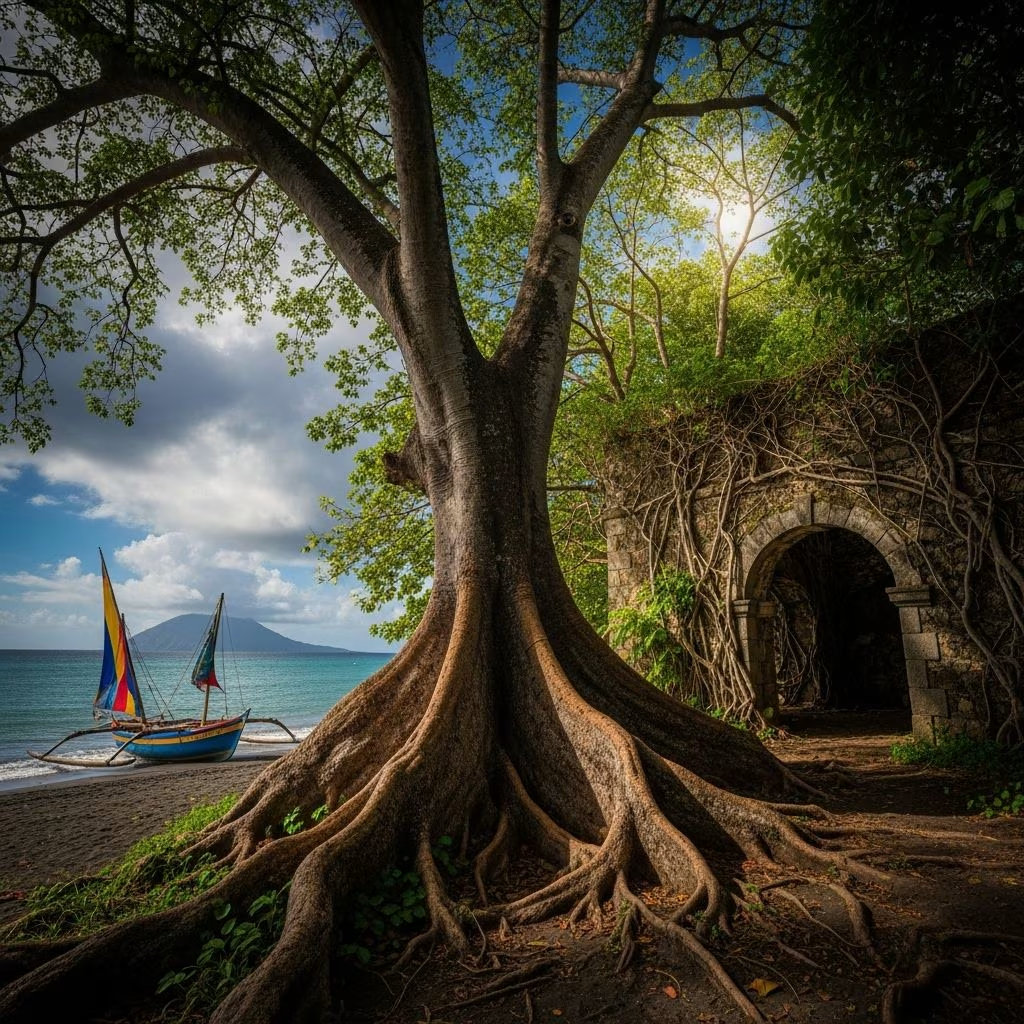
St. Vincent, the lush main island of St. Vincent and the Grenadines, holds a treasure trove of historical sites that whisper tales of indigenous resistance, colonial rivalries, and natural wonders. From towering forts built to subdue local populations to gardens nurturing plants brought by famous explorers, this Caribbean gem offers travelers a chance to step back in time while surrounded by verdant landscapes and volcanic beauty.
The history of St. Vincent is marked by intense struggles between European powers and the resilient Carib people. French settlers arrived in the early 18th century, followed by British dominance, leading to conflicts that shaped the island’s fortifications and infrastructure. Today, these sites stand as testaments to that turbulent era, providing context for the peaceful, multicultural society that thrives now.
Key colonial influences are evident in Kingstown, the vibrant capital known for its arched Georgian architecture and bustling markets. Founded under French rule in 1722, it transitioned to British control, blending architectural styles that reflect both heritages. Visitors can wander Bay Street, admiring 18th-century buildings and harbor views, or explore the lively Kingstown Market for local produce and crafts.
Dominating the skyline above Kingstown, Fort Charlotte exemplifies British military strategy. Constructed in the early 19th century at 600 feet above sea level, its cannons point inland toward Carib territories rather than the sea, underscoring its role in suppressing local uprisings. Inside, vivid murals depict the fierce Carib wars, offering a stark visual history.
Other forts like Fort Hamilton and Fort Duvernette add to the network, each with unique stories of defense and daily colonial life.
Established in 1765, the St. Vincent Botanical Gardens claim the title of the oldest in the Western Hemisphere, a serene counterpoint to the island’s militaristic past. Spanning lush grounds, the gardens feature native species alongside exotics, including a breadfruit tree propagated from cuttings brought by Captain William Bligh in 1793 after his famous Bounty voyage.
A guided tour reveals the gardens’ evolution from a colonial plant nursery to a national treasure. Highlights include:
Plan for 1-2 hours here, combining it with nearby Montreal Gardens for a full day of botanical exploration.
St. Vincent’s sugar economy drove ambitious projects like the Black Point Tunnel, carved between 1812 and 1815. This 300-foot passage through solid rock connected cane fields to export ports, laboriously hand-built by enslaved workers using basic tools. Today, it stands as a poignant reminder of exploitation, with its dark interior leading to a bat cave perfect for adventurous explorers.
| Site | Built | Length | Key Feature |
|---|---|---|---|
| Black Point Tunnel | 1812-1815 | 300 feet | Hand-carved by enslaved labor; bat cave access |
| Fort Charlotte | Early 1800s | N/A | Inland-facing cannons; war murals |
| Botanical Gardens | 1765 | Multiple acres | Bligh’s breadfruit tree; parrot aviary |
North of Buccament Bay lies Layou Petroglyph Park, home to enigmatic carvings on a massive boulder estimated to date from 300-600 B.C.E. These Amerindian inscriptions, possibly spiritual or territorial markers, remain undeciphered, inviting speculation amid surrounding lush ridges and a refreshing natural pool.
Further along the Leeward Highway, the Carib Rock boasts a striking human face etching from A.D. 600, among the Caribbean’s finest. A scenic drive here combines history with stunning coastal views, ideal for photography and light hiking.
St. Mary’s Cathedral of the Assumption captivates with its eclectic design, blending Moorish, Romanesque, Byzantine, Venetian, and Flemish elements. Consecrated in 1823 but completed in the 1930s, its 100-foot Madonna Tower offers unparalleled harbor panoramas. This Catholic landmark provides insights into the island’s religious evolution.
Nearby, St. George’s Cathedral and other churches like Mayreau Catholic Church showcase diverse worship traditions, from Anglican to Methodist, reflecting St. Vincent’s cultural mosaic.
Navigating St. Vincent’s sites is straightforward with affordable taxis or guided tours. Start in Kingstown, then head north via Leeward Highway for petroglyphs and tunnels. Ferries connect to Bequia for maritime museums if extending your trip.
Enhance visits with hikes to Dark View Falls, Vermont Nature Trail, or Owia Salt Pond. Cultural stops include the National Museum in Kingstown and Bequia’s heritage sites. For film buffs, Wallilabou served as a Pirates of the Caribbean set.
St. Vincent’s heritage isn’t isolated—it’s woven into daily life, from market vendors sharing oral histories to artists drawing inspiration from ancient stones.
Yes, with standard precautions; sites are generally safe, though rural areas warrant caution after dark.
2-3 days suffice for main sites; add time for Bequia day trips.
Not always, but highly recommended for deeper insights at gardens, forts, and petroglyphs.
Around $5-10 USD, including guide option.
Absolutely—many sites near beaches like Buccament Bay.
Efforts by locals and organizations safeguard these sites, ensuring the stories of Caribs, colonists, and enslaved builders endure. Visitors play a role by supporting ethical tourism and respecting natural surroundings.
