

 Travel Essentials
 Travel Essentials

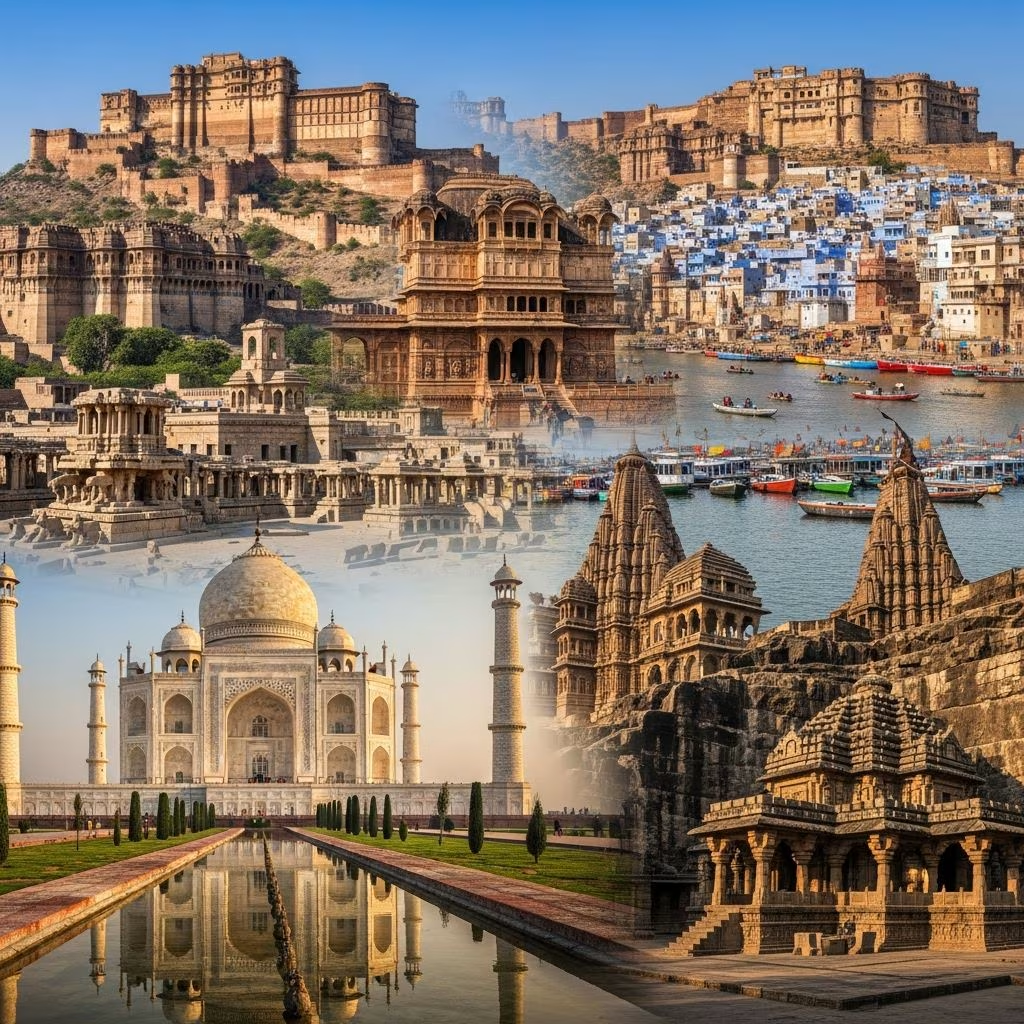
Explore India's richest historical treasures, from prehistoric rock art to Mughal marvels and ancient temples, offering profound insights into the nation's diverse cultural evolution.
 Travel Essentials
India’s landscape is a living museum, dotted with monuments and ruins that whisper tales from prehistoric times to the grandeur of empires. These sites, many recognized by UNESCO, reveal the subcontinent’s layered history of innovation, spirituality, and resilience. From cave paintings older than the pyramids to towering minarets and sprawling fortresses, they invite travelers to connect with civilizations long past.
The dawn of human presence in India is vividly captured in its ancient rock shelters, offering a window into Paleolithic life. These locations showcase some of the world’s earliest artistic expressions and tools, predating many global civilizations.
Nestled in Madhya Pradesh’s lush hills, Bhimbetka stands as a testament to India’s antiquity. Over 700 rock shelters adorn the landscape, many bearing vivid paintings in red pigment that depict hunting scenes, dances, and mythical beasts. Artifacts like ostrich eggshell beads and stone tools indicate habitation dating back at least 30,000 years. This UNESCO site preserves layered evidence of continuous human activity, evolving from nomadic hunters to settled communities.
In Gujarat’s Rann of Kutch, Dholavira reveals the sophistication of the Indus Valley Civilization around 2500 BCE. This urban settlement featured advanced water management systems, including reservoirs that harnessed seasonal floods, multi-story buildings, and a unique signboard with proto-script. Discovered in the 1960s, it highlights trade links extending to Mesopotamia.
Visitors wander through vast reservoirs, granaries, and ceremonial grounds, marveling at stone architecture resilient against arid conditions.
Buddhism’s birthplace profoundly shaped India’s spiritual heritage, leaving behind stupas, monasteries, and universities that influenced Asia.
Bihar’s Bodhgaya is the hallowed ground under the Bodhi Tree where Siddhartha Gautama became the Buddha in the 5th century BCE. The Mahabodhi Temple Complex, a UNESCO site, centers around a towering stupa and the sacred tree descendant. Pilgrims from across the globe meditate here, surrounded by international monasteries.
| Element | Description |
|---|---|
| Mahabodhi Temple | 55m pyramidal tower with Buddha statue. |
| Bodhi Tree | Direct sapling from original enlightenment tree. |
| Surrounding Monasteries | Representing Thai, Tibetan, Japanese traditions. |
Near Bodhgaya, Nalanda’s ruins evoke the intellectual zenith of ancient India. Flourishing from the 5th to 12th centuries CE, it hosted 10,000 students and 2,000 teachers, drawing scholars like Xuanzang from China. Vast monasteries, stupas, and lecture halls reveal a curriculum spanning philosophy, medicine, and astronomy. Destroyed by invaders, its legacy endures in modern universities.
Madhya Pradesh’s Sanchi, commissioned by Emperor Ashoka in the 3rd century BCE, features the Great Stupa with intricately carved toranas (gateways) depicting Jataka tales. These marble gateways, added later, narrate Buddha’s life without direct images, symbolizing early aniconism.
Maharashtra’s Deccan Plateau hides architectural miracles carved directly from basalt cliffs, blending art, devotion, and engineering from the 2nd century BCE to 10th century CE.
Ajanta’s 30 caves served as viharas (monasteries) and chaityas (prayer halls), adorned with paintings illustrating Buddha’s previous lives. The vibrant frescoes, preserved in horseshoe-shaped caves, capture expressions of serenity and emotion with natural pigments.
Ellora’s 34 caves represent Hinduism, Buddhism, and Jainism. The crowning Kailasa Temple (Cave 16) is a monolithic structure excavated top-down, dedicated to Shiva, featuring life-sized elephants and Ramayana carvings. This multi-faith ensemble symbolizes medieval India’s religious tolerance.
Rajasthan’s forts embody martial prowess and aesthetic splendor, built to withstand sieges while showcasing artistry.
Perched in the Aravalli hills, Kumbhalgarh’s 36 km wall—the world’s second-longest—encircles palaces, temples, and reservoirs. Built by Maharana Kumbha in the 15th century, it was impregnable, with birth of prince Udai Singh within its walls. Over 300 Jain temples dot the complex.
The massive Chittorgarh Fort witnessed three famous jauhars (mass self-immolations) amid Rajput defiance against invaders. Palaces like Padmini’s and towering towers overlook victory pillars commemorating battles.
The Mughals fused Persian, Islamic, and Indian styles, creating timeless icons of power and love.
Delhi’s Qutb Minar, a 73m victory tower from 1193 CE, marks the Delhi Sultanate’s rise. Flanked by the Quwwat-ul-Islam Mosque and Alai Darwaza’s innovative dome, Mehrauli Park holds 100+ monuments.
Abandoned after 14 years, Akbar’s sandstone city near Agra features Buland Darwaza—the world’s tallest gateway—and Salim Chishti’s marble tomb. Panch Mahal’s five-story design reflects syncretic architecture.
Agra’s Taj, built 1632-1653 by Shah Jahan, is a funerary garden with perfect symmetry, Quranic calligraphy, and pietra dura inlays. A UNESCO wonder symbolizing devotion.
Delhi’s Lal Qila, Shah Jahan’s 17th-century residence, features Diwan-i-Aam halls, pearl mosques, and gardens where India’s independence was declared.
Karnataka’s Hampi, once Vijayanagara’s capital, sprawls with Virupaksha Temple, Vittala’s musical pillars, and bazaars described by travelers. A UNESCO site of Dravidian architecture.
Tamil Nadu’s 11th-century Brihadeeswarar Temple in Thanjavur boasts a 66m vimana, cast in a single granite block. Gangaikonda and Airavatesvara exemplify Chola bronze iconography and water management.
To maximize your trip:
Bhimbetka’s rock shelters date back 30,000 years, predating most ancient sites.
Over 40, with many historical like Taj Mahal and Hampi.
Yes, with standard precautions; most have ASI protection.
Golden Triangle (Delhi-Agra-Jaipur) pairs with Rajasthan forts.
Modest clothing; cover shoulders and knees.
