

 Travel Essentials
 Travel Essentials

Explore essential US destinations tied to LGBTQ+ milestones, including Stonewall, the Castro, and Chicago's leather heritage, for an enriching historical journey.
 Travel Essentials
Across the United States, numerous locations stand as testaments to the struggles, triumphs, and vibrant culture of the LGBTQ+ community. These sites offer travelers a chance to connect with pivotal moments in history, from spontaneous acts of resistance to the establishment of enduring cultural hubs. Visiting them provides deeper insight into the ongoing fight for equality and celebration of diversity.
The spark of the contemporary LGBTQ+ rights movement ignited in urban centers where communities gathered despite legal and social barriers. These places transformed from everyday venues into symbols of defiance and unity.
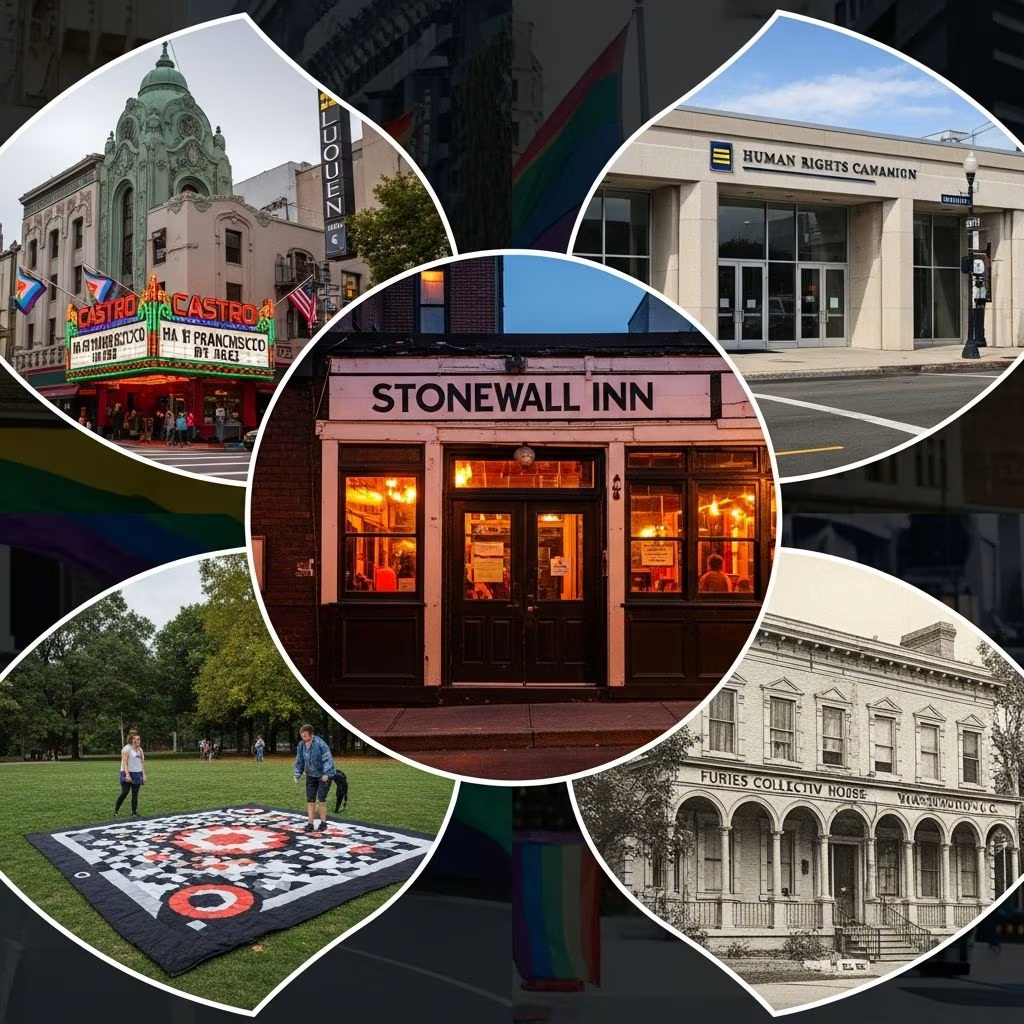
Greenwich Village in New York City holds unparalleled significance as the site of the Stonewall Riots in 1969. On June 28, police raided the Stonewall Inn, a mafia-owned bar that served as a rare safe space for LGBTQ+ individuals to gather, dance, and express themselves openly. Patrons resisted the raid, leading to days of protests that galvanized national attention and led to the first Pride marches the following year. Today, the Stonewall Inn operates as a lively bar with billiards, piano performances, and dance events, preserving its rebellious spirit. Adjacent to it, the Stonewall National Monument, designated in 2016, features a visitor center with immersive exhibits, tours, lectures, and art displays operated by Pride Live in partnership with the National Park Service.
Nearby, the neighborhood boasts additional landmarks like Julius’, recognized as New York City’s oldest gay bar, and The Center, a hub for ACT UP activism during the AIDS crisis. The NYC AIDS Memorial honors those lost to the epidemic. For a fuller experience, the NYC LGBT Historic Sites Project documents dozens of sites, including the Leslie-Lohman Museum of Art, dedicated exclusively to LGBTQ+ visual art, and Henrietta Hudson, a longstanding lesbian bar.
Off Long Island’s coast, Fire Island has served as a vacation retreat for LGBTQ+ people since the mid-20th century. Cherry Grove attracted lesbians, while The Pines became a predominantly gay male destination, fostering unapologetic expression away from mainland scrutiny. These communities built lasting traditions of art, performance, and social bonds that continue to draw visitors.
San Francisco’s Castro neighborhood emerged as one of the nation’s first openly gay enclaves. Post-World War II, many dishonorably discharged service members settled there, drawn by its affordable Victorian homes. By the 1970s, it became a beacon of visibility, anchored by activist Harvey Milk.
At 575 Castro Street, the former site of Castro Camera—where Harvey Milk opened his shop and political campaign headquarters—stands as a core landmark. Milk became California’s first openly gay elected official in 1977 before his assassination in 1978. Plaques and a mural commemorate the spot, emphasizing his role in advancing gay rights through local politics. The GLBT Historical Society Museum, the first standalone institution dedicated to LGBTQ+ history, nearby displays artifacts like a segment of Gilbert Baker’s original 1978 rainbow flag, symbolizing Pride worldwide.
The Castro remains vibrant, with rainbow flags adorning streets and venues hosting events year-round. Visitors can tour the neighborhood to sense its enduring influence on queer culture.
Chicago offers a blend of big-city energy and intimate historical depth, with sites reflecting early organizing and subcultural preservation.
The Henry Gerber House at 1710 North Crilly Court marks the birthplace of formal gay rights advocacy in the US. In 1924, Henry Gerber founded the Society for Human Rights, the country’s first documented gay rights organization, inspired by German models. Though short-lived due to arrests, it planted seeds for future activism. The site now serves as a pilgrimage point for understanding pre-Stonewall efforts.
Founded in 1991 by Chuck Renslow, a pioneer in homoerotic photography, the Leather Archives & Museum preserves the leather, kink, fetish, and BDSM scenes within queer history. Rotating exhibits explore their evolution, including archives from Manhattan’s Mineshaft club. This institution highlights how niche communities contributed to broader LGBTQ+ resilience.
Chicago’s Boystown features the Legacy Walk, the world’s only outdoor museum walk honoring LGBTQ+ icons with quote plaques lining the streets. The Palmer House Hotel, rebuilt after the 1871 Great Chicago Fire, has hosted queer events for over a century, while the Chicago History Museum offers queer-focused online exhibits on drag and Black LGBTQ+ history.
Philadelphia’s contributions to LGBTQ+ history trace back to the nation’s founding era, blending revolutionary ideals with later activism.
At 520 Chestnut Street within Independence National Historical Park, a historic marker notes the site of the nation’s first known gay rights demonstration in 1965. Annual gatherings here by the East Coast Homophile Organizations underscored early calls for equality amid Independence Hall’s symbolic backdrop of American freedoms.
Nearby, Giovanni’s Room, one of the oldest LGBTQ+ bookstores now run by Philly AIDS Thrift, and Keith Haring’s “We the Youth” mural in Point Breeze add layers to the city’s queer tapestry. Barbara Gittings Way in Philadelphia honors another early activist.
In Queens, New York, Jacob Riis Park—known as Riis Beach—has been a queer destination since the 1940s. Excluded from mainstream beaches, LGBTQ+ New Yorkers flocked here for nude sunbathing and camaraderie. It retains its inclusive vibe, especially during summer and Pride, as a public space for diverse gatherings.
To maximize visits, consider these practical tips organized by city:
| City | Top Site | Key Event/Feature | Best Time to Visit |
|---|---|---|---|
| New York | Stonewall Inn | 1969 Riots | Pride Month |
| San Francisco | Castro Camera | Harvey Milk | Year-round |
| Chicago | Leather Archives | Subculture Preservation | Summer |
| Philadelphia | Chestnut St Marker | 1965 Protest | July 4th |
The Stonewall Inn in New York is widely regarded as the catalyst for the modern gay rights movement due to the 1969 riots.
Most are, though museums may have hours; bars like Stonewall operate nightly. Check National Park Service sites for monuments.
Resources like the National Park Service’s LGBTQ+ heritage program list nearly 400 places nationwide.
It’s more adult-oriented but offers beaches for all; areas like Cherry Grove are community-focused.
Henry Gerber’s 1924 organization was the first documented US gay rights group.
Efforts by organizations like the National Park Service continue to identify and protect sites, with surveys documenting hundreds across states. Travelers contribute by visiting respectfully, supporting local businesses, and sharing stories to educate others. These destinations not only recount history but inspire current and future generations in the pursuit of equality.
