

 Travel Essentials
 Travel Essentials

Explore Arizona's diverse natural wonders including the Grand Canyon, slot canyons, deserts, and mountains, with tips for unforgettable visits.
 Travel Essentials
Arizona stands out as a treasure trove of geological masterpieces and ecological diversity, drawing millions to witness its raw beauty each year. From vast chasms carved by ancient rivers to vibrant desert blooms and hidden underground passages, the state offers experiences that blend adventure, serenity, and awe. This guide delves into the must-see sites, providing practical insights for planning your journey through these timeless landscapes.
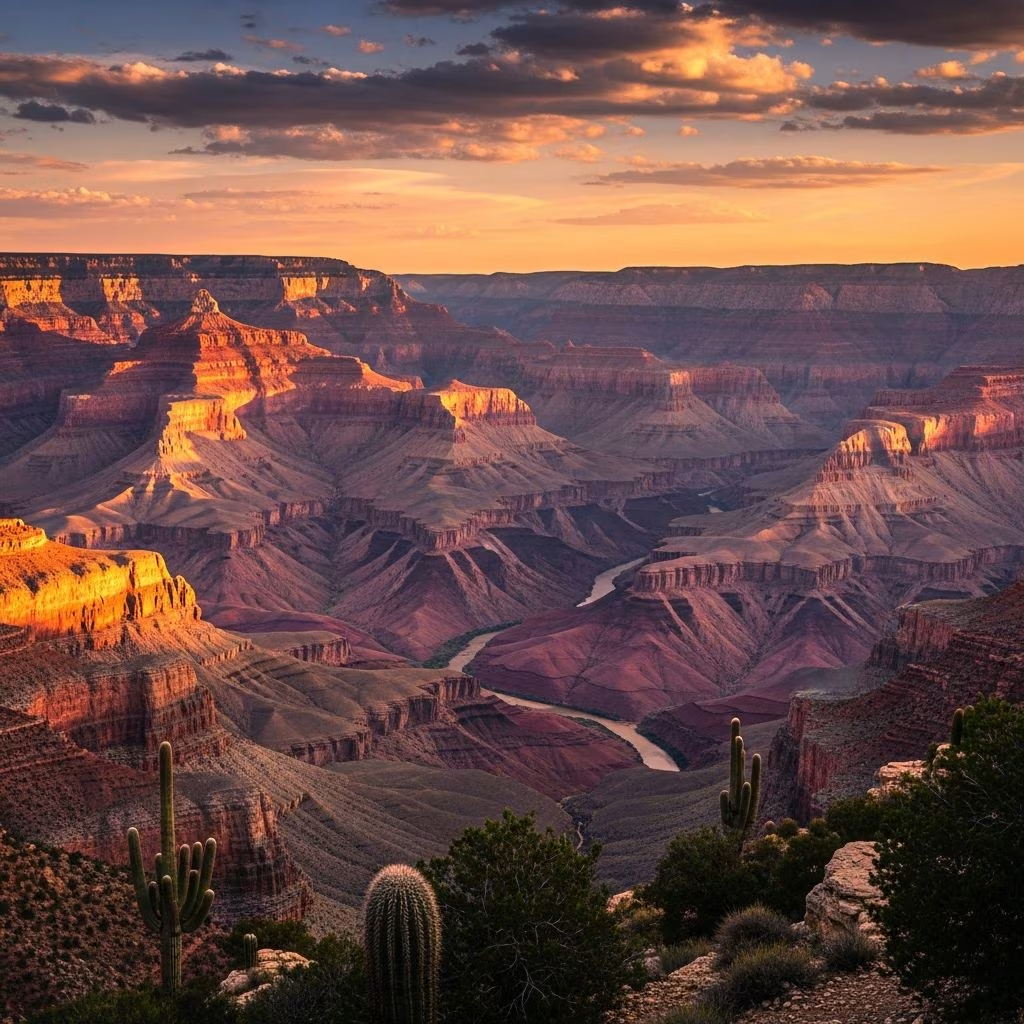
The **Grand Canyon** dominates Arizona’s natural profile, stretching 277 miles long, up to 18 miles wide, and over a mile deep, with the Colorado River snaking through its floor. Formed over six million years by relentless erosion, its layered rock walls reveal billions of years of Earth’s history, from ancient marine fossils to volcanic remnants. Visitors often describe the first viewpoint as humbling, where the scale defies comprehension—visible even from space.
Key areas include the South Rim for accessible trails like Bright Angel and family-friendly shuttles, and the remote North Rim for quieter hikes amid ponderosa pines. Rafting the river offers multi-day immersions, while helicopter tours provide bird’s-eye panoramas. Best visited in spring or fall to avoid summer heat exceeding 100°F.
Arizona’s **slot canyons**, sculpted by flash floods through soft sandstone, create otherworldly corridors where sunlight filters into dramatic beams. **Antelope Canyon**, near Page, is the icon—divided into Upper (easier access, guided tours only) and Lower (steeper ladders, more adventurous). Navajo-guided tours reveal petroglyphs and the canyon’s ethereal glow, peaking midday.
Other gems include Secret Canyon and Cardiac Canyon, but many require permits on Navajo land. The Wave in Paria Vermilion Cliffs demands a competitive lottery permit, rewarding hikers with swirling sandstone waves amid endangered condor habitats. These sites underscore flash flood risks—always check weather forecasts.
| Canyon | Location | Access | Best Time |
|---|---|---|---|
| Antelope (Upper) | Page | Guided tour | 10am-1pm |
| Antelope (Lower) | Page | Guided, ladders | Midday |
| The Wave | Vermilion Cliffs | Permit lottery | Year-round |
In the arid Southwest, **Havasupai Falls** emerge as a turquoise paradise, cascading into travertine pools deep in Havasu Canyon on Havasupai Tribal land. An 8-mile hike (or helicopter) from Hualapai Hilltop leads to these 100-200 foot falls, where mineral-rich waters glow electric blue. Permits are limited; camping enhances the multi-day escape, with Navajo Falls and Mooney Falls nearby.
Nearby, **Horseshoe Bend** bends the Colorado River into a dramatic 1,000-foot drop, ideal for sunset photos—no hike required beyond a short walk. Further south, Fossil Creek’s springs feed lush pools, while Slide Rock State Park in Oak Creek Canyon offers natural red-rock waterslides.
The **Sonoran Desert** blankets southern Arizona, home to the iconic saguaro cactus—towering sentinels up to 50 feet tall, blooming white flowers in spring. **Saguaro National Park**, split east and west of Tucson, protects these giants amid cholla and prickly pear, with drives like Cactus Forest revealing ancient petrified forests nearby.
Wildlife thrives here: roadrunners, Gila monsters, and winter wildflower superbloom transform flats into colorful carpets. Organ Pipe Cactus National Monument adds rare organ pipe cacti along the Mexican border. Night skies dazzle, perfect for stargazing in designated dark-sky parks.
Arizona’s **San Francisco Peaks**, highest in the state at 12,633 feet (Humphreys Peak), offer alpine hikes through aspen groves turning golden in fall. Flagstaff’s Buffalo Park loops lava flows with volcano views. **Sunset Crater Volcano National Monument** preserves a 900-year-old cinder cone amid colorful pumice.
In the south, **Huachuca Mountains** climb to 9,400 feet, harboring jaguars and bird flyways along Patagonia-Sonoita Creek Preserve—a rare riparian oasis. Chiricahua’s Wonderland of Rocks features balanced hoodoos where Apaches once roamed.
Beneath the surface, **Lava River Cave** near Flagstaff plunges 3,000 feet into smooth basalt tubes from ancient flows—bring headlamps for the 30-foot ceilings. **Onyx Cave** in Coronado National Forest ranks among Arizona’s finest, with intricate formations.
The **Arizona Strip**, north of Grand Canyon, hides Vermilion Cliffs’ wave-like steps and condor sanctuaries—remote but rewarding for 4WD explorers. **Monument Valley**’s buttes, straddling Navajo Nation, inspired Western films with their red spires piercing blue skies.
Arizona’s wonders span climates: pack layers for canyon rims (freezing nights) and deserts (scorching days). Entry fees apply—America the Beautiful Pass ($80/year) covers national sites. Sustainable travel means sticking to trails, using reef-safe sunscreen near waters, and supporting Native guides.
Sample 7-Day Itinerary:
Spring (March-May) and fall (Sept-Nov) offer mild weather and blooms; summers are hot, winters snowy at elevations.
Yes—apply via recreation.gov for The Wave (lottery) and Havasupai Tribal Council months ahead.
Mandatory for Antelope Canyon on Navajo land; book via authorized operators.
South Rim and Saguaro NP have easy paths; slot canyons and Havasupai suit fit adventurers.
Condors, bighorn sheep, scorpions—keep distance, store food properly.
