

 Travel Essentials
 Travel Essentials

Uncover Monaco's blend of luxury, history, and natural beauty. Discover must-see attractions, local markets, museums, and cultural experiences in this glamorous destination.
 Travel Essentials
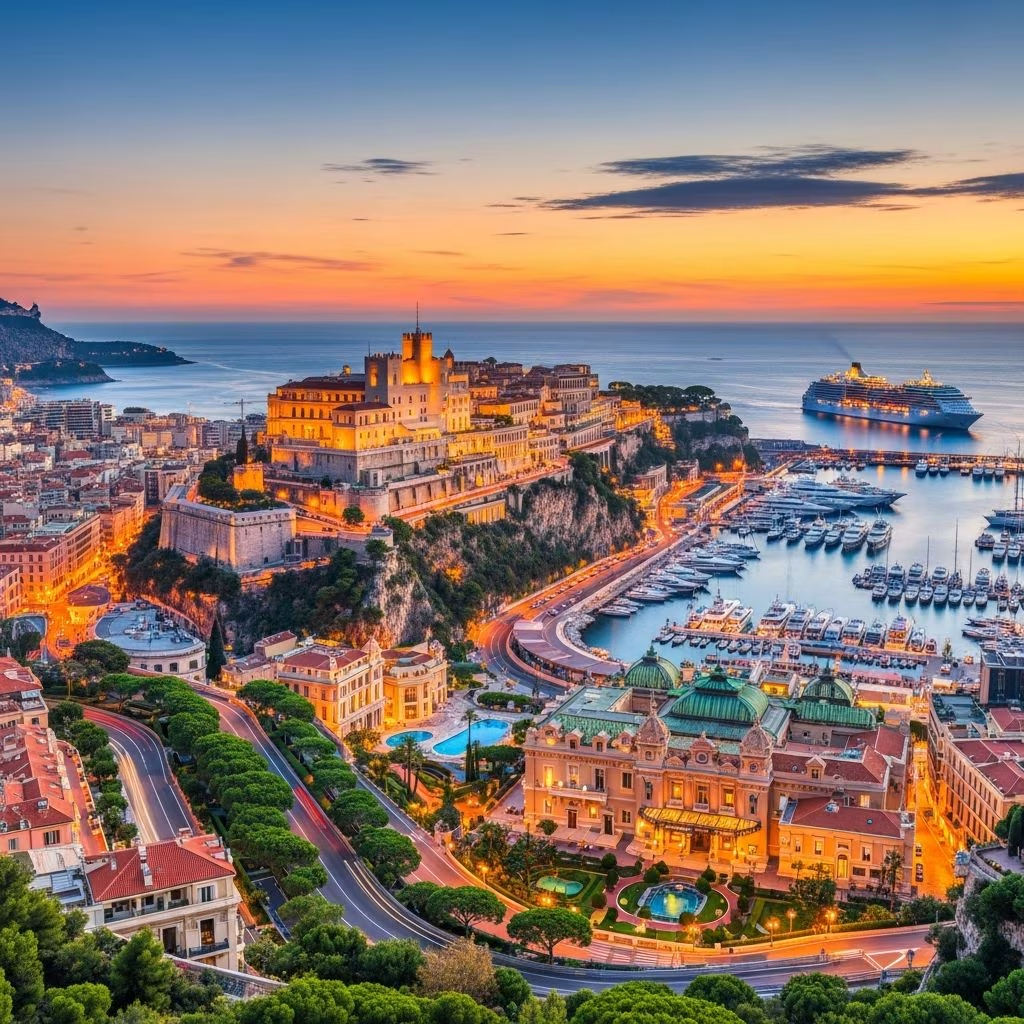
Nestled along the French Riviera, Monaco stands as one of Europe’s most enchanting destinations, combining aristocratic elegance with Mediterranean charm. This compact principality, despite its modest size of merely 500 acres, contains an impressive array of attractions that cater to diverse interests and budgets. Whether you seek cultural immersion, natural beauty, or the glamour associated with high society, Monaco presents opportunities for meaningful exploration at every turn.
The Prince’s Palace of Monaco stands as the official residence of the royal family and represents the heart of the principality’s governance and heritage. Daily at precisely five minutes before noon, uniformed Carabiniers du Prince perform an elaborate changing of the guard ceremony in front of the palace. This ritualistic display offers visitors a glimpse into the principality’s ceremonial traditions and provides an excellent photo opportunity.
Beyond the ceremonial spectacle, much of the year the palace welcomes visitors through guided tours that showcase meticulously preserved state apartments. Each room demonstrates remarkable opulence, featuring gilt accents, silk draperies, and an extensive collection of artwork and furnishings accumulated by the House of Grimaldi since 1160. The palace tour provides insight into centuries of royal heritage and the refined aesthetic standards maintained throughout the residence.
Monaco-Ville, commonly referred to as the Old Town or Le Rocher (The Rock), comprises the original settlement perched dramatically above the Mediterranean. This historic quarter features narrow cobblestone streets lined with characterful buildings painted in warm hues, creating an atmosphere that transports visitors back to medieval times. The architectural ensemble represents different periods of the principality’s evolution, with structures ranging from centuries-old fortifications to more recent residential buildings maintaining traditional aesthetic standards.
Wandering through these winding pathways reveals boutiques, cafés, and eateries tucked into historic buildings. The district’s unique architecture sets it apart from Monaco’s modern developments, offering an authentic counterpoint to the contemporary luxury found in other neighborhoods. Many visitors consider time spent exploring these streets essential for understanding Monaco’s cultural identity beyond its reputation for wealth and glamour.
The Condamine Market, situated at Place d’Armes, operates daily including Sundays and represents a living connection to Monaco’s everyday culture. This hybrid covered and open-air market serves as the primary shopping destination for residents seeking regional specialties, seasonal produce, and fresh seafood from Mediterranean waters below. Unlike tourist-oriented venues, the market remains fundamentally geared toward local needs and preferences.
The market atmosphere embodies authentic Monegasque life, where residents conduct their weekly shopping, visit the newsstand, engage in neighborly conversation, and supervise children in the designated play area. Visitors can experience this quotidian rhythm by sampling traditional regional fare, including socca, a distinctive chickpea pancake served at market cafés. Settling at one of the old-fashioned coffee establishments provides an ideal vantage point for observing daily life while enjoying refreshment in an unpretentious setting.
The Musée Oceanographique (Oceanographic Museum) stands majestically on cliffs above the Mediterranean, representing one of the world’s most prestigious marine science centers. Founded by Prince Albert I, an accomplished sailor and oceanography pioneer, the institution has dedicated over a century to oceanic study and conservation. The museum houses an exceptional collection exceeding 6,000 specimens, complemented by rare natural history artifacts that chronicle marine biodiversity and oceanographic knowledge.
The facility features multiple exhibition spaces, including spectacular aquariums where visitors encounter diverse marine species in carefully maintained habitats. Specialized attractions such as the shark lagoon and Turtle Island positioned on the panoramic terrace create memorable encounters with ocean life. The museum’s design integrates scientific rigor with aesthetic presentation, earning its designation as a temple where art and science converge. For families and marine enthusiasts, the museum offers a manageable size that allows thorough exploration without overwhelming visitors during day trips.
The Jardin Exotique (Exotic Garden) showcases an extraordinary collection of succulents and arid-region plants positioned dramatically along cliff edges overlooking Monaco’s coastline. The garden’s origins trace to the 1860s when exotic specimens arrived from Mexico, eventually developing into the current horticultural masterpiece. Prince Albert I commissioned the establishment of the present garden in 1912, employing Chief Engineer Louis Notari to design the landscape that has matured over succeeding generations.
This botanical attraction features plants from arid regions across the Americas, Africa, and the Arabian Peninsula, creating a diverse and visually striking landscape. Beneath the garden’s surface lies the Observatory Cave, a substantial cavern system containing prehistoric rock formations accessible to visitors and spelunking enthusiasts. The combination of exotic botany and geological intrigue makes the Jardin Exotique an educational and aesthetically rewarding experience that appeals to nature enthusiasts and families alike.
Within Fontvieille Park lies the Princess Grace Memorial Rose Garden, dedicated to Grace Kelly’s memory and established as a serene refuge amidst Monaco’s urban environment. This horticultural space provides a tranquil setting for contemplation and leisurely strolls, featuring numerous rose varieties and flowering plants that create a sensory experience. The garden’s peaceful ambiance contrasts markedly with the principality’s commercial hustle, offering visitors respite from sightseeing activities.
The surrounding Fontvieille Park extends from the Circus and Heliport toward the Columbus Hotel, providing valuable green space within the densely populated principality. These landscaped areas demonstrate Monaco’s commitment to maintaining natural beauty despite significant development pressures, ensuring residents and visitors have access to peaceful outdoor environments.
Monaco’s shopping culture caters to diverse economic contexts, from ultra-luxury establishments to more modest retail options. The Pavillons Monte Carlo represents an extraordinarily upscale shopping destination where the world’s most discerning shoppers acquire everything from haute couture to tiaras. This venue epitomizes the principality’s reputation as a haven for extravagant acquisition and refined taste.
For those with more moderate budgets, Le Dressing consignment shop provides access to luxury goods at reduced price points, making designer fashion accessible to broader audiences. Contemporary art museums and the Monaco Yacht Club feature gift shops offering sophisticated souvenirs that extend beyond typical tourist merchandise, allowing visitors to acquire distinctive remembrances reflecting Monaco’s cultural institutions and maritime heritage.
The Moyenne Corniche provides expansive panoramic vistas across the French Riviera landscape, encompassing the port of Villefranche-sur-Mer and the exclusive peninsula of Saint-Jean-Cap-Ferrat. Brief visits to these elevated viewpoints require minimal time investment yet yield substantial visual rewards, establishing geographic context for Monaco’s position within the broader Riviera region.
Port Hercules, one of the rare deep-water harbors in the French Riviera, anchors Monaco’s maritime identity and hosts prestigious events including the annual Monaco Yacht Show. Originally developed in ancient times but substantially rebuilt in 1926 to accommodate modern yachting facilities, the harbor has undergone significant renovations in 1970 and 2011. Waterfront strolls and harbourside dining provide opportunities to experience Monaco’s maritime character while observing luxury vessels and the cosmopolitan crowds they attract.
Monaco Cathedral, dedicated to the Immaculate Conception, represents the spiritual center of the principality and hosts significant national ceremonial occasions. Constructed from white stone quarried near La Turbie, the cathedral embodies both architectural significance and cultural importance. This venerable institution serves as Saint Nicholas Cathedral and remains integral to Monaco’s identity as a cultural and spiritual hub despite the principality’s contemporary reputation for secular glamour and entertainment.
Casino Square (Place du Casino) concentrates Monaco’s most recognizable symbols of luxury and sophistication. The world-famous Monte Carlo Casino anchors this prestigious location, complemented by the storied Hôtel de Paris and architectural landmarks exemplifying belle époque design principles. The square attracts both serious gamblers and curious visitors, functioning as Monaco’s most iconic public space and drawing point for those seeking to experience the principality’s legendary glamour.
Effective Monaco exploration typically begins at Port Hercules, progressing through Monaco-Ville’s historic quarters toward the Prince’s Palace and concluding with museum visits and garden exploration. This sequence leverages Monaco’s compact geography while building narrative progression from maritime commerce through historical settlement to contemporary cultural institutions. Strategic timing around the noon palace changing of the guard ceremony and market hours maximizes the probability of experiencing Monaco’s signature attractions under optimal conditions.
