

 Travel Essentials
 Travel Essentials

Explore Óbidos' iconic castle, fortified walls, chocolate culture, and charming streets in this comprehensive travel guide.
 Travel Essentials
Nestled in the heart of central Portugal lies a town that seems frozen in time—a place where narrow cobblestone streets wind through whitewashed buildings, and ancient stone walls stand sentinel over verdant valleys. Óbidos represents one of Portugal’s most captivating destinations, drawing visitors from across the globe who seek authentic medieval charm coupled with modern amenities and cultural experiences. This comprehensive guide explores the multifaceted attractions that make Óbidos an indispensable stop on any Portuguese itinerary.
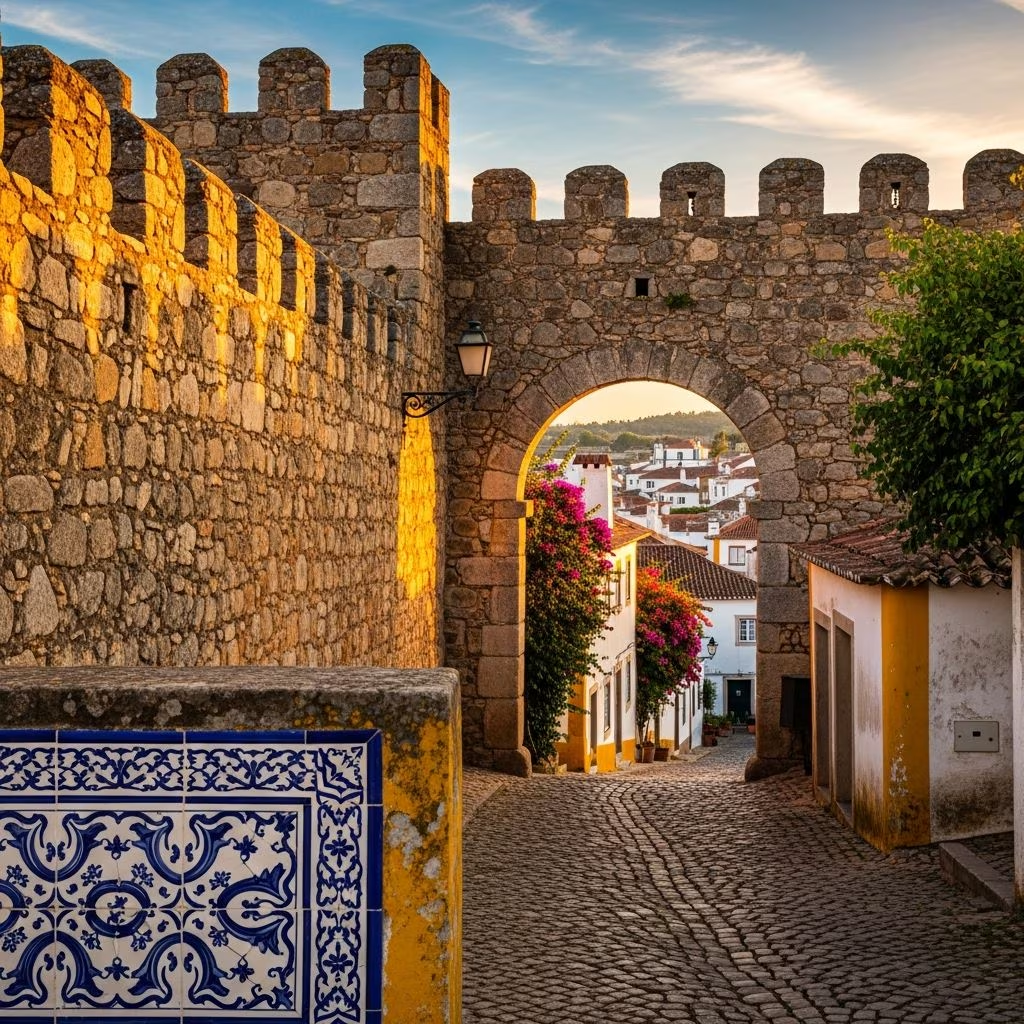
The most iconic activity in Óbidos begins the moment you commit to traversing the town’s legendary fortified walls. Stretching approximately 1.5 kilometers around the entire settlement, these defensive structures create a complete circuit that can be navigated in roughly an hour, depending on your pace and inclination to pause for photography or contemplation. The walls, originally constructed to protect the medieval settlement from invasion, now serve as an elevated promenade offering unobstructed panoramic vistas of terracotta-tiled rooftops, surrounding countryside, and the castle’s imposing silhouette.
Entry to the fortified walls is accessible via steep staircases positioned at strategic intervals around the perimeter. The most convenient starting point is immediately left of the Porta da Vila (main entrance gate), where a challenging but manageable climb deposits you onto the wall’s upper surface. From this vantage point, visitors can choose to traverse rightward toward the southern towers for expansive views, or venture leftward to explore quieter sections favored by those seeking solitude and reflection.
A crucial consideration for wall-walkers involves the lack of protective railings along the 1.5-kilometer route. This historical authenticity, while adding to the medieval experience, requires visitors to exercise appropriate caution, particularly during crowded periods or inclement weather. Sturdy footwear becomes essential, as centuries-old stone surfaces can prove slippery and uneven. The optimal time for this walk occurs during late afternoon hours, when golden light bathes the landscape and creates Instagram-worthy moments while minimizing the midday sun’s intensity.
Óbidos Castle stands as more than a mere historical structure; it represents one of Portugal’s Seven Wonders—a distinction bestowed by popular vote among Portuguese citizens recognizing the nation’s most iconic landmarks. This fortification boasts a chronological narrative spanning centuries, with its foundations established during Roman occupation, subsequent fortification by Arab rulers, and significant Christian reconstruction following the 1148 conquest. The castle endured considerable damage during the catastrophic 1755 earthquake but underwent comprehensive restoration during the twentieth century, transforming it into a functional heritage site rather than a crumbling ruin.
Within the castle’s walls, visitors encounter multiple layers of historical interpretation. The structure contains medieval exhibits, informational displays, and atmospheric spaces that permit visitors to mentally reconstruct daily life during medieval periods. Additionally, Óbidos Castle periodically hosts medieval reenactments and theatrical performances that animate historical narratives, allowing visitors to experience interpretations of medieval culture through costumed performers and interactive demonstrations.
The castle’s significance extends beyond its architectural merit. For centuries, the fortress served as a royal residence and has hosted some of Portugal’s most notable historical figures. The connection between the castle and the surrounding town creates a unified historical narrative, where architectural preservation and contemporary tourism coexist.
The Porta da Vila represents the primary entrance through which most visitors first experience Óbidos’ interior world. This double-walled gate structure, designed for medieval defense, features an interior alcove adorned with intricate tilework—the characteristic blue and white azulejo tiles that define Portuguese aesthetic tradition. These tiles, added between 1740 and 1750, depict religious scenes from the Passion of Christ, creating a spiritual passage from the exterior secular world into the town’s sanctified space.
Less frequented but equally worthy of attention stands the Porta do Vale (Gate of the Valley), also known as Porta da Senhora da Graça (Gate of Our Lady of Grace), located in the eastern fortification. Dating to the 1100s, this secondary entrance once featured sculptural representations of the Virgin and Child, elements now preserved within the Igreja de Santa Maria (Church of Saint Mary). Visitors who venture beyond the main thoroughfare to locate this eastern gate discover a quieter, more authentic encounter with medieval architecture and engineering.
The Igreja de Santa Maria dominates Óbidos’ religious landscape as the primary place of worship and a repository of significant artistic treasures. The interior walls display exceptional examples of Portuguese tile work, with blue ceramic panels creating luminous visual environments that guide the eye toward the altar and enhance the sense of sacred atmosphere. The church contains one of Portugal’s finest Renaissance tombs—the burial monument of D. João de Noronha and his wife D. Isabel de Sousa—representing masterful stone carving and sculptural achievement.
Historical significance permeates the church’s walls; in 1441, King D. Alfonso V married his cousin D. Isabel within these precincts, a union that occurred when both principals were mere children, ages ten and eight respectively, reflecting the political marriage practices of medieval Portuguese nobility. The Igreja de Santa Maria has hosted multiple royal weddings throughout Portuguese history, elevating its cultural status beyond that of a typical parish church.
Beyond its medieval attractions, Óbidos maintains a distinctive relationship with chocolate that extends back generations, creating a unique gastronomic dimension to the town’s contemporary identity. The annual International Chocolate Festival, held each spring since 2002, transforms the entire settlement into a celebration of chocolate culture, featuring international artisans, culinary demonstrations, and festive programming. During this festival period, the narrow streets overflow with chocolate vendors, confectioners from across Europe, and visitors eager to sample innovations in chocolate preparation and presentation.
Throughout the year, dedicated chocolate establishments operate within the town, offering visitors opportunities to taste local chocolate variations and sample the traditional ginjinha (a cherry liqueur) served in innovative edible chocolate cups—a combination that epitomizes the intersection of Portuguese tradition and contemporary culinary creativity. The Óbidos Chocolate House and similar establishments provide structured tastings and educational programming about chocolate production methods and flavor profiles.
Óbidos harbors multiple independent bookstores that have earned reputations extending far beyond typical tourism retail spaces. These establishments function as both commercial entities and cultural institutions, curating collections that reflect both Portuguese literature and international offerings. The Literary Man Hotel represents an innovative approach to hospitality, where guest accommodations integrate with extensive book collections, creating an environment where literary appreciation becomes central to the accommodation experience rather than an incidental amenity.
These bookstores attract bibliophiles specifically because they transcend commodity retail; they represent curated cultural spaces where proprietors have made intentional decisions about inventory, presentation, and customer experience. Visitors often discover unexpected volumes, limited editions, and regional publications that illuminate Portuguese culture and contemporary literary production.
Positioned on a terraced platform adjacent to the fortified wall in the town’s northeastern sector, the Baloiço de Óbidos (Óbidos Swing) offers an unexpected moment of suspended contemplation with vistas encompassing whitewashed residences and terracotta roofing that characterize the settlement’s visual identity. This simple apparatus, set within shaded areas created by mature trees, has achieved social media prominence as a photograph location while simultaneously functioning as a genuine recreational amenity for visitors seeking respite during their explorations.
The swing’s positioning provides optimal viewing angles for capturing the town’s architectural essence while permitting a physical engagement with the landscape through the gentle motion of swinging. The location’s relative remoteness from main thoroughfares ensures that moments spent here often involve peaceful solitude rather than crowded tourism experiences.
The experience of Óbidos fundamentally derives from pedestrian exploration of the narrow lanes that comprise the old town center, typically requiring no more than one hour to traverse end-to-end on foot. Yet this compressed geography conceals remarkable depth, as each street frontage hosts local artisans, craft vendors, cafés, and small museums. The main thoroughfare, Rua Direita, functions as the commercial spine, while lateral streets provide quieter alternatives for those seeking escape from concentrated visitor activity.
Along these streets, visitors encounter local craftspeople engaged in traditional practices—pottery creation, textile work, and woodcraft—often available for observation or purchase. Small cafés serve both conventional beverages and distinctive local specialties, including various renditions of ginjinha and other regional liqueurs. The absence of major commercial chains means that virtually all establishments reflect local enterprise and cultural expression rather than standardized tourism infrastructure.
Óbidos undergoes transformation during specific seasonal celebrations, most notably during July when the Medieval Fair converts the entire settlement into a functioning historical reenactment environment. During this period, dozens of vendor stalls sell period-appropriate food items and historical reproductions, while residents and hired performers don costume to recreate medieval commercial and social dynamics. Visitors may rent or purchase period attire, permitting full immersion within the historical narrative rather than remaining passive observers.
The International Chocolate Festival provides another significant draw, particularly for those visiting during spring months. These events extend the typical tourist experience beyond photography and architectural appreciation into participatory cultural engagement, creating memories rooted in active involvement rather than passive consumption.
Óbidos functions effectively as a day-trip destination from Lisbon (approximately 90 kilometers south) or as part of broader explorations of central Portugal’s coastal and interior regions. The settlement’s compact nature permits efficient visitation without requiring extensive time commitments, while the quality of cultural and historical experiences justifies longer stays for those with flexible schedules.
The town’s location within Portugal’s silver coast region enables integration with beach visits, additional historical sites, and gastronomic experiences that characterize central Portuguese tourism. Many visitors structure itineraries that combine Óbidos’ medieval experiences with nearby coastal towns, creating diverse regional experiences within manageable geographic parameters.
