

 Travel Essentials
 Travel Essentials

A comprehensive guide to Rome's iconic monuments, museums, and cultural treasures that define the Eternal City's unparalleled historical significance.
 Travel Essentials
Rome stands as one of Europe’s most captivating destinations, offering visitors an extraordinary blend of archaeological significance, artistic mastery, and vibrant contemporary culture. The Italian capital preserves thousands of years of human civilization within its boundaries, making it an essential pilgrimage for anyone interested in history, architecture, or art. Whether you are a first-time visitor or returning to rediscover familiar corners, Rome continuously reveals new layers of complexity and beauty that justify its status as the Eternal City.
Understanding how to navigate Rome’s most important cultural landmarks requires both strategic planning and an appreciation for what makes each site unique. This guide presents the essential experiences that should anchor any comprehensive Roman itinerary, while also offering context about why these particular destinations matter so profoundly to our understanding of Western civilization.
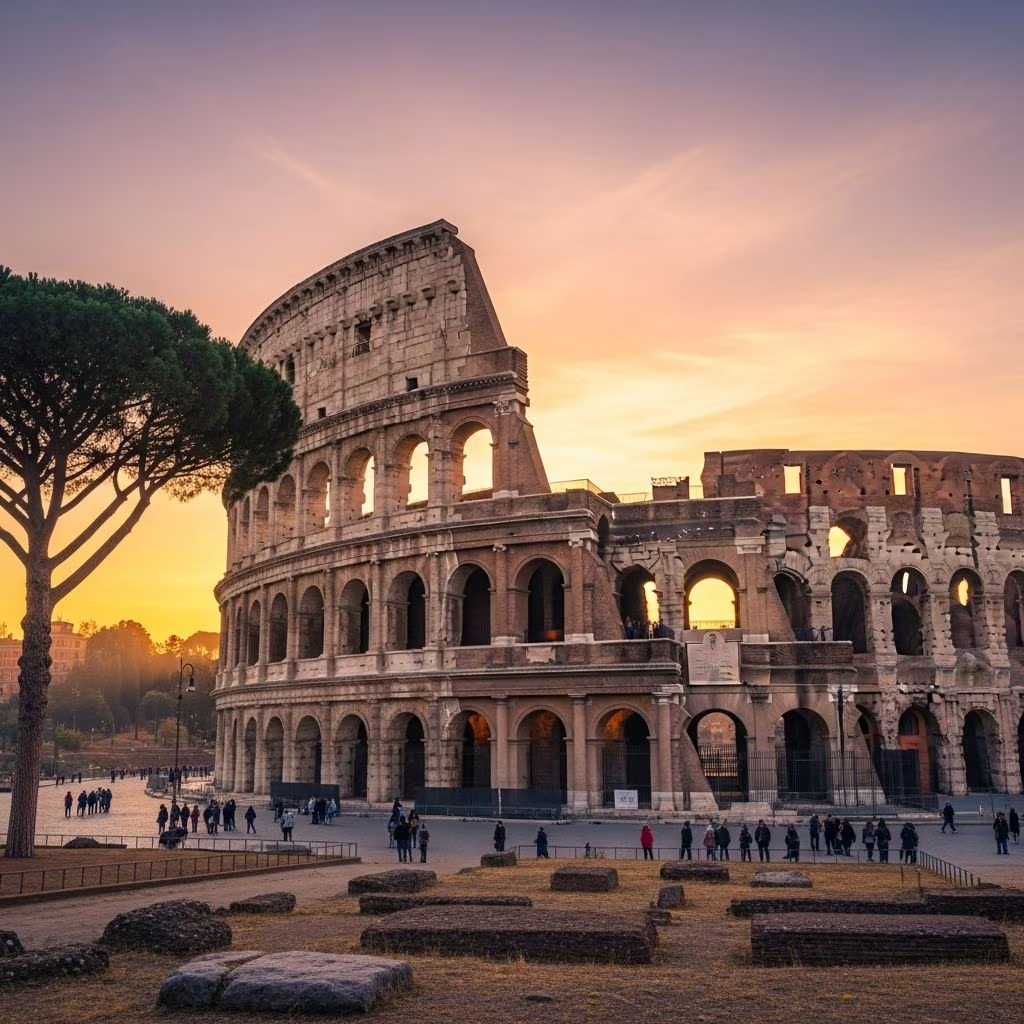
No discussion of Rome can begin anywhere other than the Colosseum, the monumental amphitheater that has become synonymous with ancient Rome itself. Constructed nearly two millennia ago, this architectural marvel originally accommodated approximately 70,000 spectators and remains one of the most intact Roman structures surviving to the present day. The sheer scale of the construction, achieved without modern machinery or materials science, demonstrates the engineering prowess that characterized Roman civilization.
The Colosseum functioned as the centerpiece of Roman entertainment and spectacle, hosting gladiatorial combats, wild animal hunts, and even naval battles when the arena floor was flooded. Walking through its corridors allows visitors to imaginatively reconstruct the sensory experience of ancient Roman audiences, from the roar of crowds to the complex logistics required to manage such elaborate productions. The building’s four-story facade showcases different architectural orders, from Doric columns on the ground level to Corinthian columns on the upper sections.
For most visitors, basic entrance tickets suffice, though guided tours provide substantially more interpretive depth about the structure’s history and functional design. Photography opportunities abound, particularly during morning or late afternoon hours when the light enhances the weathered travertine stone. The Colosseum’s proximity to other major sites makes it an ideal starting point for exploring Rome’s historical quarter.
Adjacent to the Colosseum, the Roman Forum and Palatine Hill constitute an interconnected archaeological zone that requires dedicated time to fully appreciate. The Forum Romanum functioned as the civic, commercial, and religious heart of ancient Rome, containing temples, government buildings, and public gathering spaces essential to daily urban life. Walking through the Forum’s remains allows visitors to mentally reconstruct how Romans conducted business, worshipped, and governed themselves across multiple centuries.
Palatine Hill, overlooking the Forum, earned its distinction as the most prestigious residential district in ancient Rome. Emperors and wealthy families constructed elaborate palaces on this elevated terrain, seeking both physical elevation and symbolic distance from ordinary citizens. The name “Palatine” eventually became the etymological root for the word “palace” across European languages, underscoring the hill’s association with supreme authority and luxury.
Exploring these sites requires patience and imagination, as much remains ruined or fragmentary. However, the archaeological layers themselves tell compelling stories about how Roman civilization evolved across centuries, with earlier structures literally buried beneath later constructions. Tickets typically cost approximately 16 euros per person, with combination packages available for broader access to connected sites.
The Vatican Museums house one of the world’s most extraordinary art collections, accumulated through centuries of papal patronage and strategic acquisitions. Walking through these galleries means encountering works by Raphael, Caravaggio, Bernini, and countless other Renaissance and Baroque masters whose names define Western art history. The museum’s organization can feel overwhelming without prior planning, as the collection spans multiple wings, galleries, and thematic arrangements.
The museums serve as gateway to the Sistine Chapel, Michelangelo’s monumental achievement that revolutionized how artists understood the human form and the possibilities of fresco technique. The chapel’s ceiling, depicting scenes from the Book of Genesis with extraordinary anatomical precision and dramatic composition, remains one of humanity’s greatest artistic accomplishments. Experiencing this work in person, rather than through photographs or reproductions, provides profound emotional and intellectual impact that illustrations cannot convey.
Visitor numbers create significant challenges within the Vatican Museums, with crowds often numbering in the thousands daily. Early morning arrival, advance ticket purchases, or guided tour arrangements help maximize the experience while minimizing frustration. The combination of ancient history (some pieces date to Roman antiquity), medieval religious art, and Renaissance masterpieces creates a unique chronological and thematic journey through European cultural development.
Saint Peter’s Basilica represents the physical embodiment of papal authority and represents one of Christianity’s holiest sites. The basilica’s magnificent dome, designed by Michelangelo, dominates Rome’s skyline and functions as a visual anchor for the entire city. The interior space encompasses such monumental scale that first-time visitors often experience disorientation upon entering, as their perceptual frameworks struggle to accommodate the vast dimensions.
The basilica’s construction spanned multiple centuries and involved contributions from numerous Renaissance architects and artists, creating a building that synthesizes various artistic and architectural traditions. The interior features elaborate marble work, bronze sculpture, and soaring proportions designed to inspire awe and reinforce spiritual contemplation. The papal altar, positioned directly above the burial location believed to contain Saint Peter’s remains, serves as the spiritual center toward which the entire building’s geometry orients.
Climbing the dome’s interior stairs provides physical exercise coupled with increasingly intimate architectural perspective. Emerging onto the colonnade surrounding the dome offers unprecedented panoramic views of Rome and the surrounding countryside, justifying the considerable physical effort required to reach the summit.
Trevi Fountain represents the apotheosis of Baroque sculptural fountainry, combining theatrical composition with technical mastery of water engineering. The fountain rises 26 meters in height and extends 49 meters in width, occupying an entire plaza’s architectural focus with commanding presence. Its construction dates to the 18th century, making it substantially newer than many Roman monuments, yet its artistic achievement and cultural significance justify its inclusion among Rome’s most essential sites.
The fountain’s elaborate sculptural program features Neptune as the central figure, flanked by allegorical representations of abundance and health. Water cascades from multiple points, creating dynamic visual interest and auditory accompaniment to the plaza’s atmosphere. The perpetuation of coin-tossing traditions, believed to ensure return visits to Rome, generates substantial daily revenue, with funds traditionally supporting charitable purposes.
Visiting during off-peak hours, such as very early morning or late evening, offers more peaceful contemplation of the fountain’s details without the overwhelming crowds that characterize daytime visits. The surrounding neighborhood contains excellent restaurants and gelato establishments, making the fountain an ideal center point for evening strolls and casual dining experiences.
Beyond Saint Peter’s, Rome contains numerous additional churches and basilicas worthy of cultural attention. The Basilica of Saint Paul Outside the Walls represents an architectural achievement predating the Renaissance by centuries, combining early Christian design principles with substantial scale and decorative ambition. The Pantheon, originally a Roman temple dedicated to multiple deities, survived through its conversion to Christian purposes and continues to astound visitors with its perfect proportions and elegant dome featuring a central opening.
These sacred spaces offer refuge from Rome’s summer heat and crowds while providing artistic and architectural treasures ranging across multiple historical periods. Many contain artwork by significant Renaissance and Baroque artists, effectively functioning as smaller specialized museums focused on religious themes and patronage.
Roman piazzas function as gathering spaces where urban life unfolds away from the formality of designated tourist attractions. The Spanish Steps, famous gathering point and architectural composition, draw thousands of visitors daily seeking the postcard-perfect visual that the steps provide. The steps’ 135 individual treads lead upward toward the Trinità dei Monti church, with the ascent offering increasingly expansive views of the city’s domes and architecture.
The Campo de’ Fiori hosts Rome’s most vibrant daily produce market, where vendors sell fresh vegetables, fruits, and regional specialties to both tourists and local residents. The plaza’s chaotic energy and authentic commercial activity offer glimpses into Roman daily life beyond the curated tourist experience. Piazza Navona contains three fountains designed by Bernini and rivals the Spanish Steps for architectural beauty and visitor density.
Rome’s Villa Borghese Gardens function as the city’s primary large-scale green space, offering respite from urban intensity and architectural saturation. This expansive park contains walking paths, small lakes, sculptures, and the Borghese Gallery museum, creating multifaceted recreational possibilities. When tourist fatigue accumulates, the gardens provide peaceful environments for restoration and reflection away from crowds.
The gardens’ position at Rome’s northern edge makes them somewhat removed from the most congested tourist quarters, effectively functioning as a filter that discourages the most casual visitors in favor of those deliberately seeking respite and nature. The combination of landscaped gardens, wild areas, and positioned artworks creates environments suitable for both leisurely strolls and contemplative extended visits.
Beneath Saint Peter’s Basilica lie preserved ancient Roman streets and structures from the 1st century A.D., accessible through the specialized Scavi Tour that requires advance reservation as spaces book months in advance. This tour descends into the earth to reveal archaeological layers that contextualize the basilica’s construction and Rome’s continuous habitation across millennia. The experience provides visceral understanding of archaeological practice and Rome’s layered temporal dimensions.
The Scavi Tour represents one of Rome’s most distinctive and intellectually enriching experiences, combining historical significance with archaeological methodology and interpretive expertise. The emotional impact of standing in locations where early Christians reportedly gathered and where Saint Peter himself may have been buried creates profound connection to historical events and spiritual traditions.
Optimal Visiting Periods: Spring and fall months offer comfortable weather and marginally reduced crowd pressure compared to summer peak season. Winter visits provide minimal crowds but cooler temperatures require appropriate clothing.
Ticket Strategy: Advance online purchases reduce entrance queues and often provide slight cost savings. Multi-site combination tickets offer better value than individual admissions. Early morning arrival at major attractions yields significantly improved experiences with lower crowd densities.
Physical Endurance: Rome demands substantial walking across uneven terrain and climbing numerous stairs. Appropriate footwear and realistic daily itinerary pacing prevent exhaustion and injury.
Language Considerations: While major attractions offer English-language information, hiring English-speaking guides substantially enhances interpretive depth and contextual understanding compared to guidebook consultation alone.
The Colosseum provides the most iconic introduction to Roman civilization and stands as the most photographed monument. However, different visitors prioritize differently based on personal interests ranging from art history to ancient architecture to spiritual significance.
While technically possible with rush-paced itinerary planning, doing so sacrifices the contemplative engagement that these monuments deserve. A minimum three-day visit allows reasonable engagement with major sites, though five to seven days permits genuine immersion and discovery of secondary attractions.
Rome’s primary tourist districts maintain strong security presence. Standard urban precautions against pickpocketing and valuables exposure apply as in any major city. Research current travel advisories and remain aware of surrounding conditions as with any international travel.
Secondary museums, neighborhood churches, and gardens offer equally compelling experiences without the peak season crowds. Guidebooks specializing in “unusual” or “hidden” Rome attractions provide systematic approaches to discovery beyond conventional itineraries.
Rome’s collection of monuments, artworks, and sacred spaces represents humanity’s accumulated cultural and artistic achievement across two millennia. Experiencing these sites personally transforms abstract historical knowledge into visceral understanding that photographs and descriptions cannot convey. Whether visitors prioritize archaeological significance, artistic mastery, spiritual meaning, or simple aesthetic appreciation, Rome offers profound satisfaction and intellectual enrichment that justify its reputation as a destination of supreme cultural importance.
