

 Travel Essentials
 Travel Essentials

Explore Tarragona's best attractions including ancient Roman sites, stunning coastal views, and vibrant cultural experiences on Spain's Costa Dorada.
 Travel Essentials
Nestled along Spain’s Costa Dorada coastline, Tarragona stands as one of the Iberian Peninsula’s most captivating destinations, offering visitors a remarkable blend of archaeological significance and contemporary Mediterranean experiences. This Catalan city, ancient Tarraco during Roman times, preserves an extraordinary collection of monuments that transport travelers back through centuries of history while providing the contemporary comforts and natural beauty that modern tourists seek.
Whether you’re a history enthusiast eager to walk among the ruins of ancient civilizations, a nature lover drawn to pristine beaches and natural reserves, or a cultural explorer interested in medieval architecture and local traditions, Tarragona delivers compelling reasons to extend your stay beyond a fleeting day visit. The following guide presents essential experiences and lesser-known attractions that collectively paint a complete picture of this multifaceted destination.
Tarragona’s most compelling draw lies in its exceptional preservation of Roman-era structures and artifacts. The city served as the capital of Hispania Tarraconensis during the height of the Roman Empire, and visitors today can witness remarkably intact ruins that few other European destinations can match. These monuments don’t merely represent historical curiosities; they represent critical touchstones in understanding how urban centers functioned over two millennia ago.
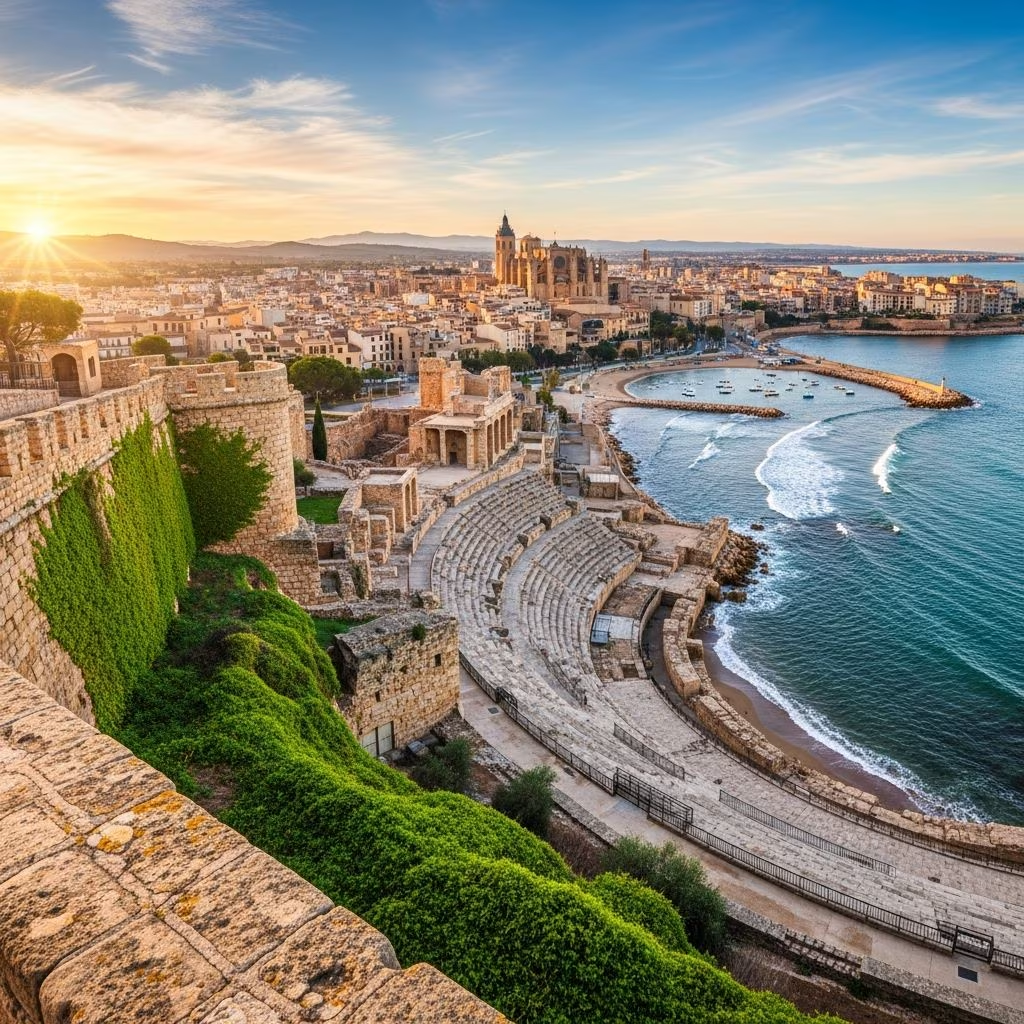
The Roman Amphitheatre stands as one of Tarragona’s most visually striking monuments, commanding attention through its distinctive semi-circular seating arrangement carved into the hillside overlooking the Mediterranean. Dating from the 2nd century AD, this venue once accommodated approximately 14,000 spectators who gathered to witness gladiatorial contests and public spectacles. Unlike modern entertainment venues designed for passive viewing, the amphitheatre functioned as a focal point of civic life where public executions, animal hunts, and combat demonstrations reinforced social hierarchies and imperial power.
Today’s visitors can explore the tiered stone seating, walk through underground passages, and imagine the roar of ancient crowds. The amphitheatre’s dramatic clifftop location, with the sea visible beyond, creates an evocative atmosphere that transcends typical archaeological site experiences. The combination of historical significance and natural beauty makes this monument particularly memorable during late afternoon visits when golden light transforms the stone surfaces.
The Roman Circus represents perhaps Tarragona’s most spectacular archaeological achievement, displaying engineering prowess that commands respect from contemporary visitors. This massive complex, occupying a prominent location in the city center since the 1st century AD, once hosted chariot races featuring speeds and competition that captivated Roman audiences. In its operational heyday, the Circus accommodated over 30,000 spectators, rivaling modern sporting venues in capacity and architectural sophistication.
What distinguishes Tarragona’s Circus from similar structures across the former Roman Empire lies in its extraordinary state of preservation. Expansive tunnels, gate structures, and foundation systems remain substantially intact, allowing visitors to comprehend the facility’s original scale and function. The on-site Tarragona History Museum contextualizes these remains within broader narratives of Roman urban development and daily life. The Torre del Pretori, adjoining the Circus complex, offers panoramic perspectives across the entire archaeological ensemble and beyond toward the coastline.
Ascending through Tarragona’s winding medieval streets, visitors eventually encounter the spectacular Tarragona Cathedral, perched majestically at the city’s highest elevation. This architectural masterpiece, designated a national monument of Spain in 1905, represents an extraordinary synthesis of Romanesque and Gothic design elements. The cathedral was deliberately constructed upon the ruins of a former Roman temple dedicated to Augustus, symbolizing the religious and cultural transition between pagan and Christian civilizations.
The cathedral’s exterior captivates through its intricate rose window, soaring 70-meter bell tower, and precisely carved stone details that showcase medieval craftsmanship at its finest. The bell tower houses 19 bells, including the renowned Capona, which weighs exceeding 5,000 kilograms. Interior spaces feature ethereal light filtered through stained glass windows, illuminating ornate cloister galleries where visitors can contemplate centuries of spiritual devotion and artistic achievement.
The Balcó del Mediterrani, or “Balcony of the Mediterranean,” functions as Tarragona’s premier vantage point for appreciating the city’s spatial relationship with sea and sky. This strategically positioned overlook provides unobstructed panoramic views encompassing the amphitheatre, cathedral, harbor, and Mediterranean shoreline in a single sweeping perspective. The promenade’s design encourages lingering; comfortable seating and manicured gardens invite visitors to settle into a contemplative state while absorbing the vista.
This location proves especially compelling during transitional hours when golden hour light transforms familiar landscapes into scenes of extraordinary beauty. Early morning visits allow you to observe the city awakening, while sunset visits create photographic opportunities and atmospheric experiences that linger in memory long after departure.
Tarragona’s main thoroughfare, La Rambla Nova, extends across more than 150 years of continuous urban development, establishing itself as the city’s primary shopping destination while preserving architectural character throughout its length. This tree-lined boulevard accommodates over 150 shops representing contemporary retail alongside cafes and restaurants that cater to both local residents and visiting tourists.
Beyond commercial activity, the Rambla functions as a social spine connecting different districts and providing access to key attractions. Walking this route reveals how Tarragona balances historical preservation with contemporary needs, maintaining architectural integrity while adapting to modern urban requirements. The street’s gentle incline toward the cathedral creates natural wayfinding that guides explorers upward toward increasingly significant historical monuments.
El Serrallo represents Tarragona’s working waterfront district, where fishing boats still operate according to traditions extending back generations. This neighborhood avoids the commercialization that sometimes characterizes touristy harbor areas, maintaining authentic character through family-operated seafood restaurants, boat repair facilities, and fish markets that serve local communities primarily.
Visitors venturing into El Serrallo discover exceptional culinary opportunities, with restaurants offering fresh catch prepared according to traditional Catalan methods. The district’s creative street art and informal atmosphere contrast sharply with the formality of archaeological sites, providing authentic glimpses into contemporary Mediterranean working culture.
Rising above the Tarragona countryside, the Les Ferreres Aqueduct, also known as Pont del Diable (Devil’s Bridge), showcases remarkable Roman engineering prowess applied to infrastructure development. This two-tiered structure once transported water across considerable distances to supply the ancient city of Tarraco with essential resources. Today, wooded trails surround the aqueduct, creating opportunities for hiking and nature appreciation within sight of this historical monument.
The walkway along the structure’s top provides sweeping vistas across agricultural lands and toward coastal horizons, offering visitors perspectives on Roman territorial organization and landscape management. The combination of historical significance and natural setting creates experiences more memorable than isolated indoor museum visits.
Located within Western Europe’s largest wetland ecosystems, MónNatura Delta de l’Ebre Nature Reserve provides exceptional opportunities for environmental education and wildlife observation. This protected area encompasses restored salt works at La Tancada, traditional fishing demonstrations, and an observatory offering 360-degree perspectives across extensive salt pans. With favorable conditions and timing, visitors may observe flamingos and other specialized wetland bird species in their natural habitats.
This destination appeals particularly to nature enthusiasts seeking alternatives to urban archaeological sites, providing environmental context for understanding how human communities interact with Mediterranean ecosystems.
The Central Market represents Tarragona’s primary location for experiencing local commerce and agricultural production. This vibrant space brings together produce vendors, seafood merchants, and specialty food retailers who serve community needs while welcoming curious visitors. Market exploration provides authentic cultural immersion and culinary inspiration, with opportunities to purchase fresh ingredients for picnics or acquire specialty items unavailable in typical tourist shops.
Tarragona rewards visits extending beyond single-day excursions, with 2-3 days allowing comprehensive exploration of primary attractions alongside secondary sites and leisurely neighborhood wandering. Spring and autumn months offer ideal weather conditions with reduced summer crowds, though the destination remains accessible throughout the year.
The city’s compact medieval center encourages walking exploration, with most significant attractions accessible via pedestrian routes. Public transportation connects Tarragona with broader Catalonia, including proximity to Barcelona and other Costa Dorada destinations. Regional trains facilitate day trips to neighboring attractions including PortAventura amusement park and Ferrari Land.
Tarragona’s Mediterranean location ensures access to exceptional seafood preparations, while local wine production contributes distinctive regional beverages to dining experiences. Traditional Catalan cuisine emphasizes quality ingredients prepared according to time-tested methods, with restaurants ranging from casual family establishments to fine dining venues offering contemporary interpretations of classical dishes.
The Roman Amphitheatre combines accessibility, visual impact, and historical significance, providing optimal introduction to Tarragona’s archaeological heritage while offering Mediterranean views that enhance the experience.
Comprehensive exploration of major sites requires minimum 2-3 days, though single-day visits can encompass amphitheatre, cathedral, circus, and promenade experiences through careful itinerary planning.
Yes; the city includes coastal beaches and nearby Costa Dorada resort areas, allowing visitors to balance archaeological exploration with leisure bathing and water activities.
El Serrallo’s seafood restaurants and Central Market-adjacent establishments showcase traditional preparations, while casual tapas venues throughout the old town provide accessible entry points to local cuisine.
While independent exploration remains feasible, guided tours provide historical context and interpretive depth that enhance understanding of monument significance and Roman urban organization.
