

 Travel Essentials
 Travel Essentials

Explore Torngat Mountains National Park, a 9,700 sq km Arctic wilderness in Labrador featuring towering peaks, glaciers, wildlife, and authentic Inuit experiences.
 Travel Essentials
Nestled at the northern tip of Labrador lies one of Canada’s most extraordinary and remote national parks: Torngat Mountains National Park. Spanning 9,700 square kilometers of untamed subarctic landscape, this protected wilderness represents a remarkable fusion of natural grandeur and deep cultural significance. The park’s name originates from the Inuktitut word “Tongait,” meaning “place of spirits,” reflecting centuries of spiritual and cultural connections that the Inuit people maintain with this dramatic terrain.
For adventurers seeking genuine backcountry experiences beyond the reach of conventional tourism infrastructure, Torngat Mountains National Park stands as an unparalleled destination. Unlike more accessible national parks scattered throughout Canada, this northern sanctuary demands commitment, preparation, and a willingness to embrace the raw authenticity of Arctic exploration. The park’s remoteness is precisely what makes it so compelling—a place where ancient traditions continue, where nature retains its untamed character, and where visitors encounter landscapes that remain largely unchanged for millennia.
The Torngat Mountains constitute an impressive mountain range featuring some of eastern Canada’s most formidable peaks. Mount Caubvick, also known as Mont D’Iberville, towers at 1,652 meters, commanding the landscape as the highest point in the entire eastern Canadian mountain system. This elevation distinction positions the Torngats among the region’s most geologically significant formations.
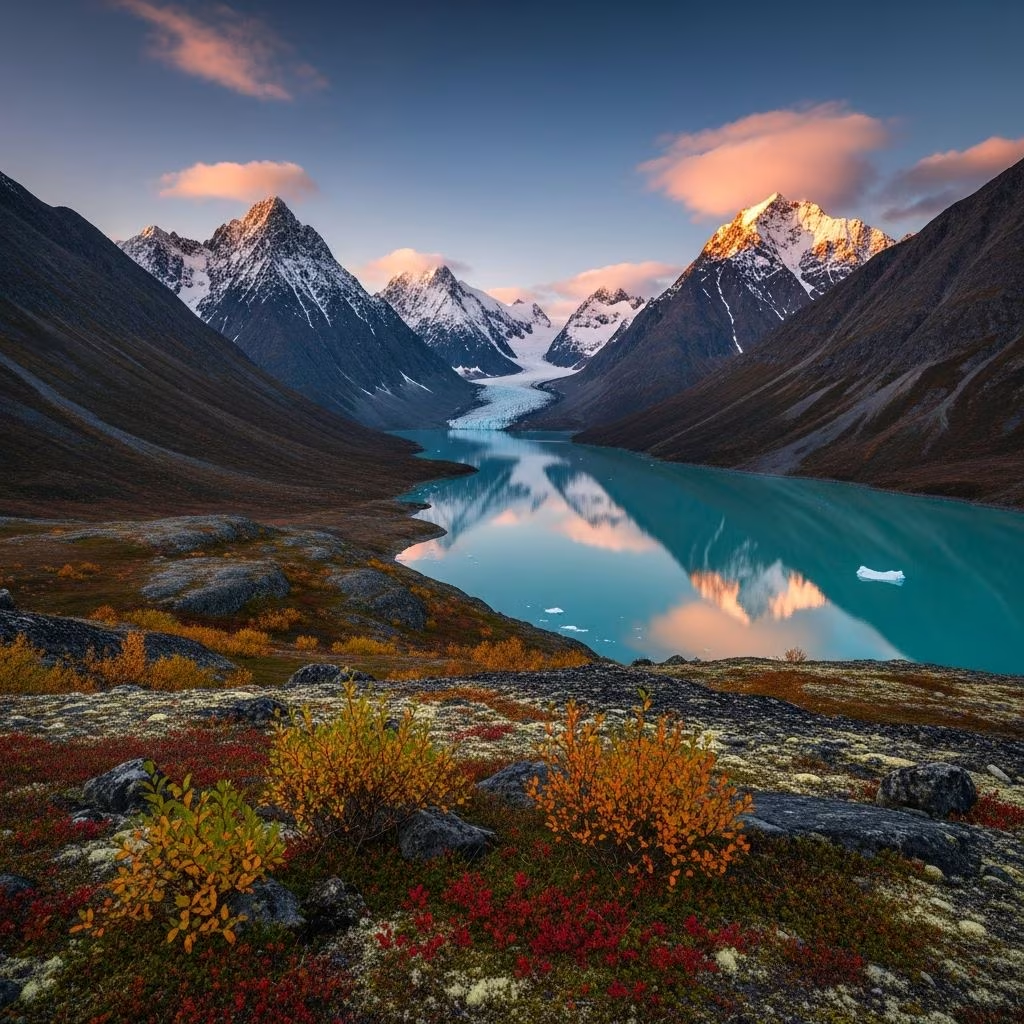
The park’s topography encompasses far more than the mountains themselves. Glacier-carved fjords slice through the terrain, creating dramatic waterways that plunge toward the Atlantic Ocean. Nachvak Fjord represents one of these spectacular natural sculptures, showcasing the raw power of glacial erosion that continues to shape the landscape. More than forty active glaciers persist within park boundaries, their crystalline masses feeding pristine streams and creating seasonal waterfalls that cascade down mountainsides.
An essential characteristic of the Torngat Mountains is their position above the treeline. This elevation ensures that visitors encounter predominantly tundra ecosystems, meaning unobstructed panoramic vistas dominate the experience. Without dense forest coverage, sight lines stretch for miles across rolling terrain, revealing the park’s intricate geological composition and dynamic weather patterns.
The Precambrian rock formations that constitute the Torngat Mountains belong to the Canadian Shield, one of Earth’s oldest and most stable geological structures. These rocks are thought to have formed several billion years ago, making the Torngats a repository of deep planetary history. Walking among these peaks means traversing terrain that predates most modern mountain ranges by billions of years, offering a humbling perspective on geological time.
Reaching Torngat Mountains National Park requires significantly more planning than visiting most Canadian national parks. The complete absence of roads leading to or within the park creates both an obstacle and an advantage—while accessibility remains limited, this remoteness preserves the wilderness character that makes the park extraordinary.
The typical access route involves:
The Torngat Mountains Base Camp, located 200 kilometers north of Nain (Labrador’s northernmost community), serves as the primary infrastructure hub for park visitors. This facility operates as both a research station and visitor accommodation, offering essential services and organizing guided excursions throughout the park.
Parks Canada emphasizes the importance of thorough preparation and registration before visiting. Potential visitors must complete mandatory safety briefings, arrange appropriate equipment, and comply with all park regulations. The remoteness of the location means that emergency services respond differently than in more accessible regions, requiring visitors to maintain heightened self-sufficiency throughout their stay.
The Torngat Mountains represent a critical habitat for several distinctive species adapted to subarctic and Arctic conditions. Polar bears roam the coastal regions, and visitors exploring the park boundaries stand reasonable chances of observing these magnificent predators in their natural environment. The presence of polar bears necessitates specialized safety protocols, including the Parks Canada recommendation that hiking visitors engage trained Inuit polar bear guards.
Beyond polar bears, the park supports diverse wildlife populations including:
One of the park’s most celebrated natural attractions is the aurora borealis, or Northern Lights. During appropriate seasons, the clear Arctic skies above Torngat Mountains provide optimal viewing conditions for these mesmerizing atmospheric displays. The combination of minimal light pollution and frequent clear nights creates an ideal environment for witnessing this celestial phenomenon.
Icebergs present another distinctive natural feature, particularly visible throughout summer months. These massive ice formations, calved from glaciers and ice sheets further north, drift into the park’s coastal waters, adding an additional layer of dramatic scenery to fjord explorations.
The creation of Torngat Mountains National Park specifically honored the relationship between Inuit communities and this ancestral homeland. The park’s official establishment in 2008, following the Nunavik Inuit Land Claims Agreement, represented a significant recognition of Indigenous rights and stewardship approaches to land management.
Today, the Inuit of Nunavik and Nunatsiavut maintain active partnership roles in park management and visitor experiences. Rather than a conventional national park where Indigenous heritage is presented as historical artifact, Torngat Mountains centers living Inuit culture as an integral component of the visitor experience.
Visitors can participate in authentic cultural experiences including:
This integration of living culture distinguishes Torngat Mountains from many conventional heritage tourism models. Visitors don’t merely observe history from a distance; they engage directly with Inuit guides and communities who maintain traditional practices and knowledge systems developed over generations.
Torngat Mountains Base Camp offers diverse package options designed to accommodate varying time commitments, fitness levels, and preferences. Rather than generic one-size-fits-all programming, these customized experiences reflect recognition that visitors arrive with different objectives and capabilities.
Comprehensive seven-day packages represent the most immersive options, featuring extensive hiking and backcountry camping experiences. These extended programs allow deeper penetration into the park’s interior, multi-day explorations of different terrain types, and more substantial engagement with cultural programming.
Three to four-day alternatives accommodate visitors with more limited availability, though they still provide meaningful Arctic experiences. Even condensed timeframes allow fjord explorations, guided hiking on signature trails, and cultural interactions.
Beyond duration, packages offer different comfort levels. Options range from expedition-style camping where visitors pitch tents and embrace full backcountry conditions, to enhanced comfort arrangements with improved shelter and amenities for those seeking less austere accommodations.
Supplementary guided excursions available through park operators include helicopter tours providing aerial perspectives of the mountains and fjords, boat explorations accessing otherwise inaccessible coastal regions, and specialized fishing expeditions targeting Arctic char and brook trout.
The Torngat Mountains demand serious preparation that exceeds requirements for more developed destinations. Parks Canada provides comprehensive guidance addressing the unique challenges of this remote environment.
Visitors must bring appropriate Arctic-rated gear including specialized tents, insulated sleeping systems, weatherproof clothing designed for extreme conditions, and navigation equipment. Unlike developed parks with marked trails and support infrastructure, Torngat Mountains requires visitors to select camping locations independently and navigate using maps and compass or GPS devices.
The presence of large predators necessitates specific safety protocols. Parks Canada explicitly recommends that hikers engage trained Inuit polar bear guards, professionals who understand bear behavior and carry appropriate deterrence equipment. Bear canisters and proper food storage techniques are essential for preventing dangerous wildlife encounters.
The physical demands of backcountry exploration combined with the remote location mean that visitors should be in good physical condition and free from serious health conditions requiring immediate medical intervention. The journey to base camp and the subsequent trekking within the park represent genuine challenges that exclude those with significant mobility limitations.
Summer months (July through September) provide the most accessible conditions with longer daylight hours and milder temperatures. However, weather remains unpredictable even during these months. Aurora viewing opportunities are best during darker months but require tolerance for extreme cold.
Visitors should maintain good cardiovascular fitness and be comfortable hiking with a loaded backpack over uneven terrain. The packages vary in difficulty, but all require substantial physical capability.
Total costs typically range from several thousand to over ten thousand dollars when including flights from major cities, base camp fees, guided services, and equipment. Helicopter tours and extended packages increase costs further.
Yes, all visitors must register with park officials and receive mandatory safety briefings. Most visitors arrange trips through authorized operators who manage these requirements.
While technically possible for experienced backcountry travelers, Parks Canada strongly encourages using authorized operators and guides, particularly given the polar bear presence and remote conditions.
In an era when accessible tourism increasingly dominates travel narratives, Torngat Mountains National Park represents something increasingly rare: genuine wilderness that challenges, humbles, and transforms visitors. The park doesn’t offer convenient accessibility or abundant amenities; instead, it delivers authenticity, cultural significance, and natural drama on a scale few places match.
This is not a weekend escape but a commitment to experience something profound. The remoteness that creates logistical challenges simultaneously ensures that visitors encounter landscapes where human impact remains minimal, where wildlife behaves naturally, and where ancient cultural traditions persist as living practices rather than museum exhibits.
For those willing to undertake the journey, Torngat Mountains National Park offers rewards that justify the effort: moments of Arctic beauty, connections with Indigenous communities and traditions, encounters with iconic wildlife, and the personal transformation that occurs when humans venture beyond familiar boundaries into truly wild places.
