

 Travel Essentials
 Travel Essentials

Complete guide to hiking the Tour du Mont Blanc, covering route options, stage breakdowns, accommodation, and practical preparation strategies for Alpine trekking.
 Travel Essentials
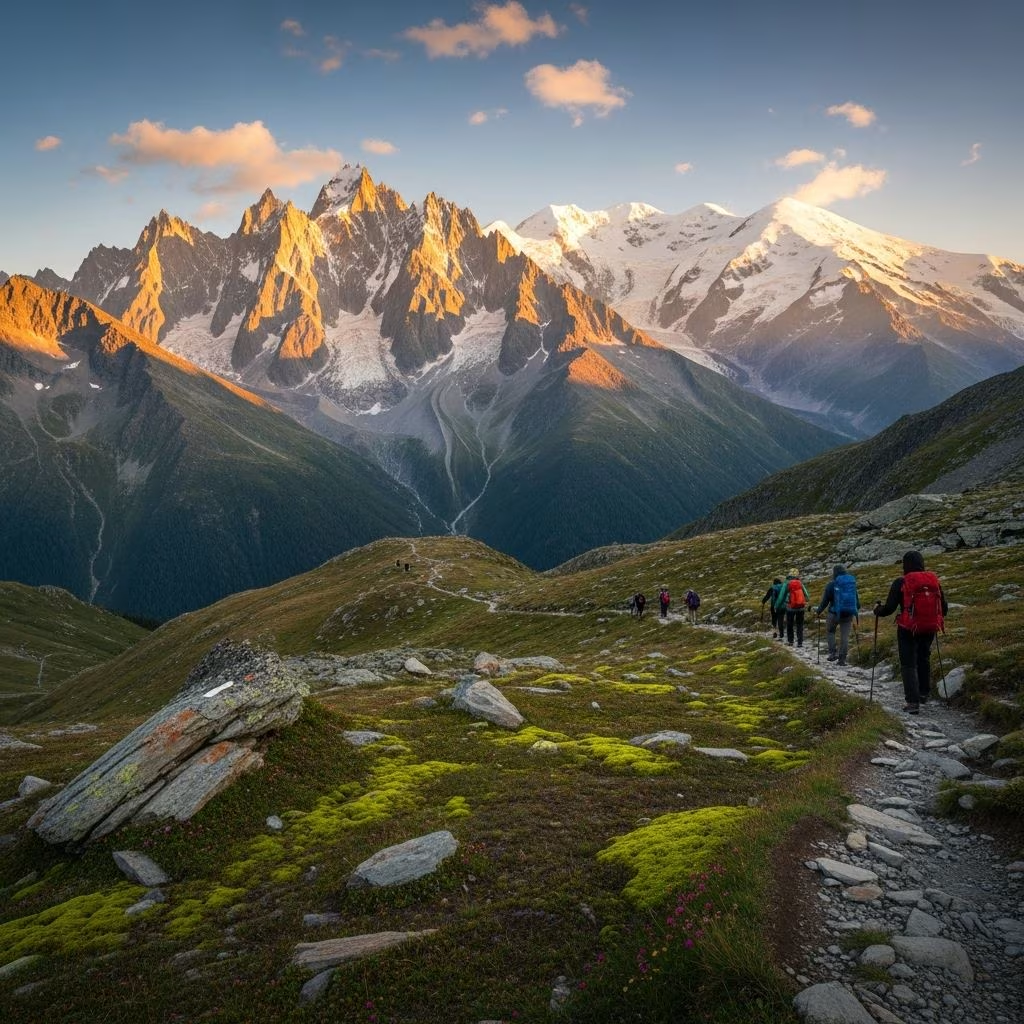
The Tour du Mont Blanc represents one of Europe’s most celebrated long-distance hiking expeditions, offering trekkers an immersive journey through the dramatic Alpine landscape. This spectacular circuit encircles the Mont Blanc massif, the highest peak in the Alps, while traversing three nations and countless mountain villages. Understanding the fundamentals of this trek transforms the experience from a simple hiking challenge into a meaningful exploration of Alpine culture and natural beauty.
The Tour du Mont Blanc encompasses approximately 160 to 170 kilometers of trail distance, with elevation changes totaling around 10,000 meters of cumulative ascent and descent. The trek typically requires 7 to 12 days for completion, depending on your pace, fitness level, and chosen itinerary variation. Most hikers opt for the classic 10 to 11-day route, which balances reasonable daily distances with sufficient time to appreciate the surroundings.
The circuit passes through three distinct countries—France, Italy, and Switzerland—creating opportunities to experience varied Alpine architecture, local cuisine, and cultural traditions within a single expedition. The route’s strategic placement ensures that hikers encounter high mountain passes, verdant valleys, and charming mountain communities, providing remarkable contrast throughout the journey.
The Tour du Mont Blanc offers flexibility in how you approach the challenge. The most popular option follows a counterclockwise direction starting from Les Houches, the official gateway near Chamonix. However, an increasingly chosen alternative involves hiking the route clockwise, which some trekkers find provides better acclimatization and different crowd dynamics.
Beyond directional choices, several route variants exist to accommodate different preferences and fitness levels:
Understanding each stage helps with pacing, accommodation planning, and mental preparation for the journey ahead.
The expedition traditionally commences at Les Houches, where you’ll discover the official starting point near the village tourist information center. The initial stage involves ascending to Col du Tricot before descending into the Miage Valley, reaching Refuge Miage for your first overnight stop.
Stage 2 carries you through changing scenery as you traverse toward Les Contamines-Montjoie, a charming village that marks your immersion into French Alpine culture. The journey involves significant elevation changes, testing your legs while rewarding you with progressively expanding mountain vistas.
By Day 3, you’ll navigate toward the Refuge de la Croix du Bonhomme, ascending past Les Mottets and reaching Col de la Siegne, which marks the frontier between France and Italy. The descent into Italian territory offers your first perspective of the Mont Blanc massif from the south, providing dramatic new visual dimensions to the massif you’ll circle.
Crossing into Italy via Col de la Siegne, Day 4 brings you to Rifugio Elisabetta with magnificent views of Monte Bianco’s southern faces. The path descends through the Vallée Lee Blanche, a glacial valley showcasing the raw Alpine landscape shaped by ancient ice movements.
Day 5 leads you to Courmayeur, Italy’s premier mountain resort and counterpart to Chamonix on the French side. This substantial town offers excellent facilities, restaurants, and cultural experiences before continuing your mountain journey. From Courmayeur, the trek ascends toward Rifugio Bertone, where hikers may choose between the classic lower-altitude route or a more challenging mountain ridge traverse over Mont de la Saxe.
By Day 6, you’ll reach Grand Col Ferret, the gateway into Switzerland. This pass represents a significant milestone, as the landscape subtly transforms while entering Switzerland’s portion of the circuit. The descent into Ferret Valley and onward to La Fouly introduces Swiss Alpine charm, with its distinctive architecture and mountain culture.
The Swiss segment, comprising Days 7 through 10, showcases the gentler yet equally stunning terrain north of Mont Blanc. La Fouly to Champex-Lac carries you through rolling Alpine meadows and forested sections, where the hiking rhythm feels different from the higher-altitude sections.
The critical section from Trient toward Col de Balme and Aiguillette des Posettes includes the notable TMB ladders—iron rungs bolted into rock faces that require careful navigation. These ladders present the trek’s most technical element, though most hikers pass through without incident. A variant route via Col des Montets exists for those uncomfortable with ladder climbing.
The final stages descend toward La Flégère and Le Brévent, where cable car options reduce knee strain during the conclusion. The journey concludes back in Les Houches after traversing Refuge du Bellachat, creating a complete circuit of the massif.
The Tour du Mont Blanc offers diverse lodging options suited to different preferences and budgets. Mountain refuges—called refugios, rifugios, or auberges depending on country—provide authentic Alpine hospitality with hearty meals and communal atmospheres. These establishments typically require advance reservations, especially during peak season from July through September.
Village accommodations in larger settlements like Courmayeur, Champex-Lac, and La Fouly offer hotel amenities, restaurant choices, and resupply opportunities. Strategic placement of rest days in these towns allows laundry facilities access, hot showers, and recuperation before continuing challenging stages.
Budget considerations range from approximately €30-50 nightly for basic refuge bunks to €80-150 for comfortable village hotels. Multi-day package tours through specialized companies typically cost €1,500-3,000 depending on accommodation standards and included services.
The trek’s physical challenge stems not from extreme altitude but from cumulative elevation changes and sustained daily distances. Daily ascents typically range from 600 to 1,000 meters, with corresponding descents creating similar strain on legs and joints.
Most trekkers spend 7 to 10 hours daily on trail, accounting for pace variations, rest stops, and individual fitness levels. The gradual elevation progression—no single stage exceeds excessive altitude—allows proper acclimatization. However, descents create greater physical stress than ascents for many hikers, particularly on sensitive knees.
| Stage Characteristics | Typical Daily Distance | Elevation Gain | Time Required |
|---|---|---|---|
| Lower-altitude valley stages | 12-15 km | 500-800 m | 5-7 hours |
| High-pass crossing stages | 10-13 km | 800-1,200 m | 7-10 hours |
| Technical terrain stages | 8-12 km | 600-1,000 m | 6-8 hours |
Successfully completing the Tour du Mont Blanc requires thoughtful preparation extending beyond mere physical conditioning. Training hikes incorporating sustained elevation gain, ideally hill repeats over 4-8 weeks, build necessary leg strength and cardiovascular endurance.
Gear considerations emphasize lightweight backpacks—ideally 8-12 kg total weight—with reliable footwear properly broken in before departure. The three-country nature demands flexible packing for varying weather conditions; mountain weather changes rapidly and dramatically.
Navigation clarity matters significantly. While the route is generally well-marked, obtaining detailed maps or utilizing GPS applications prevents wrong turns. Language preparation helps too; basic French, Italian, and German phrases facilitate refuge interactions, especially in remote locations.
The optimal hiking window extends from June through September, with July and August offering the most stable weather but also maximum crowding. June and early September provide fewer crowds while maintaining generally favorable conditions, though occasional snow patches may linger at higher passes.
Spring and autumn present risks of unexpected weather, with sudden storms potentially creating dangerous conditions at high passes. Winter renders most route sections inaccessible due to snow and avalanche risk, though experienced winter mountaineers occasionally attempt the circuit under specialized conditions.
Daily budgets typically range from €60-120 per person, encompassing accommodation, meals, and incidental expenses. Accommodation represents the largest single cost, followed by meals (though breakfast and dinner typically come with refuge lodging). Additional expenses include transport to and from the trailhead, any guide services, and gear replacement or rental.
Group tours range considerably in price, from budget self-guided options at €800-1,200 to fully-guided luxury experiences at €3,000-5,000. Self-guided hiking minimizes costs while maximizing autonomy and personal experience.
Moderate fitness suffices for completing the Tour du Mont Blanc. Regular training incorporating hills or stairs, combined with reasonable pace expectations, allows fit individuals to finish comfortably. The key involves consistent preparation rather than exceptional athleticism.
Yes, experienced hikers comfortable with 12-14 hour days can reduce completion to 7-8 days. However, such pace eliminates leisurely exploration and increases injury risk. Most recommend allocating 10-11 days for optimal enjoyment.
Guides prove helpful for those unfamiliar with mountain navigation or desiring cultural insights. However, the well-marked trail, abundant trail guides, and established accommodations make solo or group self-guided hiking entirely feasible.
Mid-June through early September offers ideal balance between favorable weather and manageable crowds. July-August maximizes stability but minimizes solitude.
The TMB ladder section requires careful attention but presents no insuperable obstacle for most hikers. They involve ascending approximately 20-30 meters of bolted rungs; those uncomfortable with the exposure can bypass them via the Col des Montets alternative.
The Tour du Mont Blanc exemplifies slow travel principles, encouraging deliberate engagement with the landscape and communities rather than rapid destination collection. By dedicating 10-11 days to a single geographic area, you develop nuanced understanding of Alpine ecology, village culture, and mountain traditions. Morning conversations with refuge staff, afternoon interactions with fellow hikers from diverse nations, and evening observations of changing light across glaciated peaks create meaningful experiences transcending typical tourism.
This measured pace allows physiological acclimatization, mental decompression, and genuine cultural connection—elements impossible during rushed travel. The shared challenges of sustained physical effort create bonds between trekkers, fostering communities that frequently maintain connections long after returning home.
