 Stays
StaysStays
Toxic Cabin Air: Understanding Fume Events on Commercial Flights
Learn about aircraft fume events, their causes, health impacts, and what passengers should know about cabin air safety during flights.
 Stays
StaysModern air travel has become an integral part of global connectivity, yet passengers often give little thought to the air they breathe at 35,000 feet. While most flights proceed without incident, a growing body of evidence suggests that the systems responsible for cabin ventilation may occasionally introduce unwanted contaminants into the air supply. These episodes, commonly referred to as fume events, have generated increasing concern among aviation safety advocates, medical professionals, and frequent travelers alike.
The Bleed Air System: How Modern Aircraft Manage Cabin Pressurization
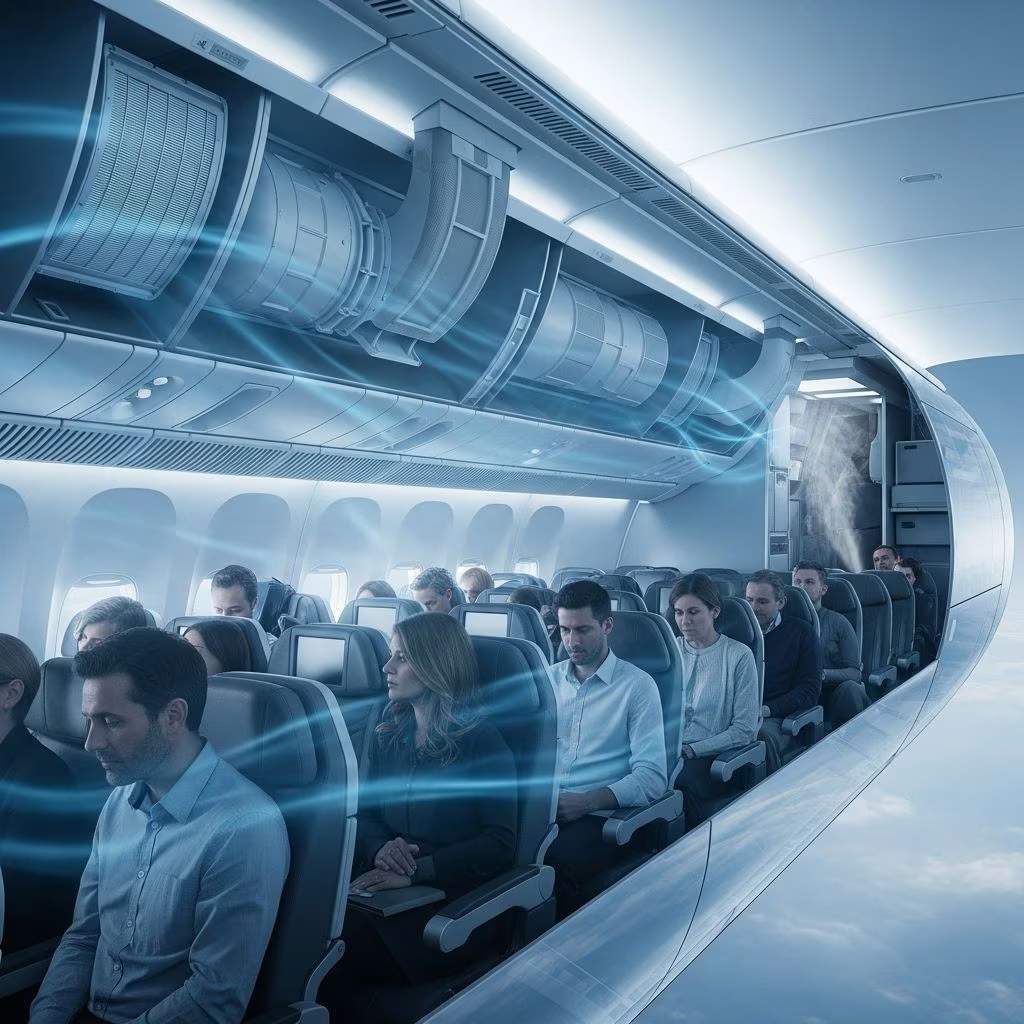
To understand how contamination occurs, it is essential to comprehend the engineering systems that keep aircraft cabins pressurized and comfortable. Modern commercial aircraft rely on a component called the bleed air system, which draws heated air directly from the aircraft’s engines and channels it through filtration systems before it enters the cabin environment. This design has been utilized across virtually all commercial aircraft for decades, with the notable exception of the Boeing 787 Dreamliner, which employs an electrical air compression system that eliminates the need to extract air from the engines.
The bleed air system operates by tapping into compressed air from the engine compressor stages, cooling it, and directing it through air conditioning packs that regulate both temperature and humidity levels for passenger comfort. While this approach is efficient and has proven effective in most operational scenarios, it creates a potential vulnerability when mechanical components deteriorate or fail unexpectedly.
Contamination Sources and Seal Failures
Fume events occur when contaminants—primarily engine oils, hydraulic fluids, and de-icing chemicals—seep into the bleed air stream and subsequently enter the cabin’s ventilation system. These leaks originate from worn or failed seals located within engine compressor sections. When these seals deteriorate, oils meant to lubricate engine components can escape and vaporize under extreme engine temperatures, transforming into gaseous compounds that become distributed throughout the aircraft’s pressurization and conditioning infrastructure.
The contamination process is particularly insidious because it occurs invisibly and without warning. Aircraft crews may not immediately recognize the degradation of internal seals, and by the time a fume event becomes noticeable to occupants through odor detection, significant quantities of contaminated air have already circulated through the cabin. The smell often resembles burning fuel, burning wood, or nail polish remover—descriptions that passengers frequently use when documenting their experiences.
Frequency and Documentation of Incidents
Determining the true prevalence of fume events has proven challenging, as data collection and reporting mechanisms vary across different aviation jurisdictions. The Federal Aviation Administration has recorded thousands of fume event reports since 2010, with certain aircraft models experiencing noticeably higher incident rates than others. The Airbus A320 family, one of the most widely operated commercial aircraft globally, has shown a particularly concerning upward trend in reported fume events in recent years.
While aircraft manufacturers and airlines frequently characterize these incidents as rare occurrences that pose minimal risk, the volume of documented reports suggests a more complex reality. Many incidents go unreported entirely, either because crews attribute symptoms to other causes or because organizational cultures inadvertently discourage formal incident documentation.
Chemical Composition of Contaminated Air
The danger presented by fume events extends beyond simple discomfort. The oils and fluids that contaminate cabin air contain organophosphates, a class of chemical compounds structurally similar to certain pesticides and nerve agents. When vaporized and inhaled, these compounds interfere with critical neurological functions by disrupting enzymatic processes essential for proper brain and nerve signaling. Even at relatively modest exposure levels, organophosphates can trigger headaches, confusion, respiratory distress, and general fatigue.
Beyond organophosphates, jet engine oils and hydraulic fluids contain numerous other toxic substances that become aerosolized during bleed air contamination events. These include tricresyl phosphate, various hydrocarbons, and ultrafine particles measuring less than 2.5 micrometers in diameter. Such minute particles easily penetrate deep into the lungs and can cross into the bloodstream, potentially reaching vital organs including the brain.
Acute Health Manifestations During Fume Events
Passengers and crew members exposed to contaminated cabin air during active fume events commonly experience a spectrum of immediate physiological responses. These acute symptoms typically include:
- Headaches and migraines of varying intensity
- Dizziness and loss of equilibrium
- Nausea and gastrointestinal distress
- Difficulty concentrating and mental confusion
- Coughing and throat irritation
- Chest pain and breathing difficulties
- Weakness and general malaise
- Disorientation and impaired spatial awareness
For most passengers experiencing these symptoms during a single flight, acute effects typically resolve within hours to days following the incident, particularly after exposure ends and the individual breathes uncontaminated air on the ground. However, the temporary nature of acute symptoms should not create false reassurance about the safety profile of these events.
Long-Term Health Consequences and Chronic Conditions
The potentially more serious concern involves crew members and frequent travelers who endure repeated exposure to contaminated air over extended periods. Medical professionals specializing in occupational health have documented cases of chronic neurological and respiratory damage among individuals with cumulative exposure histories. These long-term health effects include:
- Chronic respiratory conditions including persistent coughing and airway inflammation
- Neurological dysfunction encompassing memory loss, tremors, and confusion
- Visual impairment and eye focusing difficulties
- Central nervous system damage with lasting cognitive consequences
- Traumatic brain injuries in cases of severe or repeated exposure
- Behavioral and personality changes in affected individuals
An occupational medicine specialist at the University of California, San Francisco has treated over 100 aircrew members for injuries directly attributable to toxic fume exposure, including documented damage to the central nervous system. These cases demonstrate that the health consequences of contaminated cabin air extend well beyond temporary discomfort and represent a legitimate occupational health concern for aviation professionals.
Vulnerable Populations and Risk Factors
Certain individuals face elevated health risks when exposed to contaminated cabin air. Flight crews and pilots, through their occupational exposure patterns, encounter significantly higher concentrations of contaminated air compared to typical passengers. These aviation professionals may experience multiple fume events throughout their careers, creating cumulative exposure scenarios that amplify long-term health risks.
Passengers with pre-existing respiratory conditions such as asthma or chronic obstructive pulmonary disease face heightened vulnerability to acute symptom exacerbation during fume events. Additionally, individuals with cardiovascular disease, neurological disorders, or compromised immune function may experience more severe reactions. Children and elderly passengers represent additional at-risk categories, as their physiological systems may be less resilient to toxic chemical exposure.
The Challenge of Medical Recognition and Diagnosis
A significant complication in addressing fume event health consequences involves the challenge of accurate medical diagnosis. Many symptoms resulting from toxic fume exposure—headaches, dizziness, fatigue, difficulty concentrating—are nonspecific and commonly attributed to various other conditions including migraines, inner ear disorders, anxiety, or simple travel fatigue. Consequently, numerous individuals suffering fume-related injuries never receive proper diagnosis, and their symptoms remain misattributed to unrelated causes.
This diagnostic ambiguity is further complicated by the fact that many medical professionals lack specific training in aviation toxicology and may not consider in-flight fume exposure as a potential cause when evaluating symptomatic patients. The temporal relationship between flight exposure and symptom onset is frequently overlooked, allowing true causation to remain unrecognized.
Current Industry Response and Design Improvements
Recognition of fume event risks has prompted some design innovations within the aviation industry. The Boeing 787 Dreamliner represents the most significant advancement, incorporating an electrical air compression system that completely eliminates reliance on engine bleed air for cabin pressurization and conditioning. This design fundamentally removes the contamination pathway that affects conventional aircraft, though the 787 represents only a small percentage of the global commercial aircraft fleet.
For the vast majority of commercial aircraft currently in operation, manufacturers and airlines continue to rely on the conventional bleed air design despite decades of documented fume events. Upgrades to bleed air system filtration and monitoring have been implemented on some aircraft models, but these represent incremental improvements rather than fundamental solutions to the underlying design vulnerability.
Regulatory Oversight and Documentation Challenges
The regulatory framework governing aircraft fume events and cabin air quality remains inconsistent across different aviation authorities and international jurisdictions. While the FAA maintains records of reported incidents, regulatory requirements for mandatory reporting of fume events are not uniformly enforced. This creates significant gaps in the actual prevalence data, as many incidents likely remain undocumented in official records.
Airlines face limited regulatory pressure to implement costly design modifications or to systematically investigate the health outcomes of affected passengers and crew members. This regulatory environment creates misaligned incentives where the economic costs of addressing fume event issues are perceived as outweighing the regulatory requirements to do so.
Health Effects Summary Table
| Health Effect Category | Acute Timeline | Typical Symptoms | Population Most Affected |
|---|---|---|---|
| Immediate Physiological Response | During/immediately after exposure | Headache, dizziness, nausea, coughing | All exposed passengers and crew |
| Short-term Post-Exposure | Hours to days after flight | Confusion, weakness, chest pain | All exposed individuals |
| Chronic Neurological | Months to years with repeated exposure | Memory loss, tremors, personality changes | Primarily flight crews and frequent fliers |
| Chronic Respiratory | Months to years with repeated exposure | Persistent coughing, airway inflammation | Flight crews and those with pre-existing conditions |
Passenger Safety Considerations and Practical Recommendations
While the statistical probability of experiencing a severe fume event remains relatively low on any individual flight, passengers concerned about cabin air quality can take several practical steps. Immediately reporting unusual odors or symptoms to flight attendants ensures documentation and allows crews to implement emergency procedures if necessary. Maintaining awareness of personal baseline health status enables individuals to more readily recognize when symptoms during or after flights may be unusual.
Frequent travelers and those with pre-existing respiratory or neurological conditions may benefit from consulting with occupational health or toxicology specialists before undertaking extensive air travel schedules. Such consultations can establish baseline health documentation useful for comparing post-exposure health status if incidents occur.
The Path Forward for Aviation Safety
Addressing the fume event crisis requires coordinated action across multiple stakeholders. Aircraft manufacturers must prioritize the design and implementation of contamination-resistant air supply systems throughout their product lines. Regulatory bodies must establish more rigorous reporting requirements and investigate health outcomes systematically rather than treating fume events as statistical anomalies. Airlines should implement comprehensive crew training on fume event recognition and response procedures while maintaining thorough documentation of all incidents.
Perhaps most importantly, affected individuals must have access to medical professionals capable of accurately diagnosing fume-related injuries and connecting health consequences to their underlying aviation exposure causes. Only through comprehensive recognition of the problem and coordinated systemic responses can the aviation industry meaningfully improve cabin air quality and protect the health of both passengers and crew members.
Frequently Asked Questions
What does contaminated cabin air smell like?
Passengers and crew describe the odor as resembling burning jet fuel, burning wood, or nail polish remover. The smell typically becomes noticeable when concentrated contamination enters the cabin, though subtle contamination may produce little detectable odor.
Is every flight experiencing fume events?
No. While the FAA has recorded thousands of fume events since 2010, these represent a small fraction of total commercial flights. However, the actual incidence may be underreported since many incidents go undocumented.
Which aircraft models have the highest fume event rates?
The Airbus A320 family has shown a notably higher frequency of reported fume events in recent years compared to other common commercial aircraft models.
Can fume exposure cause permanent health damage?
Yes, repeated exposure to contaminated cabin air has been associated with chronic neurological damage, central nervous system injury, and permanent respiratory conditions, particularly among flight crew members.
Why hasn’t the bleed air system been replaced industry-wide?
The bleed air design has functioned reliably for decades and the economic costs of redesigning and retrofitting aircraft are substantial. Only newer aircraft like the Boeing 787 Dreamliner employ alternative systems.
References
- Toxic Fumes on Airline Aircraft Put Passengers and Crew at Risk — Singleton Schreiber. Accessed 2026. https://www.singletonschreiber.com/theblog/toxic-fumes-on-airline-aircraft-put-passengers-and-crew-at-risk
- A review of health effects associated with exposure to jet engine emissions — National Center for Biotechnology Information (NCBI). 2021. https://pmc.ncbi.nlm.nih.gov/articles/PMC7866671/
- Is it normal to smell exhaust on a plane? (Cause, Impacts) — Tsunami Air. Accessed 2026. https://tsunamiair.com/airplane/exhaust/smell
- Toxic Airplane Fumes: A Growing Public Health and Personal Injury Crisis — For The People. Accessed 2026. https://www.forthepeople.com/blog/toxic-airplane-fumes-growing-public-health-and-personal-injury-crisis/
- Ultrafine particles in jet fuel emissions responsible for serious health consequences — Green Air News. Accessed 2026. https://www.greenairnews.com/?p=5870
On This Page
The Bleed Air System: How Modern Aircraft Manage Cabin Pressurization Contamination Sources and Seal Failures Frequency and Documentation of Incidents Chemical Composition of Contaminated Air Acute Health Manifestations During Fume Events Long-Term Health Consequences and Chronic Conditions Vulnerable Populations and Risk Factors The Challenge of Medical Recognition and Diagnosis Current Industry Response and Design Improvements Regulatory Oversight and Documentation Challenges Health Effects Summary Table Passenger Safety Considerations and Practical Recommendations The Path Forward for Aviation Safety Frequently Asked Questions← Previous
Drake Passage to Antarctica: Cruise or Fly?
Next →
Best Caribbean Islands Near Los Angeles for a Tropical Escape
Related Reading