

 Travel Essentials
 Travel Essentials

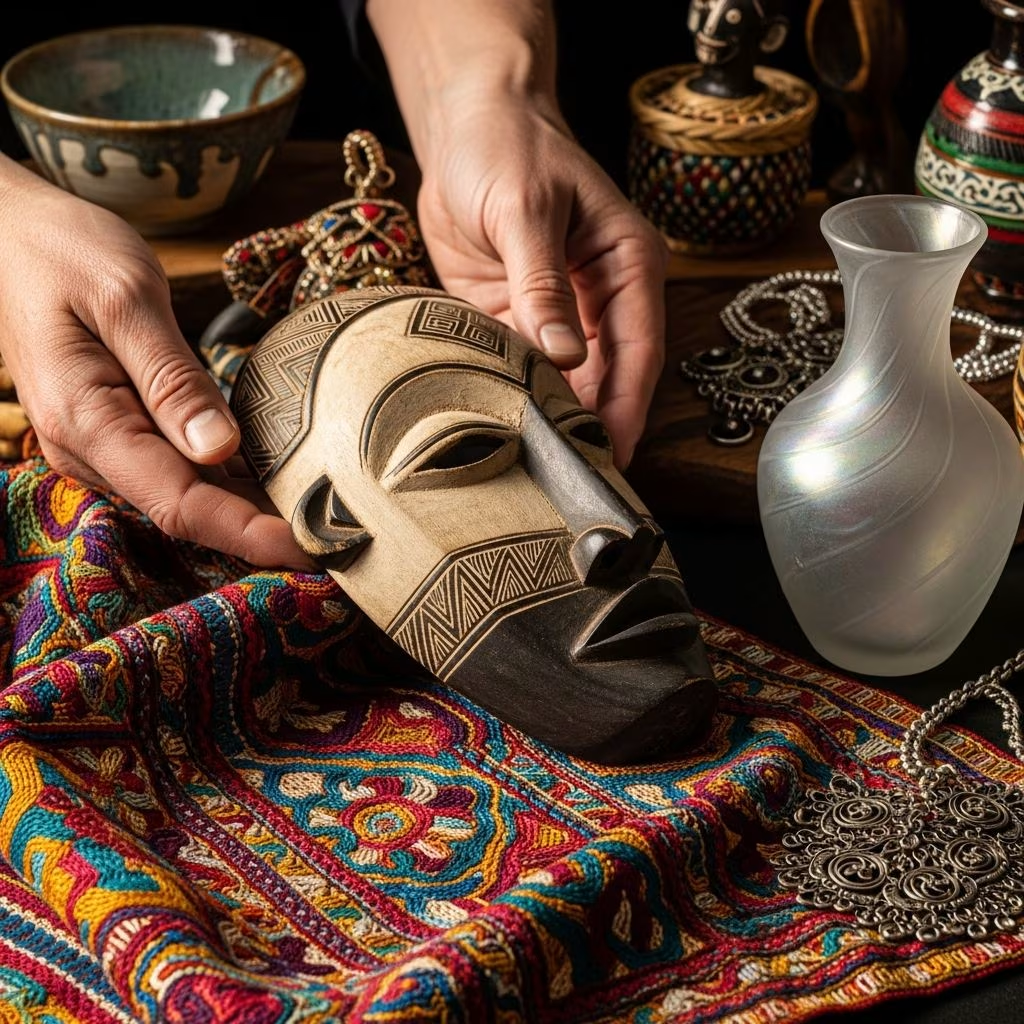
Master artisans worldwide preserve centuries-old handcrafting traditions, attracting global audiences and creating sustainable livelihoods through culturally significant creative practices.
 Travel Essentials
In an era dominated by mass production and digital innovation, a remarkable countermovement is gaining momentum worldwide. Skilled artisans and cultural custodians are revitalizing ancient handcrafting traditions, transforming these practices into compelling narratives that captivate contemporary audiences. These aren’t merely nostalgic remnants of the past—they represent living, breathing cultural expressions that continue to evolve while maintaining their fundamental essence.
The resurgence of interest in traditional craftsmanship reflects a deeper hunger for authenticity, meaningful connection, and cultural understanding. As travelers, collectors, and everyday consumers seek alternatives to factory-produced goods, artisans find themselves at the intersection of tradition and opportunity. Their workshops have become destinations, their techniques the subject of fascination, and their cultural practices increasingly recognized as invaluable heritage worthy of celebration and preservation.
In mountainous regions of Southeast Asia, one of humanity’s most intimate art forms continues under the practiced hands of master practitioners who’ve devoted entire lifespans to their craft. These artists use implements their ancestors employed for centuries—natural materials transformed into precise instruments—to create permanent decorative marks that serve as cultural identity markers and spiritual connectors.
The significance of this practice extends far beyond aesthetic consideration. Each design carries meaning rooted in community history, family lineage, and spiritual beliefs. The transmission of this knowledge occurs through direct apprenticeship, typically beginning in childhood, where aspiring practitioners learn not just technical skills but the cultural context and philosophical foundations underlying their art.
What’s particularly noteworthy is how this tradition has adapted to contemporary realities. While maintaining absolute fidelity to traditional techniques and cultural protocols, practitioners now welcome international participants eager to participate in this ancient ritual. This expansion hasn’t diluted the practice; rather, it has created sustainable income streams and renewed interest among younger community members who recognize the economic and cultural value of their inherited craft.
Islamic artistic traditions prohibit the depiction of living beings in decorative contexts, a restriction that sparked extraordinary innovation in geometric and abstract design. Complex mathematical patterns developed over centuries represent the pinnacle of this creative constraint, resulting in intricate tessellations that continue adorning architectural masterpieces across multiple continents.
Master tilers working in North African countries undergo rigorous training regimens that typically commence during childhood years, with knowledge transferred directly from mentors to apprentices within family units. This hands-on educational model ensures that subtle techniques—the precise angles, specific cutting methods, and color combination principles—remain embedded within family traditions rather than becoming abstract theoretical knowledge.
The contemporary marketplace has discovered significant commercial potential in these tiles. Luxury hospitality establishments, upscale spas, and residential designers now actively seek out these handcrafted pieces, recognizing that authentic geometric tiles carry aesthetic authority and cultural authenticity that industrial replicas cannot capture. This global demand has revitalized entire communities of craftspeople, transforming traditional family businesses into thriving enterprises that employ multiple generations simultaneously.
Across diverse geographical regions, textile production represents one of humanity’s oldest handcrafts, yet it continues displaying remarkable adaptability and creative evolution. Communities have developed distinctive weaving methodologies, fiber preparation techniques, and pattern traditions that reflect both their natural environments and cultural aesthetics.
In Southeast Asian villages, particularly among economically disadvantaged communities, traditional weaving has emerged as a significant income-generating activity. Women artisans working collectively produce fabrics that combine traditional patterns with contemporary color palettes, appealing simultaneously to cultural purists and modern designers. This synthesis creates viable economic opportunities—with individual artisans earning meaningful monthly incomes—while simultaneously serving as a cultural preservation mechanism.
Bamboo and cane weaving traditions in South Asian regions showcase specialized technical knowledge passed through generations. The process of selecting raw materials, preparing fibers, and executing intricate weaving patterns requires extensive training and intimate understanding of material properties. These functional crafts produce items that perform practical roles in daily life while embodying aesthetic principles distinctive to their cultural origins.
A Japanese artistic practice involving the precise folding of paper represents one of humanity’s most contemplative handcrafts. Although scholarly consensus remains uncertain regarding exact historical origins, the technique achieved refinement and widespread adoption following the introduction of paper manufacturing technology to Japan during the sixth century.
In contemporary times, this practice has experienced remarkable revival within wellness and mindfulness contexts. The repetitive motions involved in creating intricate paper structures have attracted practitioners seeking counterbalances to accelerated modern life rhythms. The meditative qualities of the work—requiring sustained concentration, deliberate hand movements, and sequential creative decisions—align perfectly with contemporary interest in mindfulness practices and stress-reduction techniques.
What distinguishes this craft’s modern trajectory is its integration with Japan’s sophisticated wellness industry. Rather than existing as an isolated folk practice, it now occupies prominent positions within holistic health frameworks, wellness retreats, and therapeutic contexts. This cultural repositioning has introduced the practice to entirely new demographics while maintaining its fundamental artistic integrity.
Islands in the northern Atlantic have cultivated distinctive knitwear traditions intimately connected to their harsh environmental conditions and distinctive flora. The thick woolen fabrics produced through these techniques serve essential protective functions against severe weather while simultaneously expressing aesthetic principles rooted in landscape observation.
Contemporary knitwear designers working within this tradition access comprehensive historical pattern documentation—essentially archival references preserving centuries of design evolution. Rather than viewing these archives as limiting restrictions, modern practitioners employ them as creative foundations, combining classical motifs with contemporary aesthetic sensibilities. This approach generates knitwear that satisfies both cultural traditionalists and fashion-forward consumers seeking distinctive, handmade garments.
The vitality of this craft demonstrates how heritage practices can thrive through deliberate modernization strategies. Young artisans bring technical expertise and design innovation while respecting the foundational principles established by their predecessors. The resulting products command premium market prices, reflecting both the labor intensity of handwork and the cultural authenticity embedded within each piece.
Despite the encouraging resurgence in certain traditions, thousands of handcrafts worldwide face extinction pressures as younger generations pursue different career paths and industrial production displaces handmade alternatives. The gap between knowledge holders and potential apprentices widens with each generation that bypasses traditional training pathways.
According to cultural preservation organizations, safeguarding strategies must prioritize encouraging active artisan participation in ongoing craft production and facilitating intergenerational knowledge transfer within original communities. Rather than treating crafts as museum artifacts requiring preservation in fixed historical forms, effective strategies recognize them as living practices requiring continuous practitioners who evolve techniques while maintaining cultural continuity.
Innovative tourism and experiential education models offer promising preservation pathways. Immersive learning opportunities enabling travelers to study endangered crafts directly within artisans’ studios create dual benefits: generating sustainable income for practitioners while enabling international audiences to develop appreciation for cultural practices.
Pottery practices within indigenous North American communities extend far beyond utilitarian vessel production. For Pueblo, Hopi, and Navajo communities, ceramic creation represents a spiritually infused practice deeply rooted in relationships with earth, landscape, and ancestral knowledge systems. The clay itself carries spiritual significance as a material gift from the land, and production processes often incorporate ritualistic elements.
Contemporary indigenous artists continue honoring these sacred dimensions while introducing modern aesthetic innovations. This synthesis between tradition and innovation ensures these practices remain culturally vital rather than becoming historical curios confined to museum displays.
Certain European regions have maintained unbroken lace-making traditions spanning multiple centuries, with specific techniques becoming geographically associated with distinct places. The finest examples of these handcrafted textiles demonstrate extraordinary technical mastery, employing delicate fibers and extraordinarily complex patterns that require extensive training and exceptional manual dexterity.
Historical documentation traces these traditions to the sixteenth century, when handmade lace adorned royal garments and religious vestments throughout European courts. The sustained demand for authentic handcrafted lace—despite industrial lace production capabilities—reflects enduring cultural recognition of the artistic excellence and human skill embedded within these textiles.
The contemporary renaissance in traditional handcrafts reflects profound cultural shifts in how global societies value authenticity, sustainability, and human connection. These ancient practices serve as bridges between contemporary consumers and historical continuities, creating meaningful engagement with cultures beyond their immediate geographical boundaries.
The economic viability of these traditions demonstrates that cultural heritage and commercial sustainability need not represent competing values. When marketed authentically and priced to reflect genuine labor investment, handcrafted goods access willing audiences prepared to invest significantly in culturally meaningful objects. This market recognition simultaneously validates the artisans’ expertise and ensures economic incentives supporting intergenerational knowledge transmission.
The most successful heritage craft communities combine unwavering commitment to fundamental techniques and cultural protocols with flexible approaches toward aesthetic evolution and market adaptation. Young artisans bring fresh perspectives and contemporary design sensibilities without abandoning foundational principles their predecessors established.
Educational initiatives, tourism partnerships, and cultural organizations increasingly recognize their roles in supporting these transitions. By creating accessible pathways for skill acquisition, facilitating market connections, and generating cultural recognition, these institutions strengthen the conditions enabling traditional practices to flourish within contemporary economic and social contexts.
Traditional handcrafts embody centuries of accumulated cultural knowledge, employ techniques refined through generations, and carry embedded meanings reflecting their communities’ histories and spiritual practices. Each piece represents individual artistic expression shaped by cultural protocols rather than standardized factory specifications.
Direct purchases from artisans and cooperatives, participation in apprenticeship experiences, and engagement with cultural tourism organizations dedicated to preserving endangered practices all provide meaningful support while generating sustainable income for practitioners.
Increasingly yes. Premium markets recognize the aesthetic and cultural value of authentic handcrafted goods, and experiential tourism creates additional income streams. However, sustainability requires conscious market cultivation and often depends on cultural organizations’ supportive infrastructure.
Contemporary practitioners demonstrate that modernizing aesthetic expressions while honoring fundamental techniques and cultural protocols enables crafts to remain culturally vital. This balance ensures traditions evolve authentically rather than becoming frozen historical artifacts.
