

 Travel Essentials
 Travel Essentials

Discover how jewelry carries cultural identity, spiritual meaning, and history across Africa, Asia, the Americas, Europe, and the Pacific.
 Travel Essentials
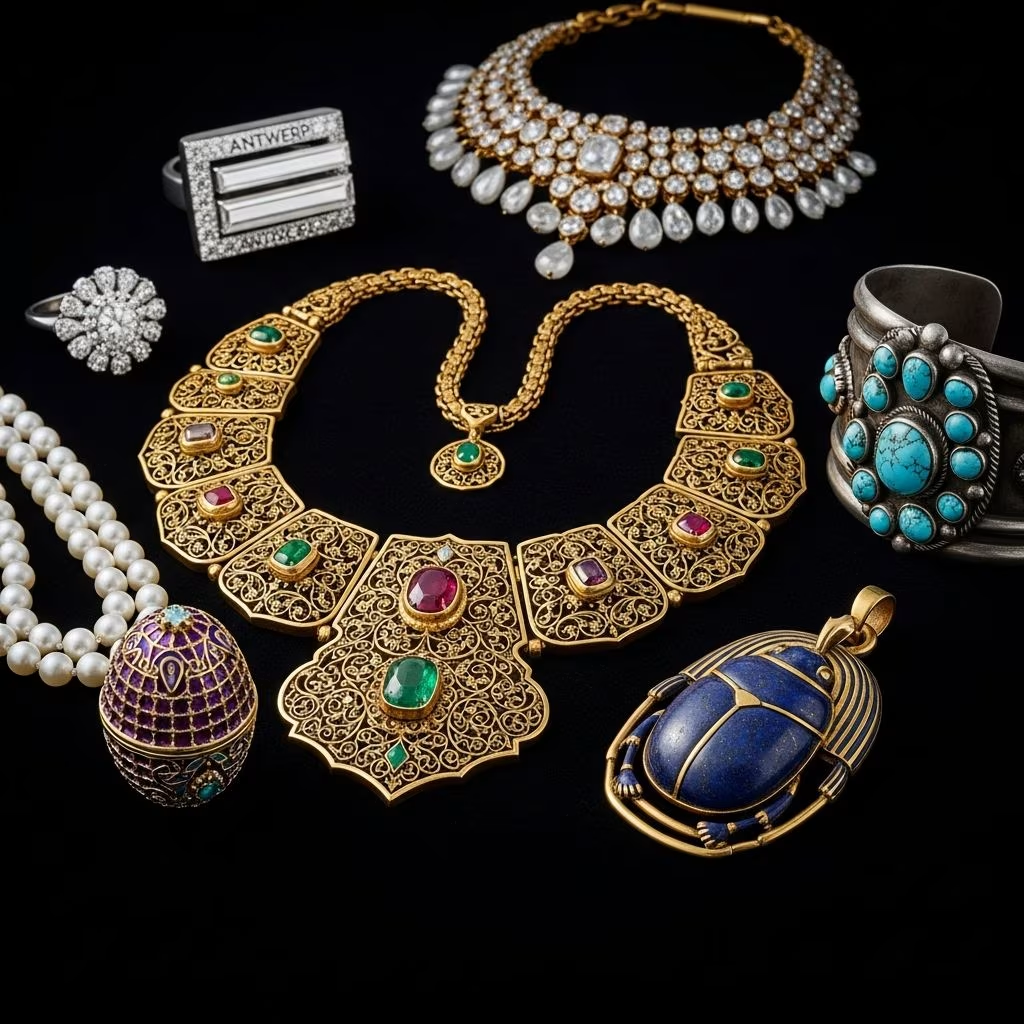
Jewelry transcends mere decoration, serving as a vital link to cultural identity, social hierarchy, and spiritual beliefs across the world. From ancient beads crafted millennia ago to intricate heirlooms passed through generations, these adornments encapsulate histories and values unique to each society.
The story of jewelry begins deep in human history, with evidence of beadwork dating back 40,000 years in Africa, where ostrich eggshells were transformed into prized items used as currency and status symbols. These early pieces laid the foundation for global traditions, evolving into sophisticated designs that blend natural resources with skilled artistry.
In many regions, materials like jade, turquoise, and shells hold profound significance. Jade, revered in China for over 7,000 years, symbolizes purity, protection, and the harmony of yin and yang, often carved into family heirlooms that ward off misfortune. Similarly, turquoise in Persian culture evoked the heavens, while Tibetans valued its color shift from blue to green as a metaphor for life’s wisdom and cycles.
Africa stands as a cradle of jewelry innovation, where beads communicate identity, lineage, and rites of passage. Zulu artisans craft necklaces that denote family affiliations through specific patterns, while Maasai designs adhere to rigid color codes reflecting tribal protocols.
Among the Himba of Angola, layered Vilanda necklaces of colorful beads signify age and maturity—the more strands, the greater the wearer’s life experience. In Cameroon, the Bubungo tribe pairs cowrie shell necklaces with wooden beads on traditional garb, embodying ethnic pride. Eswatini’s ligcebesha necklaces, featuring shield motifs, grace ceremonies like the Reed Dance, merging beadwork with national symbolism.
West African groups like the Ashanti elevate gold into wedding cuffs and anklets, heirlooms symbolizing prosperity and continuity. Nigerian brides don coral beads for fertility and royal protection among Edo and Igbo peoples.
Asia’s jewelry traditions emphasize spiritual depth and marital rituals. Chinese jade pendants, durable and luminous, represent moral virtue and safeguard against evil, integral to weddings and heirlooms. Indian brides wear at least 16 pieces during shringar ceremonies, with bangles signifying transformation into wedded life.
In Japan, engagement rings follow precise etiquette, exchanged amid symbolic gifts. Cypriot artisans, from the Bronze Age, mastered filigree and granulation, blending Greek olive wreaths with Roman influences.
| Region | Key Piece | Symbolism |
|---|---|---|
| China | Jade pendant | Protection, balance |
| India | Wedding bangles | Marital transition |
| Cyprus | Filigree earrings | Cultural fusion |
Native American and Latin American jewelry fuses nature with narrative. Hopi silversmiths employ overlay techniques, soldering silver layers with cutouts of corn, sun, and water symbols for textured depth. Navajo concho belts, braided leather inlaid with silver and turquoise, narrate family stories through generational engravings and offer ceremonial protection.
Brazil’s balangandan bracelets, with rattling charms of African origin, evolved from fertility belts to status symbols post-slavery, featuring chunky talismans. Antigua and Barbuda craft pieces from fan corals and lavender jade, dubbed ‘angel stones’ for spiritual energy.
Maori Hei Matau fishhook pendants, carved from jade or bone, promise strength, fertility, and safe sea voyages, embodying New Zealand’s natural reverence. Samoan ‘ulafala necklaces of red-painted pandanus carpels signal elite status at gatherings.
Europe’s traditions include Ireland’s Claddagh rings, symbolizing love, loyalty, and friendship through heart, hands, and crown motifs. Greeks pioneered prayer beads, later adapted as worry beads for calm. Cypriot repoussé work from the 17th century incorporates enameling alongside ancient granulation.
Globally, weddings amplify jewelry’s role. Egyptian collars rewarded valor, with amulets for priests and pharaohs. Bedouin and African communities present pieces communally, weaving music and tales into the exchange. Greek gold knots and Victorian tiaras echo enduring bonds.
Today, artisans revive techniques amid globalization. Brazilian balangandans rattle in festivals, Maasai beads trade online while preserving rules, and Chinese jade heirlooms adapt to contemporary designs. These efforts ensure traditions endure, blending heritage with innovation.
Beads from ostrich eggshells in Africa, approximately 40,000 years old.
It embodies grace, protection, and yin-yang balance, used in heirlooms for millennia.
Patterns and colors indicate tribe, status, age, or marital role, as in Zulu and Maasai designs.
Strength, prosperity, fertility, and safe travels.
Many cultures use gold, gems, or beads for protection and status, often community-involved.
