

 Travel Essentials
 Travel Essentials

An in-depth guide to the Trans Bhutan Trail: its history, sections, challenges, costs, and tips for experiencing this Himalayan gem that connects remote villages.
 Travel Essentials
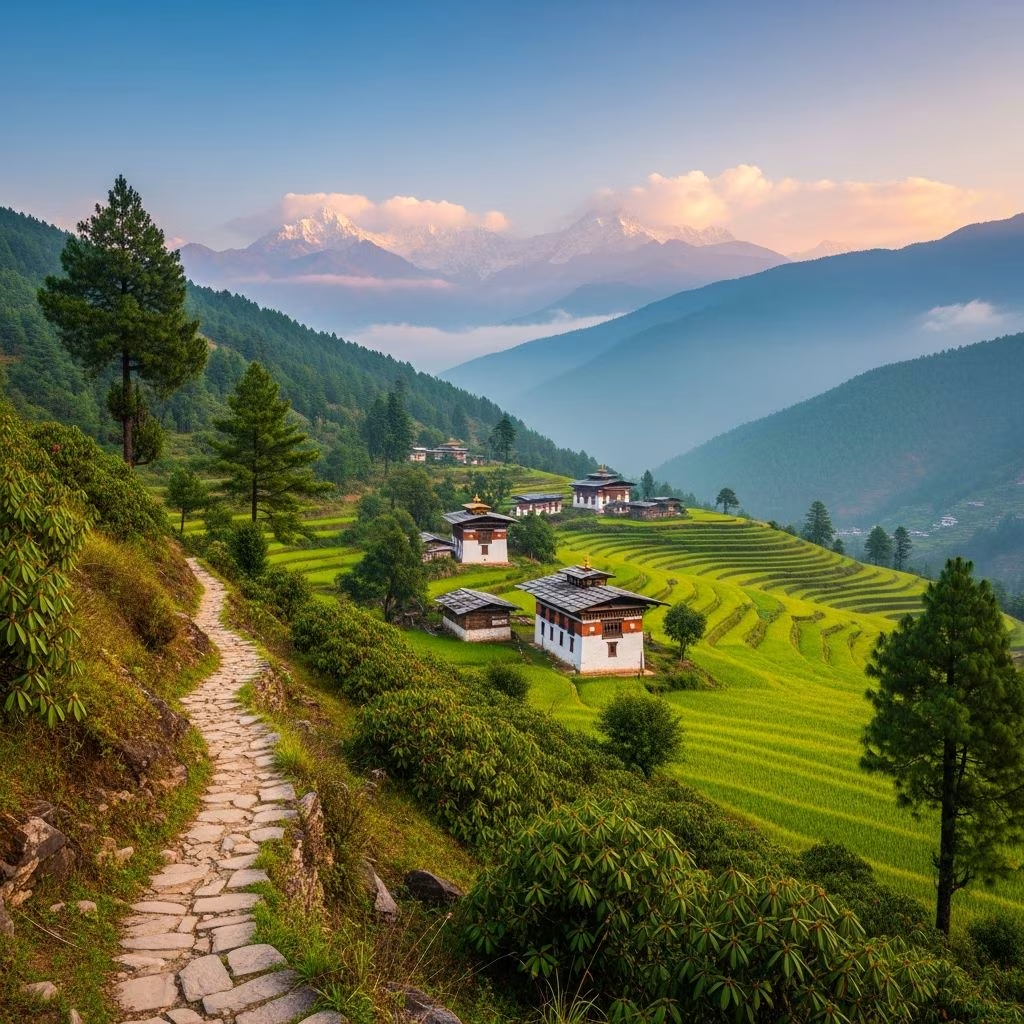
The Trans Bhutan Trail stands as one of the most captivating long-distance hiking experiences in the Himalayas, a meticulously restored 403km path that weaves through Bhutan’s dramatic landscapes and vibrant communities. Spanning from the western region of Haa to the eastern reaches of Trashigang, this trail revives a historic corridor used for centuries by traders, pilgrims, and leaders alike.
Dating back approximately 500 years, the original route served as a vital lifeline connecting isolated villages across Bhutan. It facilitated trade, governance, and spiritual journeys, leveling social hierarchies as people from all backgrounds traversed its paths. In recent years, this forgotten network has been brought back to life through collaborative efforts involving local volunteers known as De-suups, or Guardians of Peace. These community members from diverse backgrounds cleared overgrown sections, restoring the trail to its former glory while opening it to modern explorers for the first time in over six decades.
The revival project emphasizes sustainability, channeling efforts into socio-economic development for remote areas. By promoting slow-paced travel, it ensures that benefits flow directly to local economies, fostering homestays, guiding services, and cultural exchanges that empower residents.
The trail commences near Paro in the Haa district, cutting through the heart of Bhutan via key provinces such as Thimphu, Punakha, Trongsa, and Bumthang, before culminating in Trashigang. Divided into 28 distinct sections, it accommodates various itineraries, from multi-day segments to the full 36-day odyssey. Road access at multiple points allows hikers to select manageable portions without committing to the entire expanse.
Elevations vary significantly, peaking just below 4,000 meters amid towering mountains that exceed 7,000 meters. Trekkers navigate lush valleys, high passes, dense forests, and riverside meadows, encountering Bhutan’s iconic dzongs (fortresses), monasteries, and pastoral farmlands.
Classified as technically moderate yet physically demanding, the Trans Bhutan Trail suits hikers with solid fitness levels. Daily ascents and descents, combined with high-altitude exposure, test endurance over rugged terrain. Expect steep gradients, rocky paths, and stream crossings, though well-marked signage and volunteer-maintained sections enhance safety.
Preparation is key: build cardiovascular stamina, strengthen legs for uneven ground, and acclimatize to altitudes. Weather fluctuates from temperate valleys to alpine chills, necessitating layered clothing and robust footwear.
| Difficulty Level | Description | Recommended Fitness |
|---|---|---|
| Moderate-Advanced | Technical footing, elevation gains up to 1,500m/day | Regular hiking experience, 10+ km daily walks |
| Duration per Section | 1-3 days | Full trail: 36 days |
| Max Elevation | ~3,800m | Acclimatization advised |
Bhutan mandates the Sustainable Development Fee (SDF), currently set at a daily rate that funds conservation and infrastructure. A full end-to-end trek approximates US$20,000, factoring in guided tours, accommodations, meals, and permits—making it a premium pursuit. Shorter sections reduce costs significantly, often to a few thousand dollars for 5-10 days.
All treks require licensed guides, arranged via Bhutanese tour operators. The official TBT passport, stamped at completion points, serves as a memento and motivator for section-by-section progress. Bookings open seasonally, with optimal windows from October to May to avoid monsoons.
Beyond physical challenges, the trail offers profound cultural encounters. Hikers stay in village homestays, sharing meals of ema datshi (chili cheese stew) and red rice with families. Interactions with farmers, weavers, and monks reveal Gross National Happiness principles in action—Bhutan’s holistic development philosophy.
Landmarks include ancient chortens, suspension bridges, and festivals timed with lunar calendars. The trail’s eastern segments unlock off-the-beaten-path regions, where tourism remains nascent, preserving authenticity.
As a social enterprise, the Trans Bhutan Trail reinvests all profits into maintenance and local support. De-suups continue stewardship, while training programs create jobs in hospitality and guiding. This model counters mass tourism, prioritizing quality over quantity in line with Bhutan’s high-value, low-impact policy.
Visitors contribute by purchasing crafts, respecting customs (remove hats in temples, accept tsampa offerings), and minimizing environmental footprint through Leave No Trace practices.
Pack light yet comprehensively: waterproof trekking poles, high-ankle boots, thermal layers, rain gear, and a first-aid kit with altitude meds. Hydration is critical; carry purifiers for streams. Guides carry satellite phones, but personal devices offer limited signal.
Fall (October-November) delivers clear skies and vibrant foliage; spring (March-May) brings wildflowers. Avoid summer rains and winter snows at high passes.
Beginner-Friendly: Haa to Paro (3 days) – Scenic intro with moderate climbs.
Signature: Punakha to Trongsa (7 days) – Cultural highlights via fertile valleys.
Advanced: Bumthang Loop (10 days) – Remote plateaus and monasteries.
No, it demands prior hiking experience due to technical sections and elevations. Start with shorter segments.
Around US$20,000 including SDF, guides, and lodging.
Entry via approved operators; SDF covers visa on arrival.
Under 4,000m, with stunning Himalayan vistas.
No, mandatory guided groups for safety and regulations.
This trail transcends mere hiking, embodying Bhutan’s ethos of harmony between people, nature, and tradition. Whether tackling a single section or the full traverse, it promises transformative journeys amid unparalleled beauty and warmth.
