

 Travel Essentials
 Travel Essentials

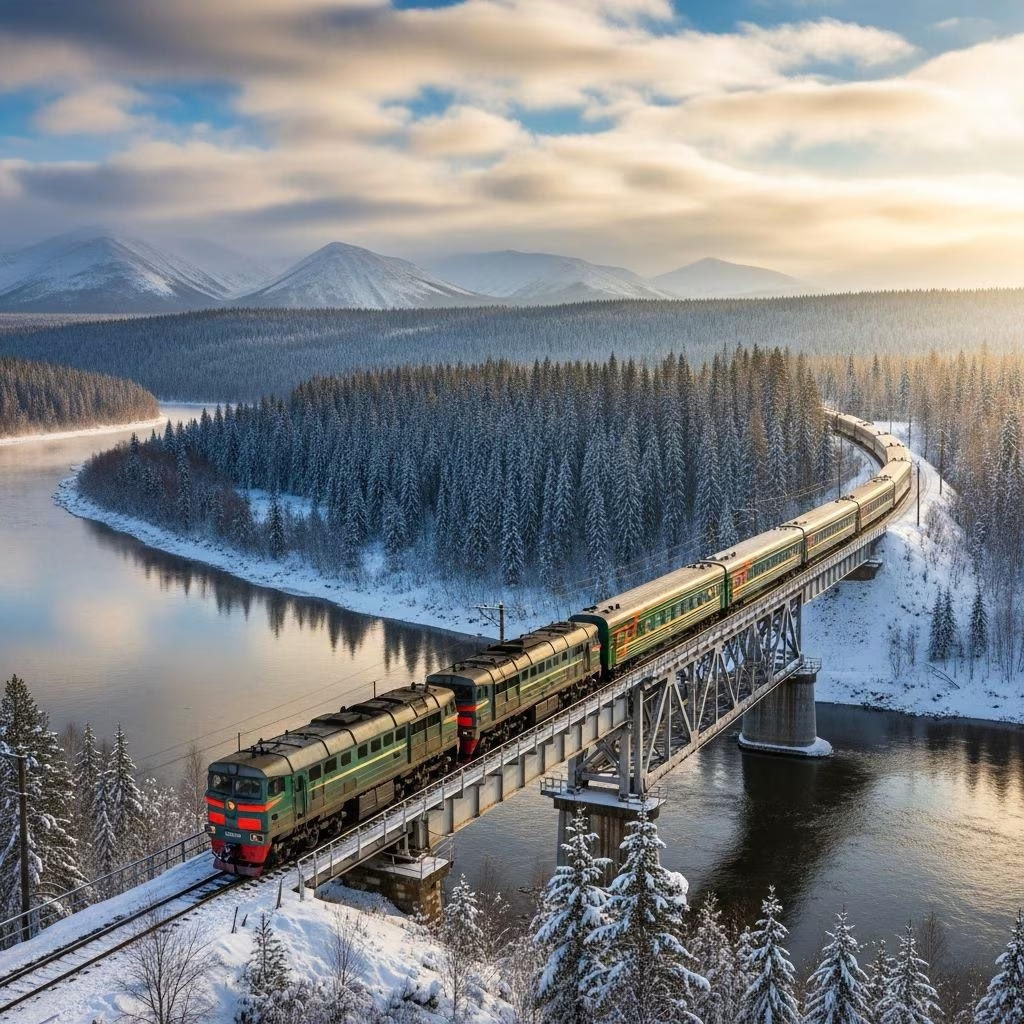
Explore the Trans-Siberian Railway, a legendary 9,289 km rail route connecting Moscow to Vladivostok through diverse landscapes and cultures.
 Travel Essentials
The Trans-Siberian Railway stands as one of the most remarkable engineering achievements and travel experiences in human history. Spanning approximately 9,289 kilometers (5,772 miles) from Moscow in the west to Vladivostok in the far east, this legendary rail corridor represents the longest railway line in the world and a journey that transcends typical travel experiences.
Conceived in the late 19th century under the vision of Tsar Nicholas II, the Trans-Siberian Railway was designed to connect European Russia with the distant Russian Far East, facilitating trade, communication, and territorial integration. More than a century later, this monumental rail system continues to captivate adventurers, cultural enthusiasts, and travelers seeking an authentic encounter with Russia’s most remote and captivating regions.
The scale of the Trans-Siberian Railway is genuinely difficult to comprehend without undertaking the journey. The route traverses eight distinct time zones, meaning that passengers experience dramatically different local times throughout their voyage. The railway connects 87 cities and towns across two continents—Europe and Asia—making it a truly transcontinental experience.
The main trunk line from Moscow to Vladivostok takes approximately eight days to traverse by train, allowing travelers sufficient time to observe the gradual transformation of landscapes and cultures. Along the way, passengers witness an extraordinary diversity of natural environments and human settlements, from the urban sophistication of Moscow to the remote Siberian wilderness, and finally to the Pacific port city of Vladivostok.
One of the most compelling aspects of traveling the Trans-Siberian Railway involves experiencing the remarkable variety of landscapes that unfold from the train windows. The journey showcases nearly every terrestrial environment imaginable.
Beyond its geographical significance, the Trans-Siberian Railway carries profound cultural and historical importance. The route passes through numerous regions with distinct ethnic identities, traditional cultures, and historical narratives. Travelers encounter communities that have maintained traditional lifestyles despite modernization, providing glimpses into authentic Russian and Central Asian cultures.
While the primary Moscow-Vladivostok route forms the backbone of the Trans-Siberian Railway system, several significant branch lines extend from the main trunk, offering alternative itineraries and connections.
An important variant of the main route incorporates the Baikal-Amur Mainline, which was constructed to provide an alternative path through some of Siberia’s most challenging terrain. This route adds complexity and length to the journey but offers access to particularly remote and pristine regions.
Many travelers opt for routing that includes Mongolia, taking the train south from the main line into Ulaanbaatar before rejoining the primary corridor. This deviation adds cultural variety and dramatically alters the travel experience, introducing passengers to the Mongolian steppes and nomadic traditions.
Some itineraries extend the journey into China, with connections to Beijing and other major Chinese cities. These extended routes provide opportunities for broader Asian exploration while maintaining the core Trans-Siberian experience.
The standard journey from Moscow to Vladivostok requires approximately eight days of continuous or semi-continuous train travel. However, many travelers enhance their experiences by incorporating stops at significant waypoints, extending total travel time considerably. Some of the longest continuous segments demand 62 hours or more without intermediate stops.
The experience of traveling the Trans-Siberian Railway varies dramatically depending on season:
Trans-Siberian trains typically offer multiple accommodation levels, ranging from basic seating to private compartments with en-suite facilities. Passenger classes generally include:
The dining car serves as a social hub where passengers from diverse backgrounds converge, share meals, and exchange travel narratives. The culinary experience reflects Russian traditions while accommodating various dietary preferences. Between formal meal times, the train’s social spaces facilitate genuine interactions between travelers and provide opportunities to observe fellow passengers from around the world.
While the train journey itself constitutes the primary experience, several stations warrant particular attention and often encourage passengers to disembark for exploration:
International travelers must secure appropriate visas for Russia and any other countries included in their itinerary. Processing times for Russian visas can be lengthy, requiring advance planning. Some travelers also require visas for Mongolia or China, depending on their chosen route.
While the Trans-Siberian Railway operates year-round, most travelers prefer summer months when weather is more moderate and daylight extends nearly continuously in northern regions. However, winter travel offers unique photographic opportunities and dramatically different experiences that some adventurers specifically seek.
Ticket pricing varies considerably based on accommodation class, season, and booking timing. Budget-conscious travelers can complete the journey for modest sums, while those seeking premium accommodations and services should plan for substantially higher expenditures. On-train dining and ancillary services involve additional costs beyond ticket fares.
The Trans-Siberian Railway traverses some of Earth’s most ecologically significant territories. The forests along the route constitute important components of global carbon cycles and biodiversity preservation. Lake Baikal, crossed during the journey, represents a unique ecosystem containing endemic species found nowhere else on Earth.
The railway’s construction and operation have substantially influenced these regions, creating both economic opportunities and environmental pressures. Modern discussions about the Trans-Siberian Railway increasingly incorporate considerations regarding sustainable tourism and environmental stewardship.
The Moscow to Vladivostok journey typically requires eight days of continuous train travel. However, most travelers extend this considerably by incorporating stops and exploring waypoints along the route, sometimes extending total trip duration to two or three weeks.
Summer months from June through August offer the most pleasant weather and maximum daylight. However, winter travel provides distinctive experiences and photographic opportunities. Spring and autumn present moderate conditions with fewer tourists.
Yes, solo travel is common on the Trans-Siberian Railway, with many travelers reporting positive experiences and valuable social interactions. Standard safety precautions applicable to any international travel should be observed.
While English competency among train staff is variable, major stations typically offer English assistance. Traveling with language resources or translation applications can facilitate communication when needed.
Appropriate clothing for prevailing seasonal conditions is essential, including layers for temperature variation. Comfort items for extended periods in transit—entertainment, comfortable clothing, toiletries—merit consideration. Medications and personal care items should be adequate for the entire journey duration.
The Trans-Siberian Railway continues to capture imaginations and inspire adventurers more than a century after its construction. The combination of extraordinary natural beauty, cultural diversity, historical significance, and the meditative quality of extended train travel creates an experience that transcends typical tourism. For many, the journey represents not merely transportation between two cities but rather a transformative exploration of one of Earth’s vast and compelling regions, offering perspectives on geography, culture, and personal capability that extend far beyond the journey’s conclusion.
