

 Travel Essentials
 Travel Essentials

This article delves into the psychological pull of constant travel, signs of addiction, benefits, risks, and strategies for balance in a world craving exploration.
 Travel Essentials
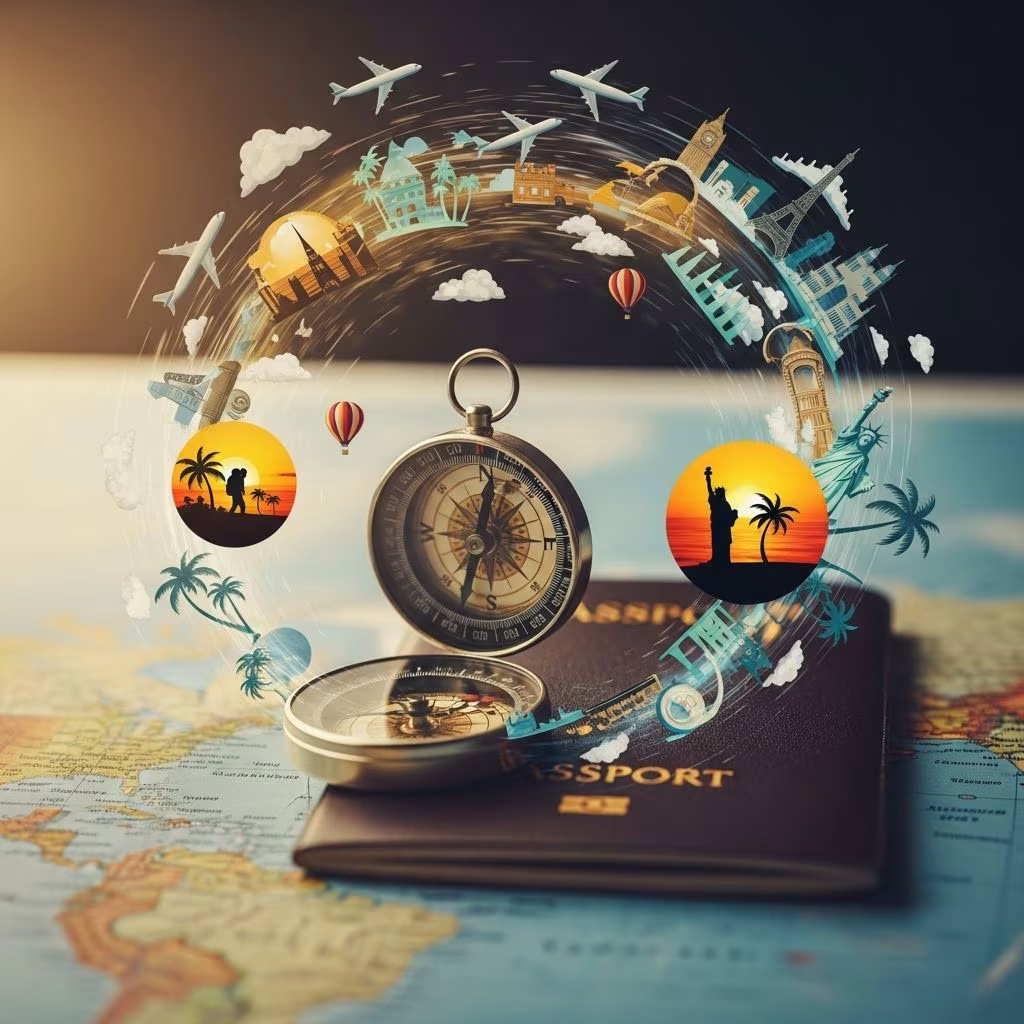
Travel addiction captivates millions, turning casual explorers into relentless nomads chasing the next horizon. This phenomenon blends thrill-seeking psychology with real-world escapism, often blurring lines between passion and compulsion.
At its core, travel addiction stems from profound rewards that hijack the brain’s pleasure centers. Novel environments trigger dopamine surges, akin to other rewarding behaviors, making each journey a high worth pursuing repeatedly.
People often describe an insatiable itch for departure, where routine life pales against the promise of discovery. Sensory overload from vibrant markets, towering landscapes, and unfamiliar cuisines creates vivid memories that linger, fueling cravings for more.
Recognizing travel addiction starts with self-reflection. Constant daydreaming about destinations, prioritizing trips over stability, or post-journey blues signal deeper patterns.
| Common Sign | Description | Impact |
|---|---|---|
| Endless Planning | Mind always plotting next escape, even mid-trip | Disrupts focus on present commitments |
| Post-Trip Crash | Depression or emptiness upon returning home | Strains relationships and work performance |
| Budget Strain | Sacrificing essentials for flights and hotels | Leads to financial instability |
| Neglected Roots | Ignoring family, friends, or career growth | Erodes long-term support networks |
These markers echo behavioral addictions, where the cycle of anticipation, experience, and withdrawal perpetuates itself.
Research frames travel craving as a measurable psychological construct, involving affective responses and sensory memories. Studies liken it to substance dependencies, with neural pathways lighting up similarly during trip planning or recall.
Neuroscientists note how travel disrupts monotony, activating the brain’s reward system. A formative road trip or overseas adventure can imprint lifelong patterns, intensifying with each outing.
Cognitive processes play key roles: tourists anticipate pleasures, replay highlights, and romanticize future jaunts, creating a self-reinforcing loop. Yet, critics caution against overpathologizing, arguing it’s often healthy escapism rather than disorder.
Beyond addiction labels, frequent travel enriches profoundly. It broadens worldviews, hones adaptability, and builds resilience through challenges like navigation mishaps or cultural faux pas.
Many report heightened creativity and problem-solving post-travel, attributing it to expanded mental horizons. Road trips, in particular, offer therapeutic motion, blending freedom with introspection.
Not all highs come without crashes. Overzealous travelers face burnout, isolation, and debt. The ‘post-travel depression’ hits hard, with lows mirroring withdrawal symptoms.
Financial tolls mount quickly: average international flights cost hundreds, while accumulating experiences strain savings. Environmentally, frequent flying contributes to carbon emissions, clashing with sustainability values.
Relationships suffer too—partners left behind feel sidelined, fostering resentment. Career stagnation looms for those chasing horizons over promotions.
Travel addicts share tales of transformation. One blogger recounts sleepless excitement pre-departure, heart racing at the airport’s hum. Another traces roots to childhood books sparking lifelong quests.
A psychologist highlights how Italy’s allure post-trip left voids only new plans could fill, questioning the compulsion’s grip. These narratives reveal joy intertwined with unease, common among the hooked.
Harness wanderlust without derailment requires strategy. Start with micro-adventures: local hikes or day trips deliver hits minus costs.
Slow travel—lingering weeks in one spot—deepens immersion, curbing quantity-over-quality traps.
| Aspect | Healthy Passion | Addictive Pattern |
|---|---|---|
| Motivation | Enrichment and growth | Escape or compulsion |
| Aftermath | Rejuvenated return | Crash and urgency for next |
| Balance | Integrates with life | Overrides responsibilities |
Distinguishing helps; passion enhances life, addiction disrupts it.
It’s recognized as a behavioral craving pattern, with studies validating its psychological basis, though not formally classified as a disorder.
Watch for interference in finances, relationships, or well-being; professional assessment clarifies.
Not cured, but channeled: opt for sustainable practices to enjoy without excess.
Embrace armchair travel via books, VR, or local gems to satisfy urges affordably.
In moderation, yes—boosting mood and resilience—but extremes risk harm.
Travel addiction, whether vice or virtue, defines modern explorers. By understanding its pull—from dopamine drives to memory magic—wanderers can navigate wisely. Prioritize balance to let adventures enrich, not eclipse, life’s full tapestry. Whether plotting a cross-country drive or exotic sojourn, the road beckons thoughtfully.
