

 Travel Essentials
 Travel Essentials

Learn travel photography techniques that turn snapshots into compelling stories with better composition, light, and camera control.
 Travel Essentials
Travel photography represents more than just documenting destinations—it’s about translating the emotions, textures, and stories of your journey into visual narratives that resonate long after you’ve returned home. Whether you’re exploring ancient ruins, wandering through vibrant markets, or capturing candid moments with locals, the ability to take compelling photographs elevates your travel experience and creates lasting memories. This guide explores fundamental techniques and strategies that transform casual snapshots into professional-quality images.
Before embarking on your travels, invest time in mastering your camera’s basic functions and settings. Whether you’re using a DSLR, mirrorless camera, or smartphone, understanding how your equipment operates directly impacts your ability to capture the shots you envision. Many photographers rely on automatic modes, which can produce adequate results but often limit creative control and consistency.
Familiarize yourself with three critical parameters that determine your image quality: aperture controls the depth of field and how much light enters the lens, shutter speed determines how long the sensor captures light and affects motion blur, and ISO measures sensor sensitivity to light. Learning to adjust these settings manually enables you to make deliberate creative choices rather than leaving decisions to your camera’s algorithms.
Before traveling, read your camera’s manual thoroughly and practice using different modes in various lighting conditions. If possible, take a photography fundamentals course or work through online tutorials specific to your camera model. This preparation ensures you won’t waste precious travel time troubleshooting technical issues or struggling with unfamiliar controls.
Composition forms the backbone of compelling travel photography. A well-composed image guides the viewer’s eye through the photograph and creates visual interest, while poor composition results in confusing or forgettable images regardless of subject matter.
One of the most accessible and effective composition techniques is the Rule of Thirds. This principle suggests dividing your frame into nine equal segments using two horizontal and two vertical lines. Rather than centering your subject directly in the middle of the frame, position important elements along these grid lines or at their intersection points. This asymmetrical arrangement creates visual tension and interest, making your images more dynamic than centered compositions.
Many cameras include a grid overlay feature on their LCD screens that displays these divisions in real-time, helping you internalize this principle. With practice, applying the Rule of Thirds becomes intuitive, and you’ll naturally position subjects according to these guidelines.
Every element within your frame should serve a purpose and contribute to your story. Ask yourself a simple question before taking each shot: “What is this photograph about?” Your answer should be what dominates your frame. If you’re photographing a historic doorway, that doorway should fill most of your composition. If you’re capturing a sunset, the sky and horizon should occupy the primary space.
Moving closer to your subject eliminates distracting elements in the background and creates more intimate, impactful images. This approach also reduces visual clutter that can undermine your message. Before releasing the shutter, scan the edges of your frame for unnecessary elements like excessive sky, ground, or objects that don’t enhance your narrative.
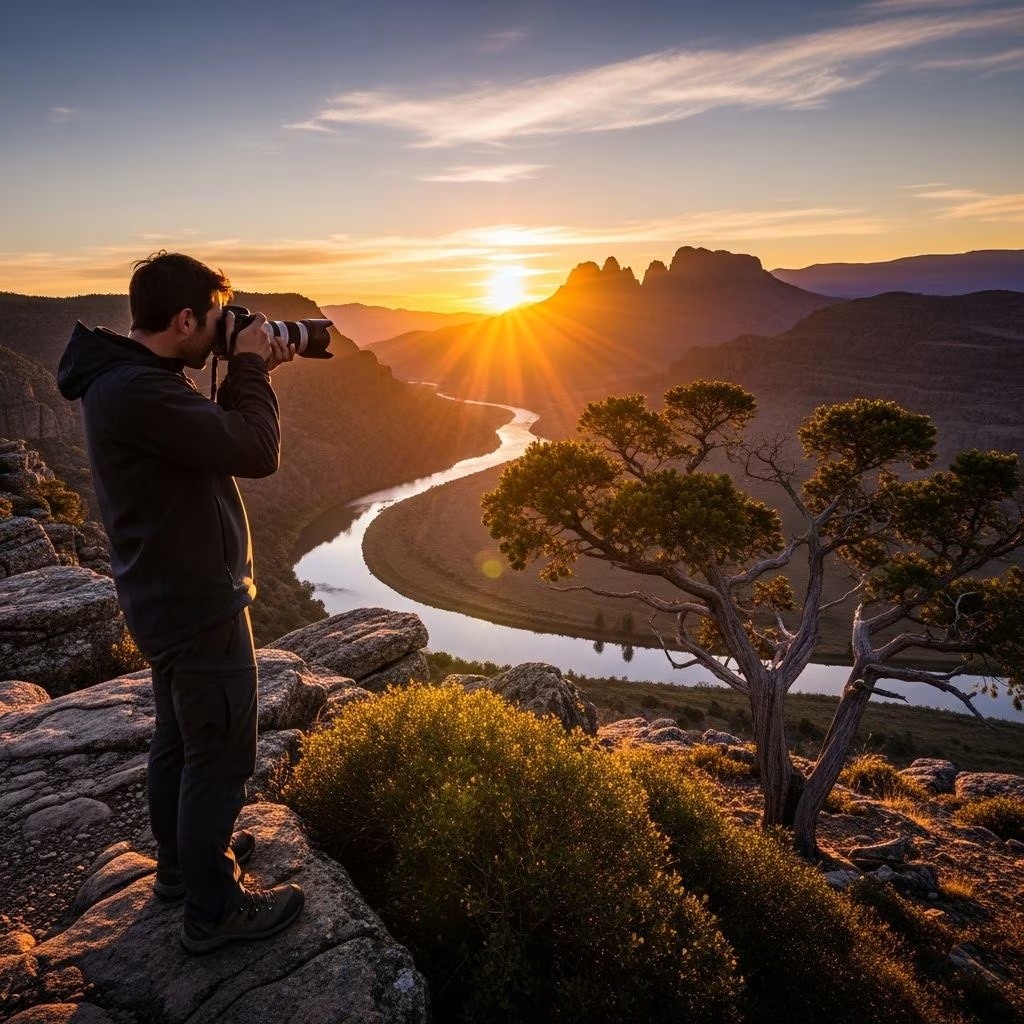
Incorporate leading lines—natural or architectural features that guide the viewer’s eye through your composition toward your main subject. Roads, rivers, fence lines, shadows, and architectural elements all create visual pathways. These lines add depth and dimension while making images feel less flat and two-dimensional.
Creating depth is particularly important in travel photography, which often involves landscape and environmental portraiture. Use foreground elements like flowers, foliage, or architectural details to establish a layered composition. This technique transforms simple backgrounds into complex, visually rich environments that feel immersive.
Light fundamentally determines your photograph’s mood, clarity, and visual appeal. Understanding how to observe, predict, and utilize light represents one of the most valuable skills in travel photography.
The golden hours—the period shortly after sunrise and before sunset—provide soft, warm light that naturally enhances colors and textures. During these times, the sun sits lower on the horizon, creating directional light that casts long shadows and accentuates surface details. This quality of light flatters landscapes, architecture, and portraits alike, making it ideal for travel photography.
Plan your travel itinerary to position yourself at visually interesting locations during golden hours. A simple market scene transformed by golden light becomes dramatically more compelling than the same scene photographed under harsh midday sun.
Strategic use of light and shadow creates contrast that naturally draws viewers’ eyes to your subject. Position your subject in well-lit areas against darker backgrounds, or use shadows to frame and emphasize your main point of interest. This interplay between light and dark adds visual drama and depth to your images.
When shooting during bright daylight, consider how shadows fall across your subject. Partially shadowed faces, architectural details, or scenes create visual interest through contrast. Side-lighting, where light approaches from the side of your subject, reveals textures and produces more dynamic images than flat, front-facing light.
Travel rarely allows you to control lighting conditions. Instead, learn to observe and adapt to available light. On overcast days, diffused light eliminates harsh shadows but can appear flat. Compensate by emphasizing colors, textures, or compositional elements. During midday when light is harsh, seek shaded areas or use reflective surfaces to bounce light onto your subject.
Modern smartphones include HDR (High Dynamic Range) features that balance highlights and shadows in challenging lighting situations. This technology can rescue images taken in bright conditions where certain areas might otherwise appear blown out or completely shadowed.
While tripods seem like additional weight in your luggage, they unlock creative possibilities unavailable with handheld photography. Tripods enable longer exposures in low-light situations, allowing you to maintain low ISO settings while avoiding camera shake. This is particularly valuable for night photography, sunrise and sunset scenes, and flowing water effects like waterfalls.
A tripod also democratizes group photography by allowing everyone to appear in the frame without requiring someone to hold the camera. Lightweight, compact travel tripods balance portability with functionality, making them practical additions to your photography gear.
Rather than holding your camera’s trigger continuously, use selective burst mode set to 3-5 frames per second. This approach captures the moments you need without generating hundreds of nearly identical images that require tedious deletion later. This strategy keeps you mentally present during your travels rather than losing yourself in post-processing.
While expansive landscape shots provide context, the details truly reveal travel experiences. Close-up photography of local crafts, textiles, food, architectural ornamentation, or natural patterns creates powerful connections to destinations. These intimate images reveal textures, colors, and nuances that broader scenes might overlook.
Experiment with shooting straight-on or directly overhead to minimize perspective distortion and allow viewers to focus on intricate details. A tightly cropped close-up of weathered paint, ornate tilework, or weathered wood grain tells stories about age, culture, and place.
Travel photography should capture authentic moments and movement. Rather than directing subjects extensively, frame your composition, anticipate movement, and allow subjects to behave naturally. This approach produces more powerful, authentic images than heavily posed alternatives.
When photographing movement, focus on your subject rather than watching your camera screen. Set your framing before movement occurs, then begin shooting just before subjects enter the frame. This technique consistently captures dynamic mid-air jumps, perfectly timed spins, or peak moments of action.
Deliberate attention to color combinations and contrasts elevates images from ordinary to exceptional. Look for scenes featuring complementary colors—hues opposite each other on the color wheel that naturally create visual impact. A vibrant blue doorway against warm terracotta walls, or bright yellow clothing against muted gray architecture creates visual excitement.
Beyond color, search for interesting textures, materials, and signs of age or growth. Peeling paint, weathered wood, new growth on ancient stone, or layered patinas tell stories about time and place. These visual elements combined with thoughtful composition create compelling narratives.
| Mistake | Impact | Solution |
|---|---|---|
| Relying entirely on automatic mode | Loss of creative control and consistent results | Learn manual mode and practice before traveling |
| Centering subjects in every frame | Visually boring, static compositions | Apply Rule of Thirds and position subjects off-center |
| Overuse of portrait mode | Artificial-looking bokeh and loss of environmental context | Use portrait mode selectively; include environment when relevant |
| Including too many elements in frame | Confused, muddled images with unclear subjects | Move closer, crop tightly, and eliminate distractions |
| Only photographing during harsh midday light | Flat, unflattering illumination and blown-out skies | Plan shoots around golden hours |
| Ignoring small details and textures | Loss of cultural depth and unique storytelling opportunities | Deliberately seek and photograph close-up details |
| Using continuous burst mode | Hundreds of nearly identical images requiring deletion | Use selective burst at 3-5 frames per second |
No. Modern smartphones produce excellent travel photographs, and understanding composition, lighting, and your equipment matters far more than having the most expensive gear. Focus on developing fundamental skills rather than constantly upgrading equipment.
Concentrate on getting technical aspects correct in-camera by understanding your settings, using proper exposure, and composing thoughtfully. While post-processing enhances images, the best travel photos originate from strong fundamentals captured during the actual moment.
Adapt your approach by emphasizing colors, textures, and compositions rather than relying on light quality. Seek shaded areas, use reflective surfaces, employ your camera’s HDR settings, or consider your tripod for longer exposures.
Frame your composition, position yourself unobtrusively, and allow scenes to unfold naturally. Minimize direction and allow subjects to behave authentically, resulting in more powerful images than heavily posed alternatives.
While not absolutely required, a lightweight tripod dramatically expands your creative options, enables group photos, and supports low-light photography. The portability of modern travel tripods makes them practical additions to your gear.
Transforming travel photography from basic snapshots into compelling visual narratives requires combining technical knowledge with creative observation. Mastering your camera’s settings, understanding compositional principles, and learning to work with available light form the foundation. Beyond these technical elements, the most memorable travel photographs emerge from genuine curiosity about destinations, attention to meaningful details, and patience in waiting for authentic moments.
As you travel, slow down and observe scenes carefully before raising your camera. Ask yourself what story you’re trying to tell, what elements matter most, and how light shapes the scene. This intentional approach, combined with the technical techniques outlined here, consistently produces images that transport viewers back to your destinations and inspire them to explore their own.
