

 Travel Essentials
 Travel Essentials

Practical travel safety tips to protect your documents, money, luggage, and health—so you can explore confidently and avoid preventable risks.
 Travel Essentials
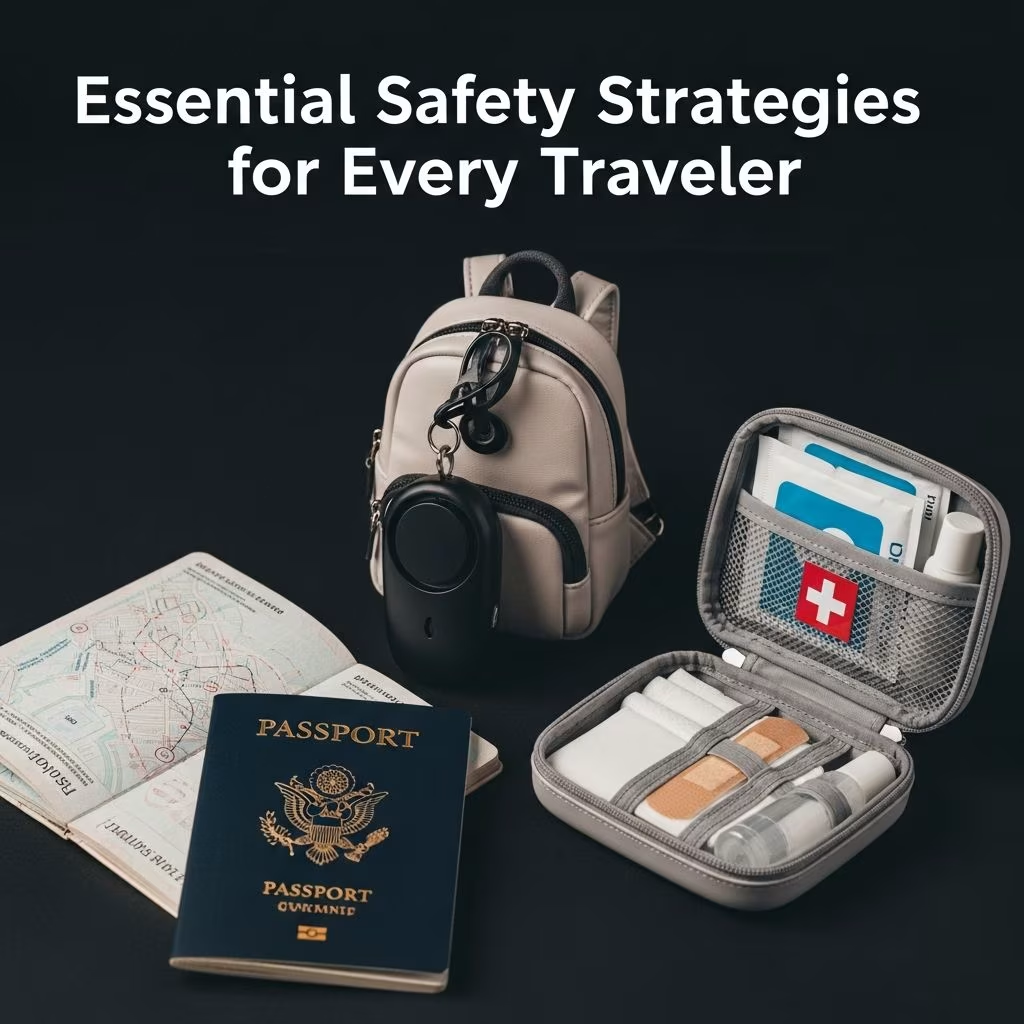
Travel offers incredible opportunities to explore new cultures, landscapes, and experiences. However, ensuring your personal safety while away from home requires deliberate planning and awareness. Whether you’re embarking on a solo adventure or traveling with companions, understanding fundamental security principles can significantly reduce risks and allow you to focus on enjoying your journey. This guide covers practical, actionable strategies to protect yourself, your important documents, your money, and your belongings throughout your travels.
Before departing, successful travelers develop a mindset centered on environmental awareness. Safety begins with understanding your surroundings and recognizing potential threats before they materialize. This doesn’t mean traveling in constant fear; rather, it involves adopting a balanced perspective that respects genuine risks while maintaining the confidence necessary to explore.
Research your destination thoroughly before arrival. Understanding local customs, typical crime patterns, current events, and areas to avoid allows you to make informed decisions about where to spend time and which neighborhoods to explore. Familiarize yourself with emergency contact numbers, the location of your country’s embassy or consulate, and local hospitals or medical facilities. This preparation transforms you from a passive visitor to an empowered traveler capable of responding effectively to various situations.
Establish regular communication with trusted contacts at home. Check in daily through calls, texts, or location-sharing applications. This practice serves multiple purposes: it provides peace of mind to loved ones, creates a safety net if something unexpected occurs, and maintains your connection to support systems outside your travel environment. Additionally, consider registering your trip with your government’s embassy before departure, ensuring that authorities can locate you in genuine emergencies.
Your personal safety represents the foundation of all travel security measures. This encompasses both avoiding dangerous situations and maintaining physical awareness in everyday environments.
Trust your instincts regarding people and situations. If something feels uncomfortable—whether it’s a stranger’s behavior, an unfamiliar neighborhood, or a proposed activity—you have every right to remove yourself from that circumstance. Healthy skepticism is not rudeness; it’s a legitimate safety mechanism. When necessary, allow yourself to be direct or even impolite if politeness enables unsafe situations. Setting firm boundaries and communicating them clearly often prevents problems more effectively than passive compliance.
Maintain heightened awareness of your surroundings in public spaces. Notice the people around you, observe exits and potential routes, and stay alert to environmental changes. Avoid becoming absorbed in your phone while walking, particularly in transit situations where pickpockets and thieves operate. Wearing headphones can limit your ability to hear warning sounds or approaching individuals; use them selectively and keep volume at levels allowing you to remain aware.
Avoid drawing attention through flashy displays of wealth or status. Expensive jewelry, designer bags, and high-end electronics make you a target for theft. Dress modestly according to local customs, which both respects cultural norms and reduces your visibility to potential criminals. This approach doesn’t require looking shabby; it simply means blending in with the typical appearance of legitimate visitors and residents.
Consider taking a self-defense course before traveling, particularly if you journey alone. Even basic training in personal defense builds confidence, improves situational awareness, and provides practical tools should you face genuine threats. Carry a personal alarm or whistle—inexpensive items that produce startling noise and attract attention to potential attackers. In many situations, drawing attention to a threat is the most effective defense.
Avoid high-risk situations including protests, demonstrations, rallies, and areas experiencing civil unrest. While these events offer cultural insights, they can become violent with little warning. Police responses to large gatherings may be forceful, potentially resulting in arrest of participants regardless of their involvement. The temporary loss of your freedom isn’t worth any experience, no matter how significant.
Your passport, visa documentation, and travel papers constitute your most critical possessions abroad. Loss or theft of these documents can derail travel plans and create serious complications requiring embassy intervention.
Maintain separate copies of all essential documents. Store digital versions in encrypted cloud storage accessible from any internet connection, and keep physical photocopies separate from your originals. This redundancy ensures you can prove your identity and travel status even if your primary documents disappear.
Use a money belt or internal pouch worn beneath your clothing to carry your passport when moving between locations. This approach renders your documents invisible to casual observation and nearly impossible for pickpockets to access without your knowledge. While traveling during the day in cities, you might store your passport in your accommodation and carry only a photocopy, further reducing theft risk. When using your actual passport at borders or official check-ins, return it to secure storage immediately afterward.
Select accommodation options that prioritize security. Upon arrival at hotels, hostels, or vacation rentals, secure doors and windows. Portable rubber doorstops wedged under doors that open inward provide inexpensive, effective reinforcement, particularly valuable in establishments where multiple people hold key cards or codes. Use provided safes for valuable documents and excess cash, and never leave documents unattended in common areas.
Thieves specifically target travelers they perceive as carrying significant cash. Strategic financial management reduces your vulnerability while ensuring access to necessary funds.
Never store money exclusively in back pockets, which pickpockets easily access. Distribute your funds across multiple locations: some in your main wallet, some in a money belt, some in your accommodation’s safe, and some in backup locations. This diversification ensures that losing any single wallet or pouch doesn’t eliminate all financial resources.
Maintain two wallets with different purposes. Your primary wallet contains only the cash you’ll need for the day’s activities and your actual payment cards. If confronted by thieves or muggers, this wallet becomes what you surrender, protecting your main financial resources. Your secondary wallet, kept separately, holds backup funds and additional payment methods. This approach acknowledges that possessions can be replaced; the paramount concern is your personal safety. Surrendering your primary wallet removes the criminal’s motivation to escalate situations.
Utilize credit cards and travel payment apps whenever possible rather than carrying large amounts of cash. International credit cards provide fraud protection, emergency replacement services, and documentation of transactions. Notify your financial institution of your travel dates and destinations, preventing security blocks on legitimate international charges. Carrying a mix of payment methods—cards, mobile payment apps, and modest cash reserves—provides flexibility and reduces the catastrophic impact of losing any single payment method.
Be cautious with currency exchange. Use official, established exchange services rather than street vendors or suspicious individuals offering favorable rates. These informal exchanges often involve counterfeit currency or short-changing. Research the legitimate exchange rates before traveling so you can recognize when offers deviate significantly from standard values.
Belongings require constant vigilance, particularly during transfer phases when you’re moving with all your possessions through busy transit hubs.
Never leave luggage unattended in airports, train stations, or other public areas. Thieves specifically target abandoned bags; in many jurisdictions, unattended luggage also triggers security responses. Keep your belongings within your direct visual range at all times, including while sitting in cafes, restaurants, or waiting areas.
Use bags with secure closures and consider adding small locks or cable ties to zippers. This doesn’t prevent sophisticated thieves but deters opportunistic pickpockets who rely on quick access to open bags. Cross-body bag straps that can be looped around chair legs or other fixed objects prevent grab-and-run theft. When using backpacks during transit, wear them on your front rather than your back where you cannot monitor access.
Invest in travel locks designed to secure backpacks and bags to seats or fixed objects while dining or in transit. These inexpensive items provide significant security value by making your belongings inconvenient targets. Additionally, travel insurance covering baggage loss or theft provides financial recovery options should theft occur despite precautions.
Consider anti-theft bags equipped with slash-resistant materials, hidden pockets, and secure compartments designed specifically for travel environments. RFID-blocking passport covers prevent unauthorized scanning of passport chips containing personal information. These specialized items represent targeted investments in security for items you use constantly during travel.
Rain covers for backpacks serve double purposes: they protect belongings from weather while making backpacks less attractive targets for pickpockets. A covered bag is less accessible and appears less valuable than exposed, expensive-looking luggage.
Safety extends beyond personal security to include health and environmental threats specific to your destination.
Pack comprehensive first aid supplies including bandages, antiseptics, pain relievers, triangle bandages for slings, and self-adhesive wraps. Many destinations offer limited availability of familiar medical supplies; arriving prepared ensures you can address minor injuries independently. Include any prescription medications with copies of prescriptions or doctor’s notes to smooth security checkpoint passages.
Understand climate-specific health requirements for your destination. In tropical areas with water exposure, use insect repellent containing DEET, Picaridin, PMD, or IR3535, as insect bites transmit diseases including malaria, dengue, and yellow fever. Pack appropriate clothing and footwear for your destination’s climate to prevent heat exhaustion, cold-related illness, or injuries from unsuitable shoes. In hot environments, drink adequate water and recognize dehydration signs requiring intervention.
Before international travel, verify current vaccination requirements and entry conditions with your destination country and the Centers for Disease Control and Prevention. Carry both digital and physical copies of vaccination records and required medical documentation. Pack personal protection supplies including masks, hand sanitizer, and disinfecting wipes, potentially in greater quantities than locally available.
| Safety Category | Key Actions |
|---|---|
| Before Departure | Research destination, register with embassy, purchase travel insurance, attend self-defense course, establish communication plan with contacts at home |
| Document Protection | Create digital and physical document copies, store in separate locations, use money belt for originals, carry photocopies only when possible |
| Financial Security | Distribute funds across multiple locations, maintain two wallets with different purposes, use cards for most transactions, notify bank of travel, research exchange rates |
| Belongings Management | Never leave luggage unattended, use locks and ties on bags, wear backpacks in front during transit, use cross-body bags with secure straps |
| Daily Awareness | Observe surroundings constantly, trust instincts, avoid flashy displays, limit phone and headphone use while mobile, maintain regular contact with home |
| Health Preparation | Pack comprehensive first aid kit, carry medications with documentation, verify vaccinations, understand climate-specific health needs |
Contact your country’s embassy or consulate immediately to report the theft. Having separate copies of your passport documentation will expedite replacement. Bring available identification, proof of citizenship, and filing documentation as requested by your embassy. The process typically requires several days, so maintain accommodations during this period. Having travel insurance may cover associated costs and accommodation expenses during replacement procedures.
Public transportation is generally safe when approached with awareness. Keep valuables hidden and monitor your surroundings. Avoid traveling alone late at night when possible. Ask accommodation staff for recommendations about safe routes and times. Use official transportation services rather than unmarked taxis. Trust your instincts about people sharing transportation with you.
Maintain constant communication with contacts at home, trust your instincts about people and situations, avoid appearing wealthy or distracted, stay in established accommodations, use reputable tour operators, carry safety equipment including a whistle or alarm, and remember that being rude or direct is appropriate when safety is questioned.
No. Distribute funds across multiple secure locations, including a money belt for documents and backup funds, a regular wallet for daily expenses, accommodation safes for reserve cash, and separate payment methods. This distribution ensures that losing any single wallet or pouch doesn’t eliminate all financial resources.
Wear backpacks on your front rather than your back where you cannot monitor access. Use locks or cable ties on zippers. Loop bag straps around chair legs or fixed objects when sitting. Consider cross-body bags with secure straps that cannot be easily removed. These practices make backpacks inconvenient targets for opportunistic thieves.
Protecting yourself while traveling requires balancing legitimate security measures with the openness necessary to genuinely connect with destinations and people. Excessive fear limits experiences; inadequate awareness invites preventable problems. The strategies outlined in this guide provide frameworks for informed decision-making that allows you to explore confidently while respecting real risks.
Remember that the vast majority of travelers complete journeys safely by combining practical preparation, situational awareness, and sensible decision-making. Your personal safety depends less on dramatic security measures than on consistent, deliberate application of fundamental principles: knowing your environment, protecting your documents and money through diverse strategies, maintaining awareness of your surroundings, and trusting your instincts about situations and people. With these foundations in place, you’re prepared to travel safely and enjoy the transformative experiences that international travel offers.
