

 Travel Essentials
 Travel Essentials

Discover essential travel information for Jordan, covering safety, cultural norms, climate preparation, and must-see attractions for first-time visitors.
 Travel Essentials
Planning a journey to Jordan requires more than just booking flights and accommodations. Understanding the fundamental aspects of this fascinating destination will significantly enhance your travel experience and ensure you make the most of your time in this ancient land. Whether you’re drawn by archaeological wonders, natural landscapes, or cultural immersion, preparation is key to a memorable visit.
Jordan stands out as a beacon of stability and hospitality in its region. Despite geographic proximity to areas experiencing conflict, Jordan maintains a reputation as a welcoming destination for international travelers. According to recent law and order assessments, Jordan ranks favorably among nations where visitors feel comfortable and secure during their travels.
The country’s commitment to tourism safety, combined with its strong security infrastructure, means that violent crime is exceptionally rare. Most visitors move freely throughout major cities and tourist destinations without incident. However, travelers should remain aware of specific areas where caution is warranted, particularly border regions and certain neighborhoods classified as higher-risk zones.
While monitoring local news and official travel advisories remains prudent, the vast majority of Jordan’s tourist corridors—including Amman, Petra, Wadi Rum, and the Dead Sea—maintain excellent safety records. Staying informed, avoiding large demonstrations, and maintaining situational awareness constitute the primary precautions recommended for visitors.
First-time visitors often notice that Jordanians maintain a reserved demeanor during initial encounters. This cultural characteristic—sometimes humorously referred to as the typical serious expression—can seem intimidating to those unfamiliar with local customs. However, beneath this composed exterior lies a profound tradition of warmth and generosity deeply embedded in Jordanian society.
This hospitality tradition traces its roots to Bedouin culture, where welcoming strangers and providing for guests represents a fundamental value system passed down through generations. Once you establish initial contact with locals, you’ll discover their genuine interest in visitors, willingness to assist, and enthusiasm for sharing their culture.
When meeting Jordanians, observe their approach and mirror their greeting style. Some prefer handshakes, while others may place their hand over their heart as a sign of respect. Gender considerations apply—women may wait to see if a man extends his hand before initiating physical contact. These small gestures demonstrate cultural awareness and are deeply appreciated by residents.
A widespread misconception portrays Jordan as uniformly scorching year-round. In reality, the country experiences significant seasonal variations that dramatically affect packing requirements and travel comfort.
Summer months (June through August) bring intense desert heat, with temperatures regularly exceeding 35°C (95°F). During this period, prioritize lightweight, breathable clothing in neutral colors that reflect rather than absorb heat. Essential items include wide-brimmed hats, quality sunglasses, and high-SPF sunscreen.
Winter season (December through February) presents an entirely different scenario. Desert temperatures can drop dramatically after sunset, sometimes reaching near-freezing conditions. Layering becomes crucial, and many travelers are surprised to encounter cold nights even when days remain pleasant. Waterproof jackets are essential, as rainfall during winter months can lead to dangerous flash flooding, occasionally forcing temporary closures of major sites like Petra.
Shoulder seasons (March through May and September through November) offer ideal conditions with moderate temperatures, making them optimal for outdoor activities and extensive exploration.
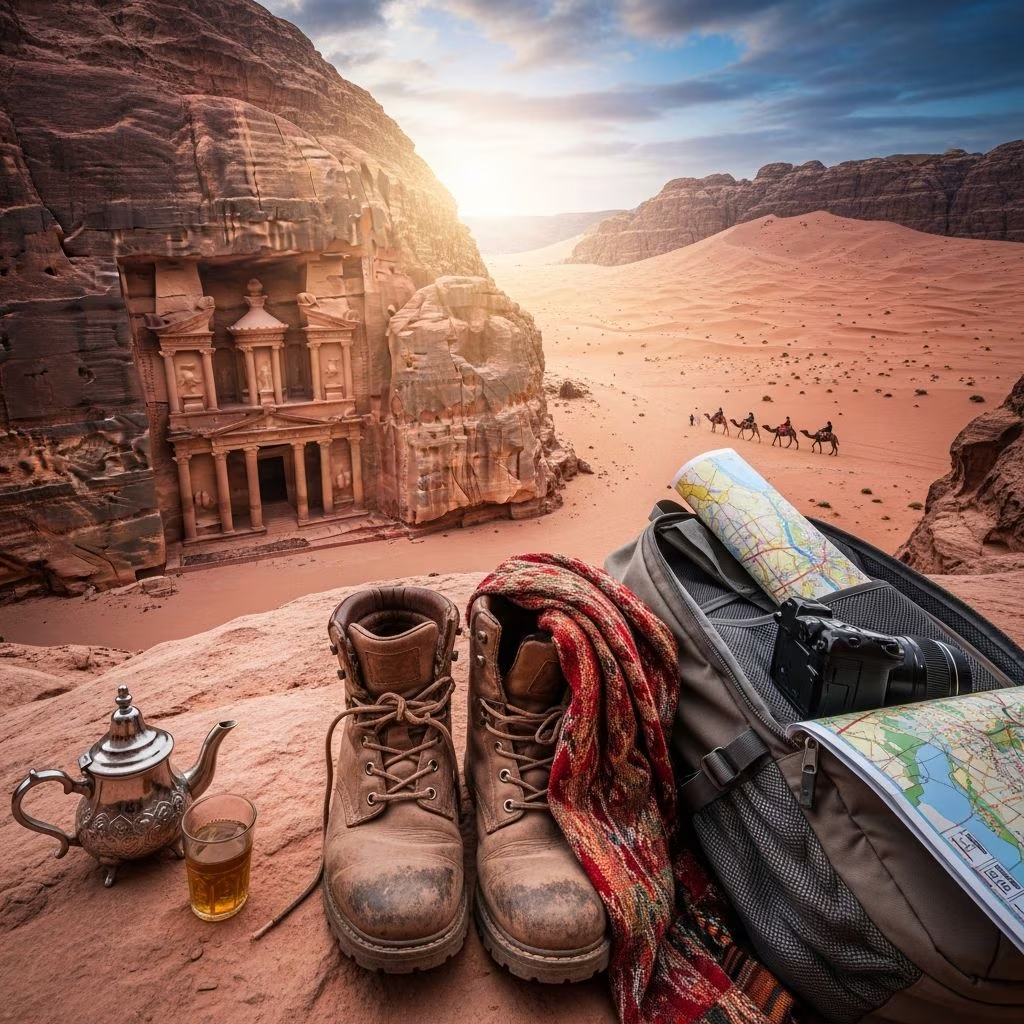
Regardless of season, packing sturdy hiking boots or high-quality walking shoes is essential. Jordan’s terrain—from rocky desert paths to uneven ancient stone—demands proper footwear. Modest clothing is advisable throughout the year, as Jordan is predominantly Muslim and respectful dress demonstrates cultural sensitivity.
Jordan’s compact size surprises many visitors. The entire country covers an area smaller than Portugal or the U.S. state of Maine, yet contains extraordinary geographic and cultural diversity. This compression of attractions into a relatively small territory might suggest efficient travel, but terrain variability complicates matters considerably.
Roads vary significantly in condition, ranging from modern highways to rough desert tracks. Travel times frequently exceed initial expectations due to mountainous sections, winding routes, and variable traffic conditions in urban areas. A journey that appears straightforward on maps often requires substantially longer than anticipated, particularly when accessing remote sites or navigating through Amman’s congested streets.
Building flexibility into your itinerary prevents frustration and allows genuine engagement with experiences. Rather than scheduling back-to-back activities with tight timing, plan leisurely transitions between destinations. This approach enables spontaneous discoveries, unexpected conversations with locals, and deeper appreciation of landscapes and cultural sites.
Within Jordan’s borders exist five UNESCO World Heritage Sites—an exceptional concentration for a country this size. These designations represent more than tourist checkboxes; they embody humanity’s cultural and natural heritage.
Petra stands as the most iconic destination. This ancient Nabataean city, carved into rose-pink sandstone cliffs approximately 2,000 years ago, earned recognition as one of the New Wonders of the World. The engineering achievement of creating an entire city within stone demonstrates extraordinary ingenuity and remains virtually unmatched in archaeological significance.
Wadi Rum offers an entirely different experience—vast red-sand deserts sculpted by wind into towering rock formations that resemble Martian landscapes. Bedouin guides lead visitors on jeep tours or camel treks, and spending nights in traditional Bedouin camps provides authentic cultural immersion under star-filled skies.
Beyond these primary attractions, numerous Roman ruins, biblical sites, and lesser-known natural reserves reward exploration. The Temple of Hercules in Amman, the ancient city of Jerash, and Mount Nebo all carry historical significance and offer insights into multiple civilizations that shaped the region.
Many visitors benefit from obtaining the Jordan Pass, which provides entrance to multiple major sites, museums, and protected areas. This cost-effective option streamlines access to key destinations while offering good value for comprehensive travelers.
Jordan’s historical timeline encompasses multiple civilizations, each leaving indelible marks on the landscape. Roman occupation beginning in 63 AD fundamentally altered the region’s trajectory. The Romans established Philadelphia—modern-day Amman—as the country’s first capital, transforming it from a smaller settlement into an administrative center.
Jerash stands as one of the Middle East’s most impressive Roman ruins. Visitors wander past intact stone colonnades, ancient theaters, a hippodrome, and the monumental Arch of Hadrian. These structures provide tangible connections to Roman engineering prowess and daily life during classical antiquity.
In Amman itself, the Citadel contains remains of the Roman Temple of Hercules alongside Umayyad palace structures. The panoramic views from this hilltop location encompass the sprawling modern capital, creating a visual bridge between ancient and contemporary Jordan.
Jordan holds profound religious importance for Christianity, Islam, and Judaism. Multiple sites referenced in biblical texts attract pilgrims and historically-minded tourists seeking tangible connections to ancient religious narratives.
Bethany Beyond the Jordan, also known as Al-Maghtas, marks the traditional site where John the Baptist baptized Jesus Christ. Many Christians consider this location as the birthplace of Christianity, making it one of the faith’s most sacred destinations. Archaeological work in recent decades has uncovered baptismal pools and monastic structures supporting the site’s historical authenticity.
Mount Nebo holds significance in Jewish and Christian traditions as the location where Moses revealed the Promised Land to the Israelites before his death. The site features a modern basilica and offers stunning vistas across the Jordan Valley toward the Dead Sea and Israeli territories.
Jordan’s reputation for religious tolerance enables peaceful coexistence of multiple faith traditions and ensures respectful access for visitors of all backgrounds to these spiritually important locations.
Shared with Israel and the Palestinian territories, the Dead Sea represents a unique natural phenomenon. At approximately 1,410 feet below sea level, it ranks as the lowest point on Earth’s surface. Its hypersalinity—approximately 10 times saltier than standard ocean water—renders the human body naturally buoyant, creating the distinctive floating experience for which the sea is famous.
The mineral-rich mud deposits lining the Dead Sea’s shores contain therapeutic properties valued in spa treatments and traditional medicine. Visitors coat themselves in this dark brown mud, allowing it to dry in the sun before rinsing off in the mineral-infused water.
Located approximately 45 minutes’ drive from Amman, the Dead Sea functions effectively as a day-trip destination from the capital. Luxury resorts, public beaches, and casual visitor facilities accommodate various preferences and budgets, making this natural wonder accessible to travelers with different interests and comfort requirements.
The Bedouin people have inhabited Jordan since the 14th century, establishing themselves as integral to the nation’s cultural identity. Wadi Rum alone hosts six Bedouin tribes maintaining traditional villages and welcoming visitors into their communities.
Experiencing Bedouin hospitality—whether through brief afternoon visits or overnight encampments—provides invaluable cultural education. Bedouins share traditional foods, demonstrate desert survival knowledge, guide visitors through otherworldly landscapes, and exemplify the hospitality traditions that define Jordanian society broadly. These interactions transcend typical tourist experiences, offering genuine human connection and cross-cultural understanding.
Arabic is Jordan’s official language, but English proficiency is surprisingly widespread in tourist areas, hotels, and among younger Jordanians. English speakers should not assume universal understanding in smaller towns or rural communities, where Arabic remains the dominant language.
Learning basic Arabic phrases enhances interactions and demonstrates respect for local culture. Simple greetings, expressions of gratitude, and polite requests resonate positively with residents and often facilitate warmer exchanges than English alone provides.
Traveling to Jordan rewards those who approach the destination with genuine curiosity, cultural sensitivity, and realistic expectations. The country’s remarkable compression of historical sites, natural wonders, and authentic cultural experiences into a manageable geographic area creates opportunities for transformative travel experiences. Flexibility, respect for local traditions, and willingness to engage authentically with places and people transform Jordan from a mere checklist of attractions into a deeply meaningful destination that lingers in memory long after departure.
