

 Travel Essentials
 Travel Essentials

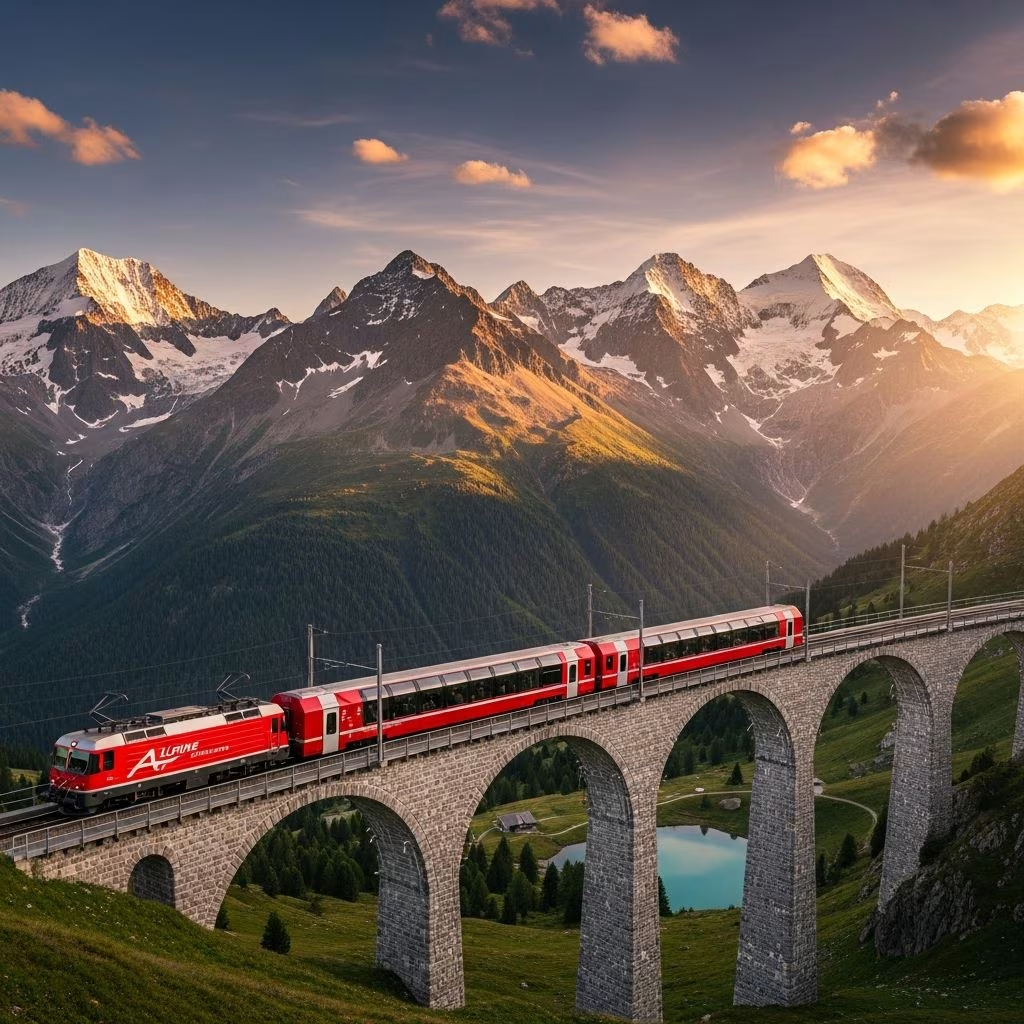
Experience the Treno Gottardo, a scenic train traversing Switzerland's most breathtaking landscapes from Zurich to sun-soaked Locarno via historic mountain routes.
 Travel Essentials
Switzerland’s railway network stands as a testament to engineering excellence and natural beauty, offering travelers an unparalleled way to experience the country’s diverse landscapes. Among the most celebrated journeys available to visitors is the Treno Gottardo, a modern scenic train service that seamlessly connects Switzerland’s cosmopolitan northern cities with the sun-drenched Mediterranean climate of the south. This distinctive rail experience represents more than simply transportation—it embodies a complete immersion into Swiss geography, culture, and hospitality.
The Treno Gottardo operates as a comprehensive transportation solution linking four major Swiss cities through one of Europe’s most historically significant mountain passages. Departing from Zurich, Basel, or Lucerne, the train carries passengers southward along the legendary Gotthard panoramic route, ultimately arriving in the charming lakeside town of Locarno. This routing choice deliberately avoids the modern Gotthard Base Tunnel, instead utilizing the historic line that showcases the region’s dramatic topography and engineering heritage.
The journey from Zurich takes approximately three hours and twenty minutes, while departures from Basel require around four hours and twenty minutes of travel time. Those boarding in Lucerne experience the shortest journey at roughly three hours. These timeframes allow passengers ample opportunity to absorb the changing landscapes while maintaining a leisurely pace suited to genuine sightseeing rather than rushed transit.
Operating hourly throughout the year, the Treno Gottardo provides flexible travel options for diverse schedules and preferences. The train alternates service departures between the three northern cities, ensuring consistent availability and reducing the need for advance planning during most travel periods. Both first and second-class seating accommodations are available, allowing travelers to select comfort levels matching their preferences and budgets.
The Treno Gottardo’s distinctive copper-colored exterior immediately catches the eye, signaling its status as a premium rail experience. However, the true innovation lies within the train’s thoughtfully designed interior. Expansive panoramic windows dominate the passenger compartments, deliberately positioned to maximize scenic viewing opportunities without requiring passengers to crane their necks or shift uncomfortably. This design philosophy recognizes that the landscape itself constitutes the primary attraction, deserving accommodation that places scenery at the visual center of the experience.
Beyond observation windows, the train incorporates several passenger-oriented features designed to enhance journey comfort:
The Treno Gottardo’s route encompasses a remarkable geographic progression that showcases Switzerland’s internal diversity. Beginning in Zurich, passengers start their journey in one of Europe’s most sophisticated urban environments, characterized by pristine lakefront districts and historic old town architecture. The initial journey segment follows Lake Zurich’s shoreline, providing extended views of this substantial alpine water body framed by distant mountain peaks.
As the train progresses toward Basel, travelers experience central Switzerland’s undulating countryside. Basel itself represents a cultural departure point, renowned internationally for its thriving arts establishments and distinctive architectural heritage. The city’s strategic location along the Rhine River and its historical importance as a medieval commercial hub add cultural richness to this waypoint.
The journey’s pivotal moment arrives upon entering the Gotthard route proper. Here, passengers ascend through a landscape of increasing drama—steep valley walls, rushing mountain streams, and engineering marvels including multiple spiral tunnels and impressive bridges designed to navigate the terrain’s extreme topography. This section represents the technical apex of Switzerland’s historical railway achievement, demonstrating nineteenth-century engineering prowess adapted to an extraordinarily challenging landscape.
Crossing through the historic Gotthard Pass tunnel marks the transition between Switzerland’s distinct regions. Emerging on the southern side, passengers encounter an immediate climatic and cultural shift. The Italian-speaking canton of Ticino begins to assert its character through architectural styles, vegetation patterns, and the perceptible warming of the air. Palm trees and Mediterranean-influenced vegetation gradually replace Alpine flora, signaling arrival in Switzerland’s warmest region.
Lucerne serves as the westernmost departure point for many Treno Gottardo journeys. This historic lakeside city presents a compelling contrast to Zurich’s modern sophistication, offering medieval architecture, covered wooden bridges, and a more intimate urban scale. Travelers boarding here immediately encounter the mountain landscape as the train leaves the city, providing seamless transition into the scenic experience.
Bellinzona emerges as a significant waypoint approximately ninety minutes after crossing the Gotthard route’s highest elevations. This strategically positioned town guards the valley leading southward and boasts three UNESCO-recognized medieval castles—Castelgrande, Montebello, and Sasso Corbaro—that crown surrounding hilltops. These fortifications speak to Bellinzona’s historical importance along Alpine trade routes, their commanding positions offering sweeping valley vistas that passengers can observe from the train.
Locarno, the journey’s final destination, represents the complete geographic and climatic culmination of the route. Positioned on Lake Maggiore’s northern shore, this town embodies Mediterranean character within Switzerland’s political boundaries. Subtropical vegetation, waterfront promenades, and the town’s Italianate architecture create an environment distinctly different from northern Switzerland, validating the journey’s claim to traverse between two distinct climatic zones.
The Gotthard route itself carries profound historical weight within Swiss and European railway history. Completed in 1882, this mountain crossing represented a monumental engineering achievement for its era, fundamentally transforming Alpine transportation and facilitating economic development across the continent. The line’s construction required innovative techniques including spiral tunnels that allowed trains to gain elevation while maintaining manageable grades, and extensive bridge work spanning deep gorges and turbulent rivers.
The modern Treno Gottardo service deliberately preserves this historic route, eschewing the contemporary Gotthard Base Tunnel that now carries much conventional traffic. This choice reflects recognition that the original line’s scenic characteristics and engineering heritage constitute irreplaceable assets worthy of preservation and celebration. The slow, winding ascent through mountain valleys that seems inconvenient to time-conscious travelers becomes an asset for leisure journeys, allowing extended appreciation of landscape and infrastructure alike.
Tickets for the Treno Gottardo can be obtained through the Swiss Federal Railways website and mobile application, with options ranging from individual journey tickets to regional passes covering multiple destinations. The train is fully covered by the Swiss Travel Pass, making it an economical choice for visitors purchasing comprehensive rail access.
While seat reservations are not mandatory for regular Treno Gottardo services, travelers are well-advised to secure reservations during peak travel seasons and particularly for first-class panoramic coaches that command higher demand. Early booking ensures optimal seating positions that maximize scenic viewing opportunities, particularly for passengers traveling during summer months when tourism peaks.
The journey works equally well regardless of travel direction. Northbound travelers experience the transition from Mediterranean to Alpine character, while southbound passengers witness the gradual emergence of warmer climates and southern European influences. Both directions offer distinct aesthetic and emotional arcs that reward attention throughout the journey.
The Treno Gottardo operates year-round, though seasonal variations significantly influence the visual experience. Summer travel offers maximum visibility and comfortable temperatures, though increased tourism creates crowding and requires advance reservations. Autumn transforms the landscape with distinctive color palettes as Alpine vegetation changes, while reduced tourist volumes create a more peaceful travel environment. Winter journeys may encounter snow-covered peaks and occasional weather-related delays, yet provide dramatic contrasts between white-blanketed high elevations and the relatively mild conditions in Locarno.
Spring presents perhaps the most dramatic transformation, with rapidly melting snow feeding thunderous mountain streams and emerging wildflowers cascading across high meadows. Photographers and nature enthusiasts often favor shoulder seasons when weather remains generally favorable while tourist density remains manageable.
The Treno Gottardo functions as both standalone experience and component within larger Swiss rail journeys. The train’s integration with the Grand Train Tour of Switzerland—a comprehensive route linking multiple scenic rail lines—allows travelers to combine this journey with other celebrated routes such as the Bernina Express or Glacier Express. This flexibility accommodates diverse travel interests and timeframes, from half-day excursions to comprehensive multi-week rail odysseys.
Day travelers frequently board the Treno Gottardo to experience specific segments—perhaps riding from Lucerne to Bellinzona and returning, or from Basel through the Gotthard route to Locarno and back. This segmented approach allows working professionals and shorter-term visitors to sample the route’s highlights without requiring multi-hour commitments to complete journeys.
The Treno Gottardo is fully included with the Swiss Travel Pass, eliminating the need for separate ticket purchases for regular service rides. Seat reservations may incur modest additional fees during peak periods.
The Treno Gottardo operates hourly throughout the year, with alternating departures from Zurich, Basel, and Lucerne ensuring consistent availability across the day.
While both services traverse the historic Gotthard panoramic route, the Treno Gottardo functions as a regular regional train with standard ticketing and reservation procedures, whereas the Gotthard Panorama Express represents a luxury service requiring seat reservations and premium pricing.
First-class compartments feature enhanced window configurations and superior seating comfort, making them optimal for dedicated scenic observation. However, second-class seating also provides adequate viewing opportunities and represents better value for budget-conscious travelers.
While the primary service runs continuously from northern cities to Locarno, travelers can board or exit at any station along the route, including Brunnen, Arth-Goldau, Flüelen, and other intermediate stops.
