

 Travel Essentials
 Travel Essentials

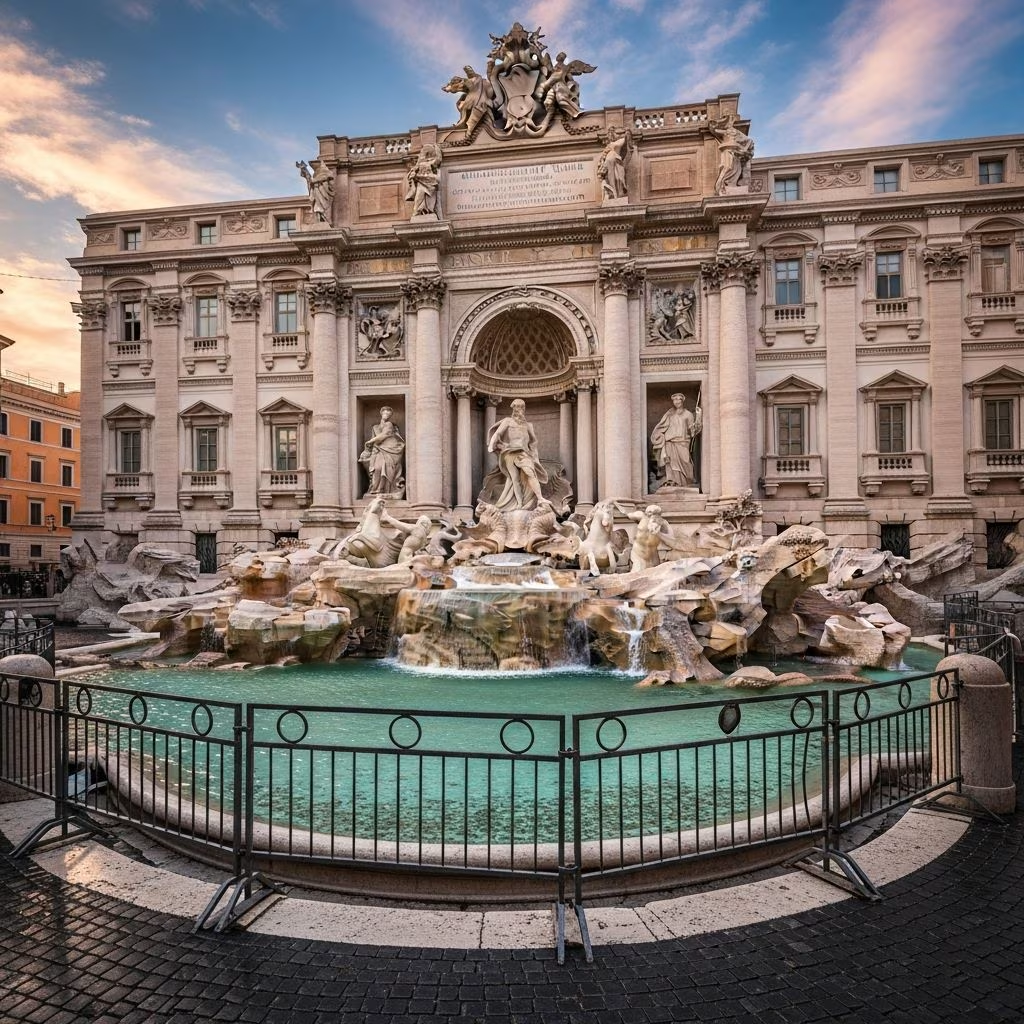
Rome is protecting the Trevi Fountain with transparent barriers to preserve the Baroque landmark while keeping the coin-toss tradition alive.
 Travel Essentials
The Trevi Fountain stands as one of Rome’s most captivating landmarks, drawing millions annually to witness its grandeur and participate in its legendary traditions. However, escalating visitor numbers have prompted city officials to implement protective measures, including sturdy barriers, to shield this 18th-century masterpiece from wear and tear. This strategic move aims to harmonize cultural reverence with the realities of mass tourism.
Completed in 1762 under Pope Clement XIII, the Trevi Fountain represents the pinnacle of Baroque artistry. Designed by Nicola Salvi, its central figure, Oceanus, commands a theatrical ensemble of sea creatures and allegorical sculptures. Legend holds that tossing a coin over one’s left shoulder into its waters guarantees a return to the Eternal City—a ritual that generates over €1.5 million yearly for local charities.
Beyond folklore, the fountain functions as an aqueduct endpoint, channeling ancient Roman engineering into a public spectacle. Its intricate travertine and stucco details have endured wars, restorations, and natural elements, but contemporary threats like overcrowding now demand intervention.
Rome welcomes upwards of 10 million visitors annually, with the Trevi Fountain as a top draw. Peak seasons see thousands congregating hourly, leading to problematic behaviors: sitting on basin edges, climbing sculptures, and littering. These actions erode stonework and heighten vandalism risks.
City data reveals a 30% uptick in incidents at major sites post-2019, underscoring the urgency for safeguards.
In early 2020, Rome’s city council greenlit a near-unanimous resolution to encircle the fountain with barriers, targeting disrespectful conduct. Mayor Virginia Raggi championed the design: approximately 1-meter-high panels of tempered glass and stainless steel, mirroring protections at Piazza Navona’s Fountain of the Four Rivers.
These enclosures prioritize unobstructed sightlines, ensuring the fountain’s dramatic facade remains photogenic. Engineering specs confirm resilience against impacts while permitting coin tosses via designated slots—preserving the tradition that funds social programs.
| Feature | Description | Benefits |
|---|---|---|
| Height | 1 meter (3 feet) | Prevents sitting/climbing without blocking views |
| Material | Glass and steel | Durable, transparent, weather-resistant |
| Access Points | Coin slots and cleaning gates | Maintains rituals and upkeep |
| Installation Timeline | 2020 approval; phased rollout | Minimizes disruption |
Critics initially decried the barriers as visually intrusive, fearing they’d mar the fountain’s allure. Yet, post-installation feedback highlights successes: cleaner environs, fewer enforcement needs, and sustained crowd flow. Similar setups at other sites prove aesthetics intact, with photos showing seamless integration.
Enhancements include widened walkways and digital signage promoting etiquette, fostering mindful tourism. The barriers redirect security efforts toward curbing illegal vending, which previously cluttered approaches.
Rollout faced hurdles like supply delays from global events, but modular construction enabled swift deployment. Maintenance protocols now involve daily inspections and seasonal deep cleans, funded partly by coin collections.
Public engagement via town halls shaped refinements, such as adjustable heights in high-traffic zones. Long-term, sensors monitor stress on structures, informing future tweaks.
Rome’s approach echoes worldwide efforts. Venice employs entry fees to manage canal crowds; Barcelona’s Sagrada Família uses velvet ropes and timers. These models validate barriers as effective without full closures.
| Site | Protection Method | Outcome |
|---|---|---|
| Trevi Fountain, Rome | Glass-steel barriers | Reduced damage, tradition preserved |
| Fountain of Four Rivers, Rome | Similar enclosures | Enhanced preservation |
| Colosseum, Rome | Ground sensors, barriers | Decline in unauthorized access |
| Times Square Ball Drop, NYC | Bollards and fencing | Safer mass gatherings |
Tourism injects €12 billion into Rome’s economy yearly, but unsustainable practices risk backlash. Barriers mitigate ‘tourist fatigue’ among locals, sustaining support for hospitality sectors. Culturally, they underscore Italy’s stewardship of UNESCO-listed gems.
Coin revenues, managed by the Rome Municipality, support housing for the needy—over 1 million euros in recent years. This virtuous cycle bolsters public buy-in.
Rome eyes expansions like AI-monitored flows and eco-tours. Collaborations with apps provide real-time crowd data, empowering choices. These innovations position the city as a leader in resilient heritage management.
Yes, dedicated slots ensure the tradition continues seamlessly.
No, their transparent design maintains clear, picturesque views from all angles.
Reports confirm a marked drop in incidents and damage.
Fines up to €500 apply for climbing or littering.
Dawn or dusk offers fewer crowds and magical lighting.
In summary, Rome’s Trevi Fountain barriers exemplify proactive heritage care, ensuring this icon endures for generations while welcoming the world.
