

 Travel Essentials
 Travel Essentials

Explore the archaeological wonders directly beneath Rome's Trevi Fountain, including a functioning ancient aqueduct and preserved Roman domus, through guided tours revealing layers of history.
 Travel Essentials
Rome’s Trevi Fountain stands as one of the world’s most famous landmarks, drawing millions of visitors annually to toss coins into its waters for good luck. Yet, few realize that directly beneath this Baroque masterpiece lies a labyrinth of ancient secrets waiting to be explored. This underground realm, known as Vicus Caprarius or the “City of Water,” preserves remnants of imperial Rome, including a still-operational aqueduct from over two millennia ago. Guided tours provide rare access to these subterranean wonders, offering a profound glimpse into the Eternal City’s layered past.
Rome is a city built upon itself, with each era leaving its mark in stratified archaeological deposits. Beneath the bustling Piazza di Trevi, modern streets give way to structures from the 1st century AD. Vicus Caprarius encapsulates this phenomenon, showcasing how ancient infrastructure supports contemporary landmarks. The site’s name evokes the neighborhood’s historical water-centric role, tied to the Aqua Virgo aqueduct that continues to feed the Trevi Fountain today.
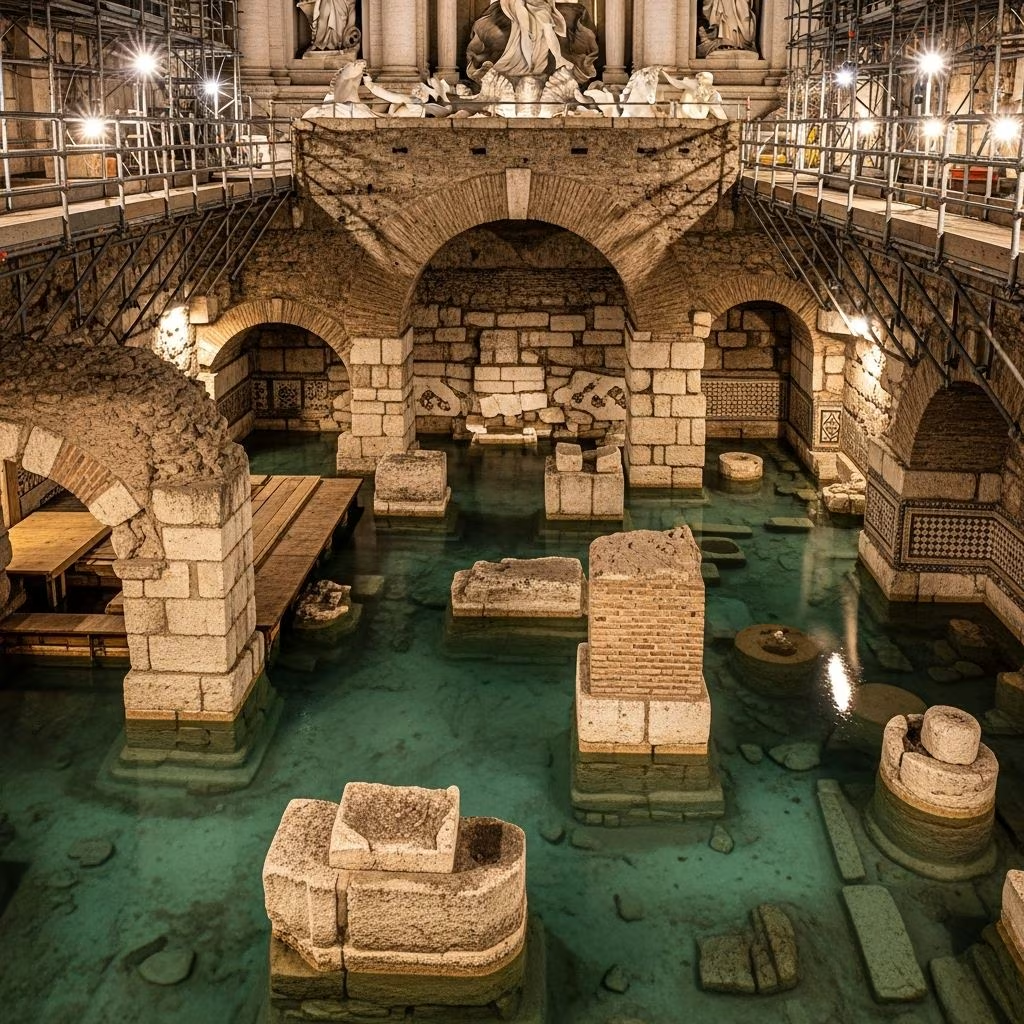
Visitors descending into this hidden world encounter a stark contrast between the fountain’s opulent surface and the raw, evocative ruins below. Moisture glistens on ancient walls, and the sound of flowing water echoes through tunnels, creating an atmospheric journey back in time. These tours illuminate Rome’s urban evolution, from republican aqueducts to imperial residences, demonstrating masterful ancient engineering that endures.
Located at Piazza di Trevi 82, Vicus Caprarius spans a compact yet richly detailed archaeological zone. Discovered during modern renovations, it reveals a Roman domus—a luxurious private home—from the late Republican to early Imperial periods. Preserved mosaics, fresco fragments, and structural elements paint a vivid picture of elite Roman life.
At the heart of the site pulses the Aqua Virgo, Rome’s only surviving ancient aqueduct still in use. Constructed around 19 BC under Emperor Augustus’ patronage, it channels spring water over 20 kilometers to the city center. Nine meters underground, visitors can witness its functional channels, a testament to Roman hydraulic genius.
Access to Vicus Caprarius requires a guided tour, ensuring safe navigation and expert narration. Tours last approximately 40-60 minutes, accommodating small groups of up to 12 for an intimate experience. Available in multiple languages including English, Italian, French, German, Portuguese, and Spanish, they cater to international travelers.
Bookings are essential via official platforms like ArcheoRoma or Vicus Caprarius’ site, with prices around €8-€20 depending on the operator. Private options offer flexibility for families or customized itineraries. Note that the site lacks wheelchair accessibility due to steep stairs and uneven terrain.
| Tour Type | Duration | Group Size | Price Range | Highlights |
|---|---|---|---|---|
| Standard Guided | 40 min | Max 12 | €8-€15 | Aqueduct, domus ruins, expert guide |
| Express Underground | 1 hour | Small groups | €20-€30 | Fountain history + underground access |
| Private Tour | 1-1.5 hours | Custom | €150+ | Personalized insights, flexible timing |
Tours commence near Via del Lavatore 49, with staff identifiable by branded signage. Digital tickets scanned on smartphones streamline entry, emphasizing punctuality for seamless starts.
The Aqua Virgo’s survival is extraordinary amid Rome’s history of invasions, neglect, and urban growth. Initiated by Marcus Vipsanius Agrippa, it tapped into springs near modern Frascati, traversing valleys and hills via precise gradients—often just 1:4,800 for steady flow. Popes in the Renaissance era restored it, culminating in its role for the Trevi Fountain’s 1732 unveiling.
Underground, tours reveal vaulted channels where water trickles audibly, underscoring its vitality. This aqueduct not only quenched ancient thirst but powered mills, baths, and fountains, integral to Roman hygiene and leisure. Modern maintenance ensures its flow, bridging antiquity with today.
The domus beneath Trevi exemplifies elite housing: spacious atrium, peristyle garden hints, and service quarters. Mosaics depict marine motifs, aligning with the water theme. Artifacts like pottery shards and tools offer tactile connections to inhabitants—merchants, officials, perhaps even Agrippa’s circle.
Archaeologists note the site’s role in understanding Vicus Caprarius neighborhood, a vibrant commercial hub near forums. Overbuilding preserved these layers, as medieval and Renaissance structures anchored atop republican foundations.
Prepare for a cool, damp environment—wear comfortable shoes, layers, and avoid loose clothing. Photography is permitted, but flash may be restricted to protect artifacts. Tours run Tuesday-Sunday, 10 AM-4 PM; book ahead, especially peak season.
Combine with Trevi Fountain surface visits: Toss your coin post-tour for symmetry. Nearby, the Spanish Steps and Pantheon enrich a full-day itinerary tracing Aqua Virgo’s path.
Beyond sightseeing, Vicus Caprarius fosters appreciation for Rome’s palimpsest nature. Guides contextualize finds within broader narratives—from aqueduct construction amid civil wars to Baroque fountain commissions glorifying papal power. It’s educational yet thrilling, demystifying how ancients engineered enduring cities.
Reviews praise the “mind-blowing” revelations, with many declaring it a top under-the-radar gem. For history buffs, families, or casual tourists, it elevates Trevi from photo-op to profound portal.
Yes, children over 6 enjoy it, but strollers are impractical due to stairs. Guides engage young minds with stories of ancient Romans.
About 9 meters, reaching imperial-era levels while remaining safe and ventilated.
Most focus underground; some express tours combine both. Check listings for details.
Typically non-refundable, but rescheduling may be possible 24+ hours prior.
Mornings avoid crowds; spring/fall offer mild weather for post-tour fountain enjoyment.
Immerse yourself in this unique fusion of history and hydrology. Vicus Caprarius isn’t just ruins—it’s Rome’s beating subterranean heart, pulsing with the same waters that enchanted ancients and inspire us today.
