

 Travel Essentials
 Travel Essentials

Trinity College Dublin is turning lawns into wild meadows, boosting biodiversity, cooling the campus, and showing how cities can rewild.
 Travel Essentials
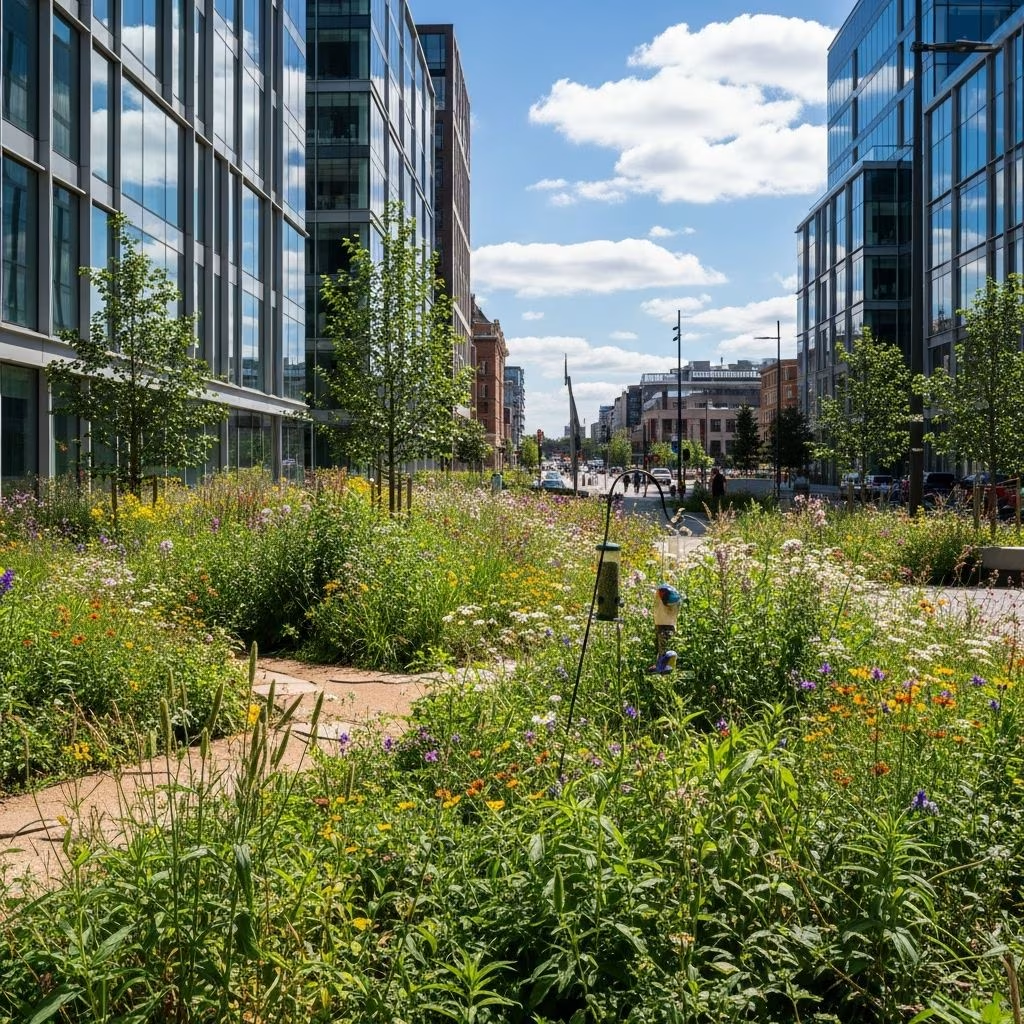
Trinity College Dublin stands at the forefront of a transformative movement in urban ecology, where traditional manicured landscapes give way to vibrant, self-sustaining ecosystems. By replacing pristine lawns with wildflower meadows and expanding native plantings, the university is not only revitalizing its historic campus but also setting a model for cities worldwide grappling with biodiversity loss and climate challenges.
In early 2020, Trinity College Dublin launched a campus-wide poll that captured the imagination of its community. Over 13,850 staff and students participated, with a resounding 90%—that’s 12,496 votes—favoring the conversion of the Front Gate lawns into a wildflower meadow. This initiative marked the beginning of a deliberate shift toward rewilding, prioritizing natural processes over aesthetic perfection.
The meadow’s establishment involved seeding a mix of native herbaceous plants designed to restore pollination services and boost insect populations. Unlike conventional landscaping, which often relies on monoculture grasses requiring constant mowing and fertilizers, this approach allows nature to flourish unchecked. Within seasons, the site bloomed with poppies, daisies, and clover, attracting bees, butterflies, and other pollinators essential for urban food chains.
Rewilding in cities like Dublin addresses multiple crises simultaneously: declining pollinator numbers, urban heat islands, and mental health strains from concrete-dominated environments. Trinity’s project exemplifies how small-scale interventions can yield outsized ecological benefits. Wildflower meadows support a cascade of biodiversity— from soil microbes to birds—creating resilient microhabitats amid urban sprawl.
These outcomes align with Trinity’s Healthy Trinity campaign, which targets a 5% increase in biodiversity-rich areas alongside 10% more trees, proving that academic institutions can lead environmental stewardship.
Trinity’s rewilding efforts extend far beyond one meadow. The campus hosts the student-led Urban Garden, established in 2022 via the Provost’s COP26 fund. This innovative space employs permaculture techniques to grow fruits and vegetables, engaging volunteers in hands-on sustainability.
Further afield, the Trinity College Botanic Garden in Dartry, dating to 1687, serves as a living laboratory with 4,000 plant species and Ireland’s Threatened Plant Seed Bank. Open to the public, it hosts workshops that educate on botany and conservation, bridging historic legacy with modern ecology.
These initiatives form part of a holistic strategy. Campus green areas now include rewilded corners, pocket forests, and native shrubberies, all designed to interconnect and amplify biodiversity.
| Project | Launch Year | Key Features | Biodiversity Gains |
|---|---|---|---|
| Front Gate Meadow | 2020 | Native wildflowers, no mowing | 90% community support; pollinator surge |
| Urban Garden | 2022 | Student-led permaculture | Fruit/veg production; community involvement |
| Botanic Garden | 1687 (modern role) | 4,000 species, seed bank | Research hub; public education |
Trinity’s success has rippled across Dublin, inspiring initiatives like Pocket Forests, launched in 2020. These dense clusters of native trees and shrubs—planted in overlooked urban plots—transform concrete voids into thriving woodlands. Sites along canals, in parks, and on campuses now teem with birds and mammals, demonstrating rewilding’s scalability.
Community-driven projects emphasize collaboration: residents, schools, and volunteers enrich soil with composted waste, then let nature lead. Examples include Inchicore Urban Forest and Grangegorman Pocket Forest on TU Dublin’s campus, linking education with ecology.
Research from Trinity scholars, like Mairéad O’Donnell’s work on urban wilding, underscores co-designing cities as shared habitats for humans and wildlife, advocating systemic transformation.
Beyond ecology, rewilding uplifts human health. Studies link proximity to biodiverse greenspaces with reduced anxiety and improved focus—critical for Trinity’s 20,000+ students. These areas encourage social bonds, outdoor learning, and even incidental exercise, aligning with Healthy Trinity’s smarter travel campaigns.
Climatically, native plantings mitigate urban heat—wild meadows can be 5-10°C cooler than lawns—and filter pollutants. In Dublin’s variable weather, they enhance flood resilience by improving soil absorption.
Not without hurdles, rewilding faces resistance over aesthetics. “Messy” growth clashes with expectations of tidy lawns, yet education shifts perceptions: Trinity’s meadow now draws admirers.
Invasives pose risks, countered by native-only seed mixes. Maintenance is minimal—occasional cuts prevent scrub encroachment—making it cost-effective long-term.
Policy support is key: Dublin’s councils back these via grants, while universities integrate them into sustainability plans.
Rewilding isn’t elite—small actions count. Sow wildflower seeds in pots, allow lawn edges to naturalize, or join local plantings. Trinity welcomes volunteers to its garden and meadow upkeep.
Communities can mimic Pocket Forests: select a 100m² plot, plant 600 natives, and observe transformation in 2-3 years.
Urban rewilding restores natural processes in cities by introducing native plants and minimizing human intervention, fostering biodiversity in built environments.
Yes, the 2020 project thrives, with high pollinator activity and community acclaim, proving rewilding’s viability on campuses.
Absolutely—the meadow, Urban Garden, and Botanic Garden are accessible to students, staff, alumni, and the public.
It sequesters carbon, cools cities, supports pollinators for food security, and builds resilient ecosystems.
Expansion of pocket forests, policy integration, and public engagement aim for a networked green infrastructure.
