


 Food & Culture
Food & Culture
Trondheim’s Female-Led Sustainable Food Revolution
Female farmers and entrepreneurs in Trondheim are pioneering a sustainable food movement that combines traditional Norwegian ingredients with modern culinary techniques.
 Food & Culture
The Rise of a Nordic Culinary Powerhouse
Trondheim, Norway’s historic former Viking capital, has undergone a remarkable transformation in recent decades. While the city remains renowned for its architectural heritage and cultural significance—including its magnificent Gothic cathedral where European monarchs have been crowned—it is increasingly gaining international recognition for an entirely different reason: its thriving and innovative food scene. What distinguishes Trondheim’s culinary landscape from other gourmet destinations is not merely the presence of acclaimed restaurants or the concentration of culinary talent, but rather the driving force behind its gastronomic renaissance: a network of passionate female entrepreneurs and farmers who are fundamentally reshaping how communities think about food production, sustainability, and cultural preservation.
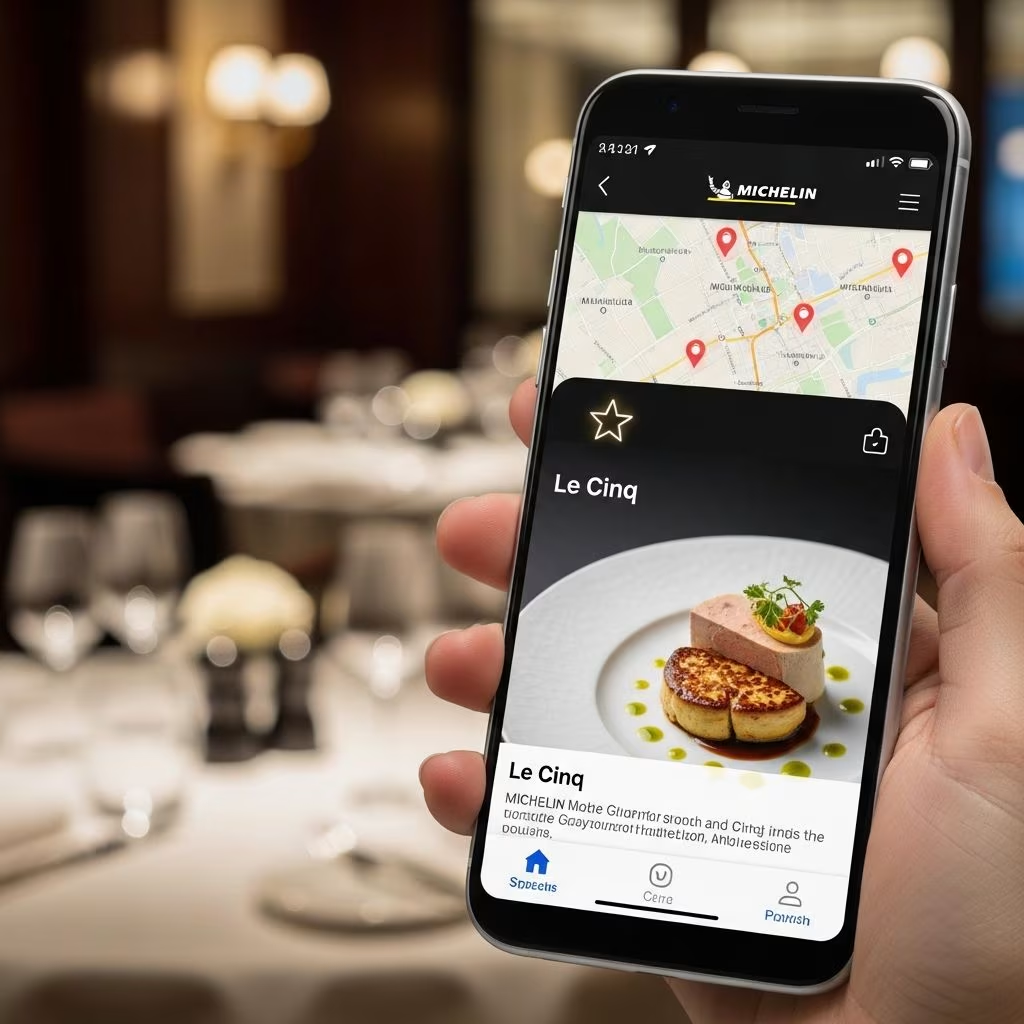
The city’s food credentials have grown exponentially in recent years. Trondheim hosted the prestigious Bocuse d’Or Europe culinary competition and was recognized as a European Region of Gastronomy, cementing its status as a serious player in global gastronomy. The number of Michelin-starred establishments relative to the city’s population of approximately 200,000 residents demonstrates an exceptional concentration of culinary excellence. Yet this success story extends far beyond restaurant kitchens and into the farms, forests, and entrepreneurial ventures that supply and inspire these establishments.
Women Entrepreneurs: The Backbone of Sustainable Agriculture
The driving force behind Trondheim’s food transformation is rooted in a distinctive cultural phenomenon: Norway’s strong tradition of female entrepreneurship. When asked about the motivations behind this pattern, local women consistently point to a singular philosophy: passion rather than profit. This fundamental orientation shapes every aspect of how women approach food production and business development in the region.
One compelling example is the journey of a former legal professional who transitioned from a 18-year career in law to become a farmer. Her transformation began when she relocated to her husband’s family farm on the mountain slopes of Vassfjellet, seeking ways to enhance sensory experiences for her husband after he lost his vision. Rather than viewing this as a limitation, she reimagined farming as a multisensory practice. Today, her enterprise specializes in blending Norwegian flowers, herbs, heathers, and berries—many cultivated and foraged from the lands surrounding Trondheim—with rare grand-cru teas sourced directly from tea farmers across the globe. This combination of local heritage and global connectivity exemplifies the innovative approach characterizing the region’s female-led agricultural initiatives.
Reimagining Farm-to-Table Relationships
At the heart of Trondheim’s sustainable food movement lies a fundamental reimagining of the relationship between producers and consumers. Rather than viewing farming as an isolated industrial process, female entrepreneurs in the region have pioneered approaches that emphasize transparency, relationship-building, and mutual respect between all participants in the food supply chain.
One of the most visible manifestations of this philosophy appears in restaurant practices that directly connect diners with the origins of their meals. Restaurants have adopted the practice of sourcing individual animals from specific local farmers, creating personal connections that extend from pasture to plate. Some establishments even display the names of the individual cows or livestock, allowing diners to mentally connect with the animal whose meat they are consuming. This approach transforms dining from a passive consumption experience into an educational and ethical engagement with food production.
This relationship-building extends beyond marketing to fundamental operational practices. Restaurants work with biodynamic and small-scale farms in the Trøndelag region, establishing long-term partnerships that allow for mutual planning and support. Rather than pursuing external certifications or relying on third-party verification systems, these enterprises build trust through consistent collaboration, shared values, and transparent communication about production methods.
Urban Farming and Innovative Growing Practices
The commitment to sustainable food production extends into unexpected spaces within the urban environment. Hotels and restaurants in Trondheim have integrated agricultural production directly into their operations, challenging conventional assumptions about where food should be grown and how urban spaces can contribute to food security.
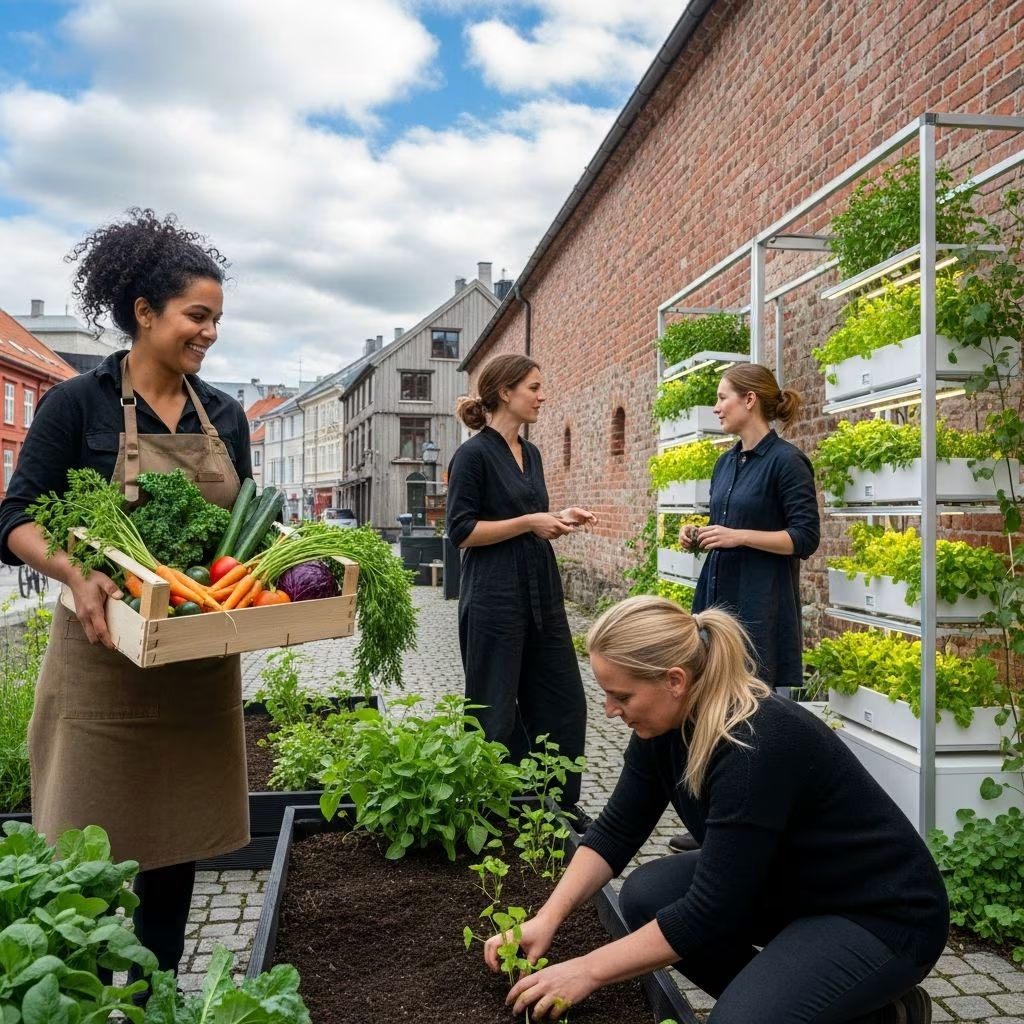
Several establishments maintain substantial fruit orchards within urban settings, with one notable hotel operating an on-site orchard containing approximately 4,000 trees. Beyond ornamental purposes, these orchards represent functional agricultural production that supplies ingredients for culinary operations. Similarly, some restaurants operate on-site farms of approximately 300 square meters, cultivating vegetables, microgreens, and fruit on soil enriched by compost generated from food waste produced within the establishment itself. This closed-loop system exemplifies circular economy principles applied to food production.
The agricultural practices employed in these urban farms demonstrate commitment to ecological stewardship. Rather than relying heavily on chemical interventions, these operations employ biological pest management strategies. Ducks are introduced to gardens to naturally control slug populations, reducing the need for pesticides. This integration of animal husbandry into crop production creates a more balanced and resilient agricultural ecosystem.
Foraging and Wild Foods: Connecting Culture to Landscape
A distinctive feature of Trondheim’s sustainable food scene involves the systematic incorporation of foraged wild foods into culinary traditions. Rather than treating foraged ingredients as exotic novelties, local food professionals have elevated wild foods to central positions in their ingredient palettes and cooking philosophies.
The forested landscapes surrounding Trondheim provide abundant resources: wild flowers, berries, mushrooms, and other plant materials that have sustained communities for generations. Contemporary food practitioners have developed sophisticated approaches to harvesting and utilizing these resources. Some enterprises have become “food alchemists,” as they are locally described, substituting imported flavor profiles with locally foraged alternatives. Wood ants, traditionally available in the surrounding forests, serve as acidic flavor elements that replace imported lemon juice or vinegar in culinary applications. This practice simultaneously reduces the carbon footprint associated with ingredient transportation while deepening connections to the local environment and cultural heritage.
Collaboration and Community Building
The sustainable food movement in Trondheim extends beyond individual restaurants or farms to encompass collaborative networks and community institutions. Rather than operating in isolation, food professionals have established interconnected enterprises that support shared missions around sustainability and education.
One notable example involves a restaurant that has developed a ecosystem of related ventures within the same physical space. Beyond the flagship restaurant, a sister establishment offering different cuisine styles, a ramen restaurant, and a food court operate in collaborative relationship. Adjacent to these commercial operations, a dedicated food culture center serves children and young people, introducing thousands of individuals annually to the pleasures of cooking and sustainable food practices. These educational initiatives employ some of Norway’s most accomplished chefs, democratizing access to culinary knowledge and fostering a generation of individuals who understand and value sustainable food systems.
Producer Partnerships and Regional Supply Networks
The success of Trondheim’s sustainable food scene depends fundamentally on robust partnerships between restaurants and regional producers. These relationships typically extend across multiple farms, creating diversified supply networks that reduce vulnerability and support multiple livelihoods simultaneously.
One particularly illustrative partnership involves restaurants working with farms spanning the Trøndelag region. These farms dedicate significant acreage—in some cases over nine hectares—to pasture-based animal husbandry and diverse crop production. The seasonal availability of produce, meat, milk, and dairy products from these farms directly shapes menu development and culinary creativity. Rather than viewing seasonal limitations as constraints, chefs celebrate them as opportunities for innovation and connection to natural rhythms.
The mutual benefit inherent in these arrangements ensures their sustainability. Farmers gain reliable markets for their products and opportunities for direct engagement with culinary professionals who understand and value their production methods. Restaurants access ingredients of exceptional quality while building their operations on transparent, ethical foundations. This symbiotic arrangement creates resilience for both parties and benefits consumers who gain access to superior products.
The Philosophy Behind the Movement
Underlying all these specific practices lies a coherent philosophy about food, community, and environmental responsibility. This worldview rejects the assumption that scaling operations requires sacrificing quality, ethics, or environmental stewardship. Instead, practitioners argue that alignment between values and business practices enhances rather than constrains success.
The emphasis on passion rather than profit as a primary motivator shapes decision-making across the movement. While financial viability remains necessary for sustainability, it is not the overriding consideration. Instead, decisions about what to grow, how to produce it, and whom to partner with are guided by questions about quality, environmental impact, cultural significance, and community benefit. This orientation allows for approaches that might appear economically irrational to conventional business analysis but prove deeply meaningful to participants and customers.
Global Recognition and Future Directions
The international recognition accorded to Trondheim’s food scene validates the approach developed by the female entrepreneurs and farmers who have built the system. Michelin recognition, designation as a European Region of Gastronomy, and hosting of prestigious international competitions demonstrate that commitment to sustainability and local production does not limit commercial viability or culinary achievement. Rather, these commitments appear to enhance both.
As Trondheim’s model gains visibility, other communities increasingly look to understand and potentially adapt its approaches. The combination of environmental stewardship, gender-inclusive entrepreneurship, regional food system development, and commitment to quality creates a blueprint for sustainable food development that transcends cultural and geographic boundaries. Female farmers and entrepreneurs in Trondheim have demonstrated that passion-driven business practices, grounded in community values and environmental responsibility, can create thriving economic activity while advancing social and ecological wellbeing.
Frequently Asked Questions
What makes Trondheim’s food scene distinctive?
Trondheim’s culinary landscape stands out for its integration of female entrepreneurship, sustainable farming practices, direct farm-to-table relationships, and incorporation of foraged local ingredients. The emphasis on passion-driven business models rather than profit-maximization creates a cohesive philosophy across the entire food ecosystem.
How do restaurants in Trondheim source their ingredients?
Rather than using conventional distributors, restaurants typically establish long-term partnerships with specific regional farms. Many work directly with biodynamic farms and small-scale producers in the Trøndelag region, often featuring the names of specific farmers or even individual animals on menus to emphasize transparency and connection.
What role do women play in Trondheim’s food scene?
Women serve as primary drivers of innovation in both agricultural production and culinary enterprises. The region’s strong tradition of female entrepreneurship, motivated primarily by passion rather than profit, has created a distinctive culture of sustainable, values-driven food business development.
Are there educational opportunities related to sustainable food in Trondheim?
Yes, several establishments operate food culture centers and educational programs that introduce young people to sustainable cooking and food production. These programs employ accomplished chefs and provide hands-on learning experiences for thousands of participants annually.
How do urban farms in Trondheim contribute to sustainability?
Urban farms operate closed-loop systems where food waste is composted and returned to soil. They employ biological pest management, minimize pesticide use, and integrate animal husbandry practices. These operations reduce transportation distances, lower carbon footprints, and demonstrate that cities can contribute meaningfully to food production.
References
- The female farmers green-fueling Trondheim’s sustainable food scene — Lonely Planet. https://www.lonelyplanet.com/articles/trondheim-norway-female-farmers-sustainable-food-scene
- Heidi Bjerkan: With success sustainable — KTCHNrebel. https://www.ktchnrebel.com/heidi-bjerkan-sustainable-foodservice-concept/
- 5 Questions with Norway’s Chef Heidi Bjerkan of Credo on Cooking — Michelin Guide. https://guide.michelin.com/us/en/article/people/chef-heidi-bjerkan-sustainable-cooking
- Why Norway’s Trondheim should be on your foodie bucket list — The World’s 50 Best. https://www.theworlds50best.com/stories/News/trondheim-trondelag-norway-travel.html
- How a Wholesome Childhood Diet Led Norway’s Top Chef — Fortune. https://fortune.com/longform/norway-bula-restaurant-chefs-trash-food-renee-fagerhoi/
On This Page
The Rise of a Nordic Culinary Powerhouse Women Entrepreneurs: The Backbone of Sustainable Agriculture Reimagining Farm-to-Table Relationships Urban Farming and Innovative Growing Practices Foraging and Wild Foods: Connecting Culture to Landscape Collaboration and Community Building Producer Partnerships and Regional Supply Networks The Philosophy Behind the Movement Global Recognition and Future Directions Frequently Asked Questions← Previous
Florida Mermaiding Guide: Top Mermaid Shows, Swims & Dining Spots
Next →
Bear Safety in British Columbia: How to Stay Safe on the Trail
Related Reading
More in Food & Culture
Food & Culture Food & Culture
 Food & Culture
Best Places to Eat in Rome: Neighborhood Dining Guide
 Food & Culture
 Food & Culture